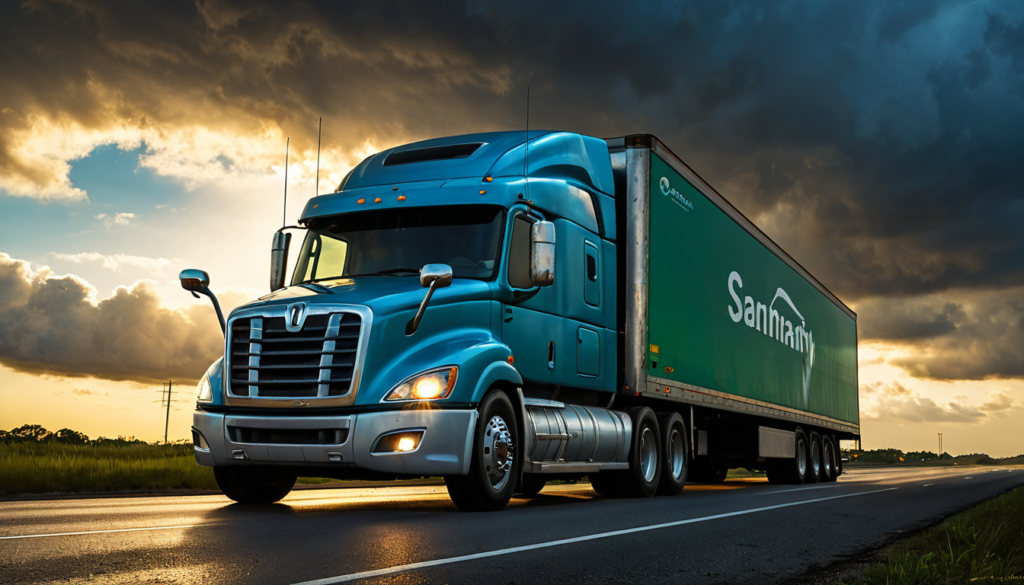
When an 80,000-pound truck changes your life forever, you need more than a lawyer—you need a fighter who knows Saint Charles Parish. Whether you’re commuting on Interstate 10 through Luling, heading to the Port of South Louisiana facilities near Hahnville, or driving along Louisiana Highway 3127 through the heart of the Mississippi River corridor, one moment of negligence from a commercial truck driver can devastate your family.
We are Attorney911, and we fight for you.
For over 25 years, Ralph Manginello has stood between trucking companies and the families they destroy. Since 1998, we’ve recovered multi-million dollar settlements for injury victims across Louisiana and Texas—from $5 million for a traumatic brain injury victim struck by a falling log, to $3.8 million for a client who lost a limb after a car crash complications, to $2.5 million for families devastated by 18-wheeler accidents. Our managing partner brings federal court experience from the U.S. District Court for the Southern District of Texas, giving us the capability to handle complex interstate trucking cases that cross jurisdictional lines.
But here’s what truly sets us apart: Our team includes a former insurance defense attorney.
Lupe Peña spent years inside the insurance industry, learning exactly how trucking insurers evaluate claims, minimize payouts, and deny legitimate cases. Now he uses that insider knowledge against them. When you hire Attorney911, you’re getting an attorney who knows their playbook—because he used to work for them.
Call 1-888-ATTY-911 right now. The clock started ticking the moment that truck hit you, and in Louisiana, you have only one year to file your lawsuit. Evidence disappears faster than that—black box data can be overwritten in 30 days, dashcam footage gets deleted within weeks, and the trucking company already has lawyers working to protect their interests.
We don’t let them get away with it. And in Saint Charles Parish, we don’t back down.## The Unique Dangers of Saint Charles Parish Trucking Corridors
Saint Charles Parish sits at the crossroads of America’s petrochemical highway. Interstate 10 runs like an artery through our communities, connecting the Port of South Louisiana—one of the largest tonnage ports in the nation—to the rest of the country. This means our highways see a constant flow of tanker trucks carrying hazardous materials, flatbeds hauling heavy equipment to and from the refineries in Norco and Taft, and long-haul 18-wheelers pushing through to New Orleans or Baton Rouge.
This isn’t just traffic—it’s a unique risk profile that Saint Charles Parish residents face every day.
The petrochemical factor. With major facilities like the Shell Norco Manufacturing Complex and Motiva Enterprises in our backyard, Saint Charles Parish sees a disproportionate number of tanker trucks carrying flammable liquids, toxic chemicals, and hazardous waste. These aren’t standard freight hauls. When a tanker truck jackknifes on I-10 near Interstate 310, or rolls over on River Road (LA Hwy 18), the consequences can include fires, explosions, and toxic exposure that affect entire neighborhoods.
The port traffic. The Port of South Louisiana operates terminals throughout our parish, handling everything from grain to heavy machinery. This creates a perfect storm of trucking risks: overloaded cargo ships being hauled to railheads, massive container trucks navigating narrow local roads, and time-pressed drivers rushing to meet shipping deadlines.
The weather. We live with hurricanes, tropical storms, and sudden flooding that other states simply don’t experience. When Hurricane Ida barreled through, we saw how quickly truck drivers can lose control on our saturated roads. Even routine thunderstorms create hydroplaning hazards on I-10’s elevated sections through the parish.
The river bridges. The Hale Boggs Memorial Bridge carries I-310 traffic 170 feet above the Mississippi River. High winds at that elevation can push trailers into adjacent lanes. The narrow shoulders and steep grades create dangerous conditions for trucks carrying heavy loads—especially when drivers ignore weight restrictions or fail to downshift properly.
Every day, families in Destrehan, St. Rose, and Ama share the road with these massive vehicles. And every day, trucking companies cut corners on safety to maximize profits.
We hold them accountable.
The 18-Wheeler Accident Epidemic: The Numbers Don’t Lie
Every 16 minutes, someone in America is injured in a commercial truck crash. In Saint Charles Parish and across Louisiana, the statistics are even grimmer given our industrial density:
- Over 5,100 people die annually in trucking accidents nationwide
- 76% of those deaths are occupants of the smaller vehicle—not the truck
- 125,000+ injuries occur every year from commercial vehicle accidents
- 29% of truck accidents involve brake system failures
- 31% of fatal truck crashes involve driver fatigue
The physics are brutal. A fully loaded 18-wheeler weighs 80,000 pounds—twenty times more than your family sedan. At 65 miles per hour, that truck needs 525 feet to stop—nearly two football fields. By comparison, your car needs only 300 feet. When a truck driver falls asleep on I-10 near the Bonnet Carré Spillway or texts while crossing the Gramercy Bridge, they physically cannot stop in time to avoid crushing your vehicle.
In Saint Charles Parish, we see these accidents weekly—often involving tankers headed to the refineries, logging trucks coming from the river parishes, or long-haul drivers pushing past their legal limits to make delivery deadlines at the port. The results are catastrophic.
Federal Trucking Regulations: Your Shield Against Negligence
The Federal Motor Carrier Safety Administration (FMCSA) regulates every commercial truck operating on Saint Charles Parish highways. These regulations, codified in 49 CFR Parts 390-399, exist to protect you. When trucking companies and drivers violate these rules, they create the dangerous conditions that cause catastrophic accidents.
Part 395: Hours of Service—The Fatigue Factor
Driver fatigue causes more trucking accidents than any other factor. Federal law under 49 CFR § 395.3 strictly limits how long truckers can drive:
- Maximum 11 hours of driving after 10 consecutive hours off duty
- 14-hour duty window—cannot drive beyond the 14th consecutive hour after coming on duty
- 30-minute break mandated after 8 cumulative hours of driving
- 60/70 hour limits—no driving after 60 hours in 7 days, or 70 hours in 8 days without a 34-hour restart
We’ve handled cases where drivers logged 18-hour days hauling petrochemical loads to the Saint Charles Parish refineries, falsifying their ELD (Electronic Logging Device) records to hide the violations. When a driver nods off on I-10 near the parish line, the results are predictable and devastating.
Part 391: Driver Qualification Standards
Under 49 CFR § 391.11, trucking companies must verify that every driver is qualified to operate a commercial vehicle. They must:
- Be at least 21 years old (interstate commerce)
- Possess a valid Commercial Driver’s License (CDL)
- Pass a Department of Transportation physical exam every 24 months
- Speak and read English sufficiently to communicate with law enforcement
- Have no history of drug or alcohol violations
We subpoena Driver Qualification Files in every case. If a trucking company hired a driver with a suspended CDL or failed to conduct a background check that would have revealed previous accidents, they are liable for negligent hiring under 49 CFR § 391.51.
Part 393: Vehicle Safety and Cargo Securement
Tanker trucks hauling to the Saint Charles Parish petrochemical facilities must comply with strict cargo securement rules under 49 CFR §§ 393.100-136. Cargo must be secured to withstand:
- Forward deceleration of 0.8 g (sudden stop)
- Rearward acceleration of 0.5 g
- Lateral movement of 0.5 g
When a tanker rolls over on River Road and spills hazardous material into the community, we investigate whether the cargo was properly secured or if the driver exceeded speed limits for the tank’s liquid load dynamics.
Part 396: Inspection and Maintenance Requirements
Brake failures cause 29% of truck accidents. Under 49 CFR § 396.3, trucking companies must “systematically inspect, repair, and maintain” all vehicles. Drivers must conduct pre-trip inspections covering:
- Service brakes and parking brake
- Steering mechanism
- Lighting devices and reflectors
- Tires (minimum 4/32″ tread depth on steer tires)
- Coupling devices
We recently uncovered a case where a trucking company operating in Louisiana failed to replace worn brake pads on a tanker hauling through Saint Charles Parish. The brakes failed on the Hale Boggs Bridge approach, causing a multi-vehicle collision. Because we acted quickly to preserve maintenance records, we proved the company knew the brakes were defective and failed to repair them.
Part 392: Driving Rules—Prohibited Practices
49 CFR § 392.3 prohibits any driver from operating a commercial vehicle while their “ability or alertness is so impaired through fatigue, illness, or any other cause as to make it unsafe.”
49 CFR § 392.82 strictly bans hand-held mobile phone use while driving. We subpoena cell phone records in every case to prove distracted driving. When a truck driver is texting while crossing the Mississippi River on I-10, they’re violating federal law—and putting your family at risk.
The 10 Liable Parties We Hunt Down
Most law firms only sue the driver and trucking company. That’s leaving money on the table—and justice unserved. In Saint Charles Parish 18-wheeler accidents, we investigate every potentially liable party to maximize your recovery.
1. The Truck Driver
Direct negligence: speeding on I-10, running red lights on US-61, distracted driving, fatigue, impairment. We get their cell phone records, ELD data, and drug test results.
2. The Trucking Company/Motor Carrier
Under respondeat superior, employers are liable for employees’ negligent acts. Plus, we pursue negligent hiring, training, and supervision claims. If a company hired a driver with a history of FMCSA violations to haul through Saint Charles Parish, they’re directly liable.
3. Cargo Owner/Shipper
Petrochemical companies and manufacturers shipping through the Port of South Louisiana have a duty to properly disclose hazardous materials and ensure safe loading. When they pressure drivers to ignore weight limits or rush delivery schedules, they share liability.
4. Loading Company
Third-party loaders at the port facilities or distribution centers must properly secure cargo. Improperly secured tanker loads or unbalanced flatbed shipments cause rollover accidents on parish highways.
5. Truck and Trailer Manufacturer
Defective brake systems, faulty coupling devices, or inadequate underride guards contribute to accidents. We work with engineers to identify design defects.
6. Parts Manufacturer
Defective tires, brake components, or steering systems can be traced back to component manufacturers. We preserve failed parts for expert analysis.
7. Maintenance Company
Third-party mechanics who negligently serviced trucks at facilities along I-10 or in nearby parishes may have created the dangerous condition that caused your accident.
8. Freight Broker
Brokers who arrange transportation without verifying carrier safety records, insurance, or DOT authority can be liable for negligent selection under federal law.
9. Truck Owner (if different from carrier)
In owner-operator situations, the owner who leased the truck may bear responsibility under negligent entrustment theories.
10. Government Entities
When the Louisiana Department of Transportation and Development fails to maintain safe road conditions—like inadequate signage on the Hale Boggs Bridge or poor drainage on I-10 during flooding—they may share liability. Note: Governmental claims have strict notice requirements and shorter deadlines.
Types of 18-Wheeler Accidents in Saint Charles Parish
Every accident is different, but certain types dominate our local highways given the unique industrial and geographic factors of Saint Charles Parish.
Tanker Rollovers and Cargo Spills
Given the petrochemical industry in our parish, tanker trucks carrying hazardous liquids pose unique dangers. Liquid “slosh” in partially filled tankers shifts the center of gravity, making rollovers more likely on curved ramps—like the tight loops connecting I-10 to I-310 or the approaches to river crossings.
When a tanker rolls over on LA Hwy 3127 or spills toxic chemicals near residential areas in Norco, the liability extends beyond the driver to the cargo owner and loading facility. We investigate whether the tanker was properly filled, whether the driver received specialized training for liquid cargo dynamics, and whether the trucking company pressured the driver to ignore safety protocols.
Jackknife Accidents on I-10
Sudden braking on the elevated sections of I-10 through Saint Charles Parish—especially during rainy weather or near the Spillway—causes trailer skids that block multiple lanes. Jackknifes often trigger multi-vehicle pileups because the jackknifed trailer creates an impassable barrier at highway speeds.
Under 49 CFR § 393.48, brakes must be properly adjusted and maintained. We analyze ECM data to determine if the driver braked suddenly due to following too closely (49 CFR § 392.11) or if brake failure contributed to the loss of control.
Underride Collisions
When a passenger vehicle slides underneath a tanker or trailer, the results are often decapitations or catastrophic head injuries. Federal law (49 CFR § 393.86) requires rear impact guards on trailers, but many trucks still operate with inadequate or missing underride protection.
Side underride guards are not federally mandated, but they are critical safety devices. We investigate whether the trucking company voluntarily installed side guards or chose profits over safety.
Rear-End Collisions
A loaded truck needs 40% more stopping distance than a car. When truck drivers tailgate on I-10 through Saint Charles Parish—especially near the congested merge points at I-310—or fail to account for wet roads during tropical weather, they cause devastating rear-end collisions.
The physics are merciless. An 80,000-pound truck striking a 4,000-pound car at 65 mph transfers catastrophic force. We use black box data to prove the truck driver failed to brake within a reasonable time, violating 49 CFR § 392.11 (following too closely).
Wide Turn Accidents (“Squeeze Play”)
Trucks turning from narrow parish roads like LA-48 or LA-626 onto US-61 or I-10 access roads must swing wide. When they fail to signal (49 CFR § 393.100 for lighting requirements) or check mirrors properly, they crush passenger vehicles in the “squeeze play” gap.
These accidents often involve local delivery trucks serving the refineries or port facilities—trucks that should know the tight turns in Saint Charles Parish but nevertheless cut corners.
Tire Blowouts
The extreme heat of Louisiana summers causes tire blowouts, especially on trucks hauling heavy loads from the port. When a steer tire blows on the Hale Boggs Bridge, the driver loses immediate control, often causing the truck to veer into oncoming lanes or off the elevated bridge entirely.
Under 49 CFR § 393.75, tires must have adequate tread depth (4/32″ on steer tires). We investigate maintenance records to prove trucking companies deferred tire replacement to save money.
Brake Failure Accidents
The steep grades on bridge approaches and the stop-and-go traffic near the port create brake overheating. When trucking companies defer brake maintenance—which we see frequently in cut-rate carriers hauling to Saint Charles Parish refineries—brakes fade on descents, causing runaway trucks.
We inspect brake adjustment records, air brake system logs, and post-trip inspection reports (49 CFR § 396.11) to prove the company knew about the defective brakes.
The 48-Hour Evidence Emergency: Why You Must Act Immediately
If you’re reading this after a Saint Charles Parish trucking accident, critical evidence is disappearing right now.
Trucking companies have rapid-response teams that descend on accident scenes within hours—often before the ambulance leaves. Their lawyers are already building a defense to minimize your claim or deny it entirely.
Here’s what happens in the first 48 hours:
Black Box Data (ECM/EDR): The truck’s Electronic Control Module records speed, braking, throttle position, and fault codes before the crash. This data overwrites in 30 days or with subsequent driving events. Once it’s gone, it’s gone forever.
ELD Logs: Electronic Logging Devices track hours of service. Federal law only requires 6 months retention. We need to demand preservation immediately.
Dashcam Footage: Many trucks have forward-facing and cab-facing cameras. This footage auto-deletes in 7-14 days unless preserved.
Driver Qualification Files: The trucking company controls these records. Without a spoliation letter, they may “misplace” documents showing the driver was unqualified.
Physical Evidence: The truck itself gets repaired or sold. Skid marks wash away. Debris gets cleared.
When you call Attorney911 at 1-888-ATTY-911, we send preservation letters within 24 hours. These legal notices put the trucking company on notice that destroying evidence will result in severe sanctions, adverse jury instructions, or even default judgment.
We also deploy accident reconstruction experts to Saint Charles Parish to photograph the scene, document road conditions, and preserve surveillance video from nearby businesses—before it’s recorded over.
The trucking company hopes you wait. They hope you focus on your injuries while they hide the evidence. We don’t let them.
We can’t stress this enough: In Louisiana, you have only ONE YEAR to file a lawsuit for personal injury or wrongful death after a trucking accident. This is the shortest statute of limitations in America (tied only with Kentucky). Miss this deadline, and you lose your right to compensation forever—even if the trucking company was 100% at fault.
Catastrophic Injuries and Your Future
The injuries caused by 18-wheeler accidents aren’t just “car accident injuries”—they’re catastrophic, life-altering traumas that require millions of dollars in lifetime care.
Traumatic Brain Injury (TBI)
When an 80,000-pound truck strikes a passenger vehicle, occupants often strike their heads against windows, steering wheels, or roofs. Even without direct impact, the sheer force of the collision causes the brain to slam against the skull interior.
Our case results for TBI: $1.5 million to $9.8 million+
TBI symptoms include:
- Persistent headaches and dizziness
- Memory loss and confusion
- Personality changes and mood swings
- Difficulty concentrating
- Depression and anxiety
- Sleep disturbances
A moderate TBI can cost $85,000 to $3 million in lifetime care. Severe TBIs requiring 24/7 care can exceed $20 million over a lifetime. We’ve recovered $5 million for a TBI victim struck by a falling log—proving that with proper legal representation, victims can secure the resources they need.
Spinal Cord Injuries and Paralysis
The crushing force of a truck impact often fractures vertebrae, severs the spinal cord, and causes permanent paralysis.
Our case results for spinal injuries: $4.7 million to $25.8 million+
Types include:
- Paraplegia: Loss of function below the waist ($1.1 million to $2.5 million+ lifetime costs)
- Quadriplegia: Loss of function in all four limbs ($3.5 million to $5 million+ lifetime costs)
Victims require wheelchair accessibility modifications to homes, specialized vehicles, round-the-clock nursing care, and extensive rehabilitation. We work with life care planners to calculate these costs and ensure your settlement covers decades of care.
Amputation
Crushing injuries from truck accidents often require surgical amputation of limbs. The trauma extends beyond the initial injury to phantom limb pain, prosthetic fittings (costing $5,000 to $50,000 each), and psychological counseling.
Our case results for amputation: $1.9 million to $8.6 million
We secured $3.8 million for a client who suffered a partial leg amputation following a car accident that led to medical complications. These cases require proving the full chain of causation from accident through amputation.
Severe Burns
Tanker truck explosions and fires cause devastating thermal injuries. Third and fourth-degree burns require multiple skin grafts, reconstructive surgery, and create permanent disfigurement.
Treatment costs: Vary by percentage of body affected, but can reach millions
Wrongful Death
When a trucking accident kills a spouse, parent, or child, the emotional devastation is compounded by financial hardship. Louisiana law allows recovery for:
- Lost future income and benefits
- Loss of consortium (companionship, guidance, support)
- Mental anguish of survivors
- Funeral and burial expenses
- Medical expenses incurred before death
Our case results for wrongful death: $1.9 million to $9.5 million
We understand that no amount of money brings back your loved one. But holding the trucking company accountable provides justice and financial security for the family left behind.
Insurance and Compensation: Accessing the $750,000 to $5 Million Policies
Federal law requires trucking companies to carry substantial liability insurance—far more than the minimum $30,000 required for passenger vehicles in Louisiana.
Federal Minimum Liability Coverage:
- Non-hazardous freight: $750,000
- Oil, petroleum, and large equipment: $1,000,000
- Hazardous materials: $5,000,000
These higher limits reflect the catastrophic nature of trucking accidents. But accessing these policies requires knowing how to navigate commercial insurance complexities.
We encounter MCS-90 endorsements (guaranteeing minimum coverage for interstate carriers), excess/umbrella policies, and intermodal equipment coverage. When multiple liable parties exist—such as the trucking company, the petrochemical shipper, and the loading facility—we “stack” insurance policies to maximize your recovery.
Unlike some firms that settle quickly for policy limits, we investigate whether the trucking company has additional assets or umbrella coverage that can provide full compensation for catastrophic injuries.
Client Testimonials: Real Results, Real People
Don’t take our word for it. Here’s what our clients say:
Glenda Walker said it best: “They fought for me to get every dime I deserved.” That’s not just a slogan—it’s a promise. We don’t settle for the first lowball offer. We fight for every dollar you’re owed.
Chad Harris understood our approach: “You are NOT a pest to them and you are NOT just some client… You are FAMILY to them.” When you’re dealing with catastrophic injuries in Saint Charles Parish, you need an attorney who treats you like family, not a case file.
Donald Wilcox came to us after another firm rejected his case: “One company said they would not accept my case. Then I got a call from Manginello… I got a call to come pick up this handsome check.” We take the cases other firms reject—and we win them.
Kiimarii Yup described the comprehensive recovery we provide: “I lost everything… my car was at a total loss, and because of Attorney Manginello and my case worker Leonor, 1 year later I have gained so much in return plus a brand new truck.”
Ernest Cano summarized our philosophy: “Mr. Manginello and his firm are first class. Will fight tooth and nail for you.”
Angel Walle appreciated our efficiency: “They solved in a couple of months what others did nothing about in two years.”
We have 251+ Google reviews with a 4.9-star average. Our commitment to communication means you always know where your case stands. As Dame Haskett noted: “Consistent communication and not one time did I call and not get a clear answer… Ralph reached out personally.”
Why Saint Charles Parish Residents Choose Attorney911
Local Knowledge: We know Saint Charles Parish. We understand the unique dangers of the Hale Boggs Bridge, the port traffic on River Road, and the refinery trucks on LA-3127. This local knowledge helps us investigate accidents and persuade local juries.
Federal Court Experience: Ralph Manginello is admitted to the U.S. District Court for the Southern District of Texas. This federal admission is crucial for interstate trucking cases involving federal regulations and multi-state carriers.
Former Insurance Defense Advantage: Lupe Peña spent years defending insurance companies. He knows their tactics, their valuation software (like Colossus), and their training manuals. Now he uses that insider knowledge to fight for you. When the insurance adjuster lowballs your claim, we know exactly how to counter their arguments.
Spanish Language Services: Hablamos Español. Lupe Peña provides fluent Spanish representation without interpreters. If your primary language is Spanish and you’ve been injured in a Saint Charles Parish trucking accident, call 1-888-ATTY-911 and ask for Lupe.
24/7 Availability: Truck accidents don’t happen on business hours. We answer calls day and night because evidence preservation is time-sensitive. When you call 1-888-ATTY-911 or (888) 288-9911, you reach a real person ready to help.
Three Office Locations: With offices in Houston (main), Austin, and Beaumont, we serve Saint Charles Parish and the entire Gulf Coast. We can meet you at your home, in the hospital, or at our offices—whatever works for your recovery.
Contingency Fee—No Fee Unless We Win: We work on a contingency basis—33.33% pre-trial, 40% if trial is required. You pay nothing upfront. We advance all costs of investigation, expert witnesses, and litigation. If we don’t recover money for you, you owe us nothing.
Proven Results: From the BP Texas City Refinery explosion litigation (where we stood toe-to-toe with one of the world’s largest corporations) to our current $10 million University of Houston hazing lawsuit, we have the resources and experience to take on any defendant.
Frequently Asked Questions About Saint Charles Parish 18-Wheeler Accidents
Q: How long do I have to file a lawsuit after a trucking accident in Saint Charles Parish?
A: One year. Louisiana has the shortest statute of limitations in America. You have exactly one year from the accident date to file your lawsuit. Miss this deadline, and you lose your right to compensation forever—no matter how strong your case or how severe your injuries. Contact us immediately at 1-888-ATTY-911 to protect your rights.
Q: What if the truck driver was an independent contractor, not an employee?
A: You can still sue the trucking company in many cases. Federal law holds motor carriers responsible for leased equipment and independent contractors operating under their authority (49 CFR § 376). Additionally, we investigate whether the company exercised enough control over the driver to establish an employer-employee relationship.
Q: Can I still recover if I was partially at fault for the accident?
A: Yes. Louisiana follows “pure comparative fault.” Even if you were 99% at fault, you can recover 1% of your damages from the trucking company. However, your recovery is reduced by your percentage of fault. We work to minimize any attributed fault and maximize your compensation.
Q: How much is my Saint Charles Parish trucking accident case worth?
A: Case values depend on injury severity, medical costs, lost wages, and insurance coverage. However, trucking accidents typically involve higher values than car accidents because:
- Federal law requires $750,000 to $5 million in insurance coverage
- Injuries are typically catastrophic (TBI, paralysis, amputation)
- Multiple liable parties may share responsibility
We’ve recovered settlements ranging from $2 million to $9.8 million+ for serious trucking accident injuries.
Q: What if the trucking company is from another state?
A: We can still pursue your case. Federal regulations apply nationwide, and we can file suit in Louisiana federal court or state court depending on strategic advantages. Ralph Manginello’s federal court admission and dual Texas/New York bar licensure allow us to handle complex interstate cases.
Q: How do I pay for medical treatment while my case is pending?
A: We help you access medical care through Letters of Protection—agreements with medical providers to treat you now and be paid from your settlement later. We also investigate whether your health insurance, MedPay, or the trucking company’s insurance can cover immediate costs.
Q: What is a spoliation letter, and why does it matter?
A: A spoliation letter is a formal legal notice demanding the trucking company preserve all evidence—including black box data, ELD logs, driver records, and maintenance reports. Once they receive this letter, destroying evidence constitutes “spoliation,” which can result in court sanctions or adverse jury instructions. We send these letters within 24 hours of being retained.
Q: Can I get punitive damages against the trucking company?
A: Possibly. Louisiana law allows punitive damages when defendants act with “wanton or reckless disregard” for safety. We seek punitive damages when trucking companies knowingly violate safety regulations, destroy evidence, or hire drivers with histories of substance abuse or safety violations.
Q: Hablamos español. ¿Pueden ayudarme con mi caso de accidente de camión en Saint Charles Parish?
A: ¡Sí! Lupe Peña es un abogado bilingüe que habla español. Llame al 1-888-ATTY-911 para una consulta gratuita en español.
Your Next Step: Call Attorney911 Today
If you or a loved one has been injured in an 18-wheeler accident in Saint Charles Parish—whether on Interstate 10 through Luling, on the Hale Boggs Bridge, or on River Road in Hahnville—every moment matters.
The trucking company already has lawyers working to minimize your claim. Black box data is ticking toward deletion. Witness memories are fading. Medical bills are mounting.
You don’t have to face this alone.
Call Attorney911 at 1-888-ATY-911 (1-888-288-9911) right now. Or call our direct line at (713) 528-9070.
We offer free consultations 24/7. We work on contingency—you pay nothing unless we win. With offices in Houston, Austin, and Beaumont, we’re never far from Saint Charles Parish.
Hablamos Español. Lupe Peña can take your call directly in Spanish.
Don’t let the trucking company get away with putting your family at risk. Don’t settle for less than you deserve. With 25+ years of experience, federal court credentials, insider insurance defense knowledge, and a track record of multi-million dollar results, Attorney911 is ready to fight for you.
Your family deserves justice. Your future deserves protection. Your case deserves Attorney911.
Call 1-888-ATTY-911 now.