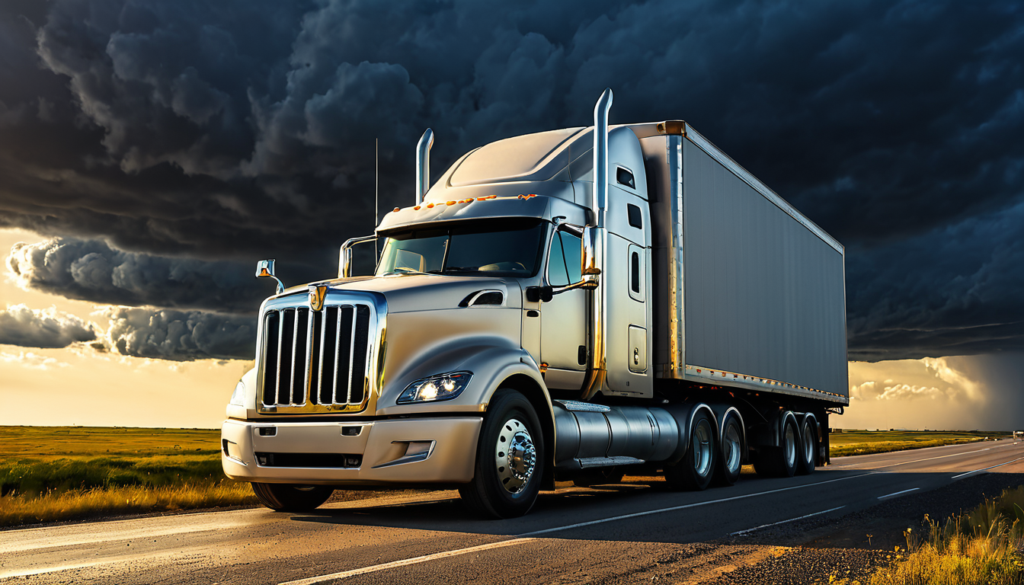
When an 80,000-pound truck jackknifes across US-64 near Liberal or rolls over on the high plains outside of Kismet, there’s no time for hesitation. In Seward County, where the horizon stretches for miles and emergency services can be thirty minutes away, a trucking accident doesn’t just damage vehicles—it destroys lives. If you’re reading this from a hospital bed in Liberal, or if you’re grieving a loss on a rural stretch of Kansas Highway 51, you need to know something critical: the trucking company that changed your life already called their lawyers. They’re already preserving evidence. They’re already building their defense.
We’re Attorney911, and we’ve spent over 25 years fighting for families just like yours across Kansas and the United States. Ralph Manginello, our managing partner, has been taking on trucking companies and Fortune 500 corporations since 1998. He knows the difference between a fender-bender and a catastrophic 18-wheeler crash on a rural Kansas highway. Our associate attorney Lupe Peña used to work for insurance companies—now he uses that insider knowledge to fight against them. That’s your advantage.
Call us now at 1-888-ATTY-911. We answer 24/7, and when it comes to trucking accidents in Seward County, every hour matters.
The Seward County Trucking Corridor: High Risk on the High Plains
Seward County sits at the crossroads of American agriculture and heavy freight. US-64 cuts right through the heart of the county, connecting the Oklahoma Panhandle to the rest of Kansas, carrying everything from cattle trailers to grain transports. US-83 runs north-south, a vital artery for Canada’s commodities flowing down to Texas. Nearby, Interstate 35 and Interstate 70 handle the heaviest commercial traffic in the region, but it’s the rural routes—K-51, US-270, and the county roads connecting Liberal to the surrounding farmland—that present unique dangers.
This isn’t Houston or Dallas. When a truck loses control on a Seward County road, help might not arrive for twenty minutes or more. The nearest Level I trauma center isn’t right around the corner—major medical facilities are in Wichita or Amarillo, hours away by ground transport. That delay in emergency response can turn survivable injuries into wrongful death cases.
The trucking industry knows Seward County well. This is wheat country, feedlot territory, and heavy equipment transport country. The agricultural calendar creates massive traffic spikes—harvest season in June and July, planting in spring, cattle movements in fall. During these windows, fatigued drivers push hard to meet deadlines. We see it every year: drivers violating their Hours of Service regulations, hauling overweight loads of grain or machinery, driving through whiteout conditions on the High Plains because the dispatcher demanded they make the delivery.
Why 18-Wheeler Accidents in Seward County Are Different
You might think an accident is just an accident. It’s not. When a semi-truck crashes into your sedan on the outskirts of Liberal, the physics alone make this a different beast entirely.
The Weight Disparity: A fully loaded 18-wheeler can weigh 80,000 pounds under federal law (49 CFR § 658.17). Your average passenger vehicle weighs 3,500 to 4,000 pounds. That truck isn’t just bigger—it’s twenty times heavier. At 65 miles per hour, an 80,000-pound truck carries nearly 80 times the kinetic energy of a car. When that energy transfers to your vehicle, the results are catastrophic.
The Stopping Distance: On dry pavement, a truck needs approximately 525 feet to stop from highway speed—that’s nearly two football fields. On icy US-83 after a Panhandle blizzard, that distance triples. By the time a distracted or fatigued driver sees brake lights ahead on K-51, it’s already too late.
The Insurance Gap: Unlike the $30,000 minimum coverage many Kansas drivers carry, commercial trucks must maintain massive insurance policies. Federal regulations require at least $750,000 for non-hazardous freight, $1,000,000 for oilfield equipment and large machinery common in western Kansas, and $5,000,000 for hazardous materials. These aren’t just numbers—they represent your path to recovery when the trucking company destroys your life.
Common 18-Wheeler Accident Types in Seward County
Every region has its signature accident types, and Seward County is no different. The flat terrain, severe weather, and agricultural freight create specific patterns of devastation.
Rollover Accidents on Rural Routes
The High Plains aren’t exactly mountainous, but they present their own rollover risks. High profile loads—cattle trailers stacked with hay, combines being transported to fields, high-wind cargoes—make trucks susceptible to sudden gusts. When a driver takes a curve too fast on US-64 or overcorrects after hitting the shoulder on a county road, 80,000 pounds of steel and cargo can flip in an instant.
These rollovers often lead to secondary crashes. When a grain truck rolls on a two-lane highway between Liberal and Plains, it blocks the entire roadway. Oncoming traffic has nowhere to go. We see crushing injuries, traumatic brain injuries, and fuel fires that cause severe burns.
Under 49 CFR § 393.100, cargo must be secured to prevent shifting that affects vehicle stability. When a load of corn shifts because the shipper failed to properly secure it, and that shift causes a rollover, both the driver and the loading company may be liable.
Rear-End Collisions on Long Stretches
Kansas highways are notorious for fatigue-related accidents. The long, straight stretches of US-83 and US-64 lull drivers into complacency. Following too closely kills—49 CFR § 392.11 prohibits driving more closely than is “reasonable and prudent,” yet we see it constantly. A truck driver who’s been on the road for 14 hours (violating the 11-hour driving limit under 49 CFR § 395.8) can’t react in time when traffic slows entering Liberal.
The physics are brutal. When an 80,000-pound truck rear-ends a 3,500-pound sedan, the car often folds like an accordion. We see spinal cord injuries, internal organ damage, and decapitation risks from underride—when the car slides under the trailer.
Cargo Spills and Agricultural Hazards
Seward County feeds the world. That means massive volumes of grain, cattle, and equipment moving by truck. When a cattle hauler loses its load on US-64, or when a grain truck spills across the highway during harvest, the resulting chaos causes multi-vehicle pileups.
Federal regulations under 49 CFR § 393.100-136 mandate specific securement requirements. For agricultural commodities, that means proper tarping, secure gates on livestock trailers, and weight distribution that prevents the trailer from becoming top-heavy. We investigate whether the shipper—whether that’s a local elevator or a major agricultural corporation—complied with these rules.
Jackknife Accidents in Winter Weather
Kansas winters don’t forgive. When a sudden ice storm hits the Panhandle or blowing snow creates whiteout conditions on the plains, truckers face impossible choices. A jackknife occurs when the trailer swings perpendicular to the cab, often sweeping across all lanes of traffic. It happens when drivers brake improperly on ice, when empty trailers (which have less traction) hit slick spots, or when drivers simply drive too fast for conditions.
49 CFR § 392.3 prohibits operating a commercial vehicle while impaired by fatigue or other causes. When a driver battling 40-mile-per-hour crosswinds loses control and jackknifes, we investigate whether they should have pulled off at the Liberal truck stop instead of pushing through.
Tire Blowouts on Hot Routes
Summer on the High Plains brings extreme heat. When the pavement temperature reaches 120 degrees and truck tires are underinflated or overloaded with agricultural equipment, blowouts happen. A “road gator”—the shredded remains of a truck tire—can strike your windshield, causing you to lose control, or the blowout itself can cause the driver to swerve into your lane.
Under 49 CFR § 393.75, tires must have adequate tread depth and be properly maintained. Drivers must conduct pre-trip inspections under 49 CFR § 396.13. When they skip these steps to save time, catastrophic accidents follow.
Catastrophic Injuries and Their Lifetime Costs
We don’t handle fender-benders. When you call Attorney911 after an 18-wheeler accident in Seward County, you’re usually dealing with life-altering trauma. The injuries we see require millions of dollars in lifetime care—and Kansas law allows you to recover those damages if you act quickly.
Traumatic Brain Injuries ($1.5 Million to $9.8 Million+)
The force of a truck impact causes the brain to slam against the skull. Even “mild” TBIs—concussions—can result in personality changes, inability to work, and early-onset dementia. Moderate to severe TBIs leave victims unable to care for themselves. Our firm has recovered over $5 million for traumatic brain injury victims—including one case involving a logging accident that resulted in permanent cognitive impairment.
Symptoms often don’t show immediately. If you were in a truck accident and are experiencing headaches, confusion, memory loss, or mood changes, seek medical attention immediately. Document everything—because the trucking company’s insurance adjuster will claim your symptoms are from something else.
Spinal Cord Injuries ($4.7 Million to $25.8 Million+)
When a truck rolls over or crushes a passenger vehicle, spinal injuries are common. Paraplegia (loss of use of legs) costs $1.1 to $2.5 million in lifetime medical care. Quadriplegia (loss of use of arms and legs) ranges from $3.5 to $5 million—and that’s just medical costs, not lost wages or pain and suffering.
The emotional toll is devastating. As client Chad Harris told us: “You are NOT just some client… You are FAMILY to them.” We don’t just fight for money; we fight for your dignity and your future.
Amputations ($1.9 Million to $8.6 Million+)
Crushing injuries from truck accidents often require amputation. Whether it’s a traumatic amputation at the scene or surgical removal later due to infection or tissue death, the result is permanent disability. We recovered $3.8 million for a client who lost a limb after a car accident led to surgical complications—medical malpractice layered on top of the trucking negligence.
Agricultural workers in Seward County face particular risks. When a combine transport or heavy equipment truck strikes a farm vehicle, the crushing forces can trap victims for hours until extraction. Every minute of delay increases the risk of amputation.
Wrongful Death ($1.9 Million to $9.5 Million+)
When a trucking accident takes a loved one, the devastation ripples through entire communities. Under Kansas law, surviving spouses, children, and parents can bring wrongful death claims. We’ve recovered millions for Kansas families, including cases involving fatal crashes on rural highways.
Time is critical. Kansas has a two-year statute of limitations for wrongful death claims. But evidence—black box data, driver logs, maintenance records—can disappear in days. As client Donald Wilcox said after we won his case: “One company said they would not accept my case. Then I got a call from Manginello… I got a call to come pick up this handsome check.”
We took his case when others said no. We’ll do the same for you.
The FMCSA Regulations Trucking Companies Break in Seward County
Federal Motor Carrier Safety Regulations aren’t just technicalities—they’re safety rules written in blood. When trucking companies violate them, people die. Here are the specific regulations we investigate after every Seward County truck accident:
Hours of Service Violations (49 CFR Part 395)
Truck drivers cannot drive more than 11 hours after 10 consecutive hours off duty. They cannot drive beyond the 14th consecutive hour after coming on duty. They must take a 30-minute break after 8 cumulative hours of driving. And they cannot exceed 60 hours in 7 days or 70 hours in 8 days.
Yet during harvest season, we see drivers pushing well beyond these limits—sometimes driving 16 or 18 hours straight to get a load of grain to the elevator before closing. Electronic Logging Devices (ELDs) are supposed to track this, but drivers sometimes “book hop” or companies pressure them to falsify logs.
Driver Qualification Failures (49 CFR Part 391)
Before a driver can legally operate an 18-wheeler, the trucking company must verify:
- They hold a valid Commercial Driver’s License (CDL)
- They passed a medical exam (49 CFR § 391.43)
- They have a clean driving record
- They passed a road test or equivalent
- They were tested for drugs and alcohol
We subpoena the Driver Qualification File for every truck driver involved in a serious crash. If the company hired a driver with a history of DUIs, or if they failed to verify medical fitness, we pursue negligent hiring claims that can result in punitive damages.
Cargo Securement Violations (49 CFR § 393.100-136)
Agricultural loads have specific securement requirements. Grain must be secured to prevent shifting that affects stability. Livestock must be contained to prevent spills. Heavy equipment must be blocked, braced, and tied down with sufficient working load limits.
When a load of cattle spills onto US-64 because gates weren’t properly secured, or when a combine shifts on a trailer causing a rollover, we hold the loading company and the shipper accountable—not just the driver.
Brake and Maintenance Failures (49 CFR Part 396)
Trucking companies must systematically inspect, repair, and maintain their vehicles. Drivers must conduct pre-trip and post-trip inspections. Brake systems must meet specific requirements under 49 CFR § 393.40-55.
Brake problems cause 29% of large truck crashes. When a truck fails to stop on the plains because brake pads were worn thin and the company deferred maintenance to save a few hundred dollars, that’s not an accident—it’s a choice that kills.
Multiple Liable Parties: Don’t Settle for One Defendant
Most law firms sue the driver and call it a day. That’s a mistake that costs you millions. In 18-wheeler accidents, multiple parties share the blame, and each carries separate insurance policies. We investigate every potential defendant:
The Truck Driver: For speeding, distracted driving, fatigue, or impairment.
The Motor Carrier: Under Kansas respondeat superior doctrines and for negligent hiring, training, or supervision. The company is vicariously liable for their employee’s negligence.
The Cargo Owner/Shipper: If they overloaded the truck, demanded unreasonable delivery schedules, or failed to disclose hazardous cargo.
The Loading Company: For improper securement—a common issue with agricultural loads in Seward County.
The Truck or Parts Manufacturer: If defective brakes, steering systems, or tires caused the crash.
The Maintenance Company: For negligent repairs or inspections—common with third-party mechanics servicing fleet trucks.
The Freight Broker: If they negligently selected a carrier with a poor safety record to save money.
The Truck Owner: In owner-operator situations, separate from the motor carrier.
Government Entities: If poor road design or maintenance contributed (though Kansas sovereign immunity laws make these cases complex).
Every additional defendant means additional insurance coverage. While one policy might have $750,000, three policies might provide $2.25 million. We pursue them all.
The 48-Hour Evidence Preservation Protocol
Here’s what the trucking companies don’t want you to know: they have rapid-response teams that arrive at accident scenes within hours. Their lawyers are there before the ambulance leaves. They’re downloading black box data, coaching the driver, and preparing their defense while you’re still in shock.
Critical evidence disappears fast:
- ECM/Black Box Data: Records speed, braking, throttle position. Can be overwritten in 30 days or with new driving events.
- ELD Data: Proves Hours of Service violations. FMCSA only requires 6-month retention.
- Dashcam Footage: Often deleted within 7-14 days if not preserved.
- Driver Qualification Files: Can be altered or “lost.”
- Maintenance Records: Out-of-service orders and repair documentation.
When you hire Attorney911, we send spoliation letters within 24 hours. These legal notices put the trucking company on notice that destroying evidence will result in sanctions, adverse jury instructions, or default judgment. We demand preservation of:
- All electronic data (ECM, ELD, GPS, telematics)
- Driver records (qualification file, drug tests, medical certs)
- Vehicle maintenance and inspection records
- Dispatch communications
- Cell phone records
As client Glenda Walker said: “They fought for me to get every dime I deserved.” We can’t fight if the evidence is gone. Call now: 1-888-ATTY-911.
Kansas Law: Your Rights and Your Deadlines
Seward County residents operate under Kansas law, which has specific rules for truck accident cases:
Statute of Limitations: You have two years from the date of the accident to file a lawsuit. Wait longer, and you lose your right to compensation forever. This applies to personal injury and wrongful death claims. For property damage, you have two years from the date of loss.
Comparative Negligence: Kansas follows a “modified comparative fault” rule with a 50% bar. If you are found 49% at fault or less, your recovery is reduced by your percentage of fault. If you are 50% or more at fault, you recover nothing. The trucking company will try to blame you—hire an attorney who knows how to prove the truck driver was 100% responsible.
Punitive Damages: Kansas caps punitive damages at the lesser of the defendant’s annual gross income or $5 million. These damages punish egregious conduct—like knowingly hiring a dangerous driver or falsifying logs. We pursue them when the evidence supports it.
Government Claims: If a government vehicle or road defect contributed, you must act fast. Kansas requires notice within 180 days for claims against municipalities.
Why Seward County Families Choose Attorney911
We’re not a “settlement mill” firm that advertises on every billboard. We’re trial lawyers with 25 years of experience taking on the largest corporations in America—and winning.
Ralph Manginello’s Experience: Since 1998, Ralph has fought for injury victims. He’s admitted to the U.S. District Court for the Southern District of Texas, giving him authority to handle interstate trucking cases. He’s litigated against BP in the Texas City Refinery explosion (15 deaths, $2.1 billion in settlements). He knows how to handle Fortune 500 trucking companies like Walmart, Amazon, FedEx, and UPS—and he knows the agricultural carriers serving Seward County.
Lupe Peña’s Insurance Defense Background: Our associate attorney spent years working for national insurance defense firms. He knows exactly how trucking insurers evaluate claims, train adjusters to minimize payouts, and deploy delay tactics. Now he uses that insider knowledge to fight for you. He knows their playbook because he used to run it.
Multi-Million Dollar Results: We don’t just talk about results—we deliver them:
- $5+ million for traumatic brain injury (falling log case)
- $3.8+ million for partial leg amputation following medical complications
- $2.5+ million for truck crash victims
- $2+ million for maritime back injuries
- Over $50 million recovered total
Client Treatment: As client Ernest Cano said: “Mr. Manginello and his firm are first class. Will fight tooth and nail for you.” Client Angel Walle told us: “They solved in a couple of months what others did nothing about in two years.”
Spanish Language Services: Seward County has a significant Hispanic population working in agriculture and trucking. Lupe Peña is fluent in Spanish. No interpreters needed. Hablamos Español. Llame al 1-888-ATTY-911.
Three Office Locations: While we handle Kansas cases from our Texas base, we have offices in Houston (1177 West Loop S, Suite 1600), Austin (316 West 12th Street, Suite 311), and Beaumont. We travel to Seward County when needed, and we offer virtual consultations.
Contingency Fee: You pay nothing unless we win. Standard fees are 33.33% pre-trial, 40% if we go to trial. We advance all investigation costs.
Frequently Asked Questions: Seward County 18-Wheeler Accidents
What should I do immediately after a truck accident in Seward County?
Call 911 immediately—emergency response times can be long in rural areas. If you’re able, photograph everything: the vehicles, the road conditions, skid marks, and your injuries. Get the truck driver’s CDL number, the company name and DOT number, and witness contact information. Do not give a recorded statement to any insurance company. Seward County Sheriff’s Office will investigate, but you need your own advocate.
How long do I have to file a lawsuit in Kansas?
Two years from the accident date. However, evidence critical to trucking cases—black box data, ELD logs, maintenance records—can be destroyed within days or weeks. Contact an attorney immediately.
What if the trucking company says I was partially at fault?
Under Kansas law, you can recover as long as you were less than 50% at fault. Your recovery is reduced by your percentage of fault. We investigate thoroughly to prove the truck driver was fully responsible—using ECM data to prove speeding or fatigue, maintenance records to prove brake failures, and expert reconstruction when needed.
Who pays my medical bills while I wait for settlement?
We can help you find medical providers who will treat you on a Letter of Protection (LOP)—meaning they get paid when your case settles. Your Personal Injury Protection (PIP) on your auto policy may also cover initial treatment. Don’t let lack of insurance stop you from getting care.
Can I sue if my loved one died in a truck accident?
Yes. Kansas allows wrongful death claims by spouses, children (including adult children), and parents of deceased children. You have two years from the date of death—not the accident—to file. We pursue full compensation for lost income, loss of companionship, funeral expenses, and mental anguish.
What if the truck driver was an independent contractor?
The motor carrier may still be liable under respondeat superior, or for negligent hiring if they failed to vet the contractor properly. Additionally, owner-operators often carry separate high-limit insurance policies. We pursue all available coverage.
How much is my case worth?
It depends on your injuries, the clarity of liability, and available insurance. Trucking cases typically carry $750,000 to $5 million in coverage. Catastrophic injury cases—TBI, paralysis, amputation—often settle for seven or eight figures. We don’t give false promises, but we do fight for maximum recovery.
Do you handle cases where illegal immigrants are involved?
Yes. Immigration status has no bearing on your right to compensation after a trucking accident. We represent all victims, and Lupe Peña provides fluent Spanish representation.
What if the truck driver was texting?
Under 49 CFR § 392.82, commercial drivers are prohibited from using hand-held mobile devices while driving. If we prove the driver was texting, that’s automatic negligence—and we subpoena cell phone records to prove it.
Will my case go to trial?
Most cases settle out of court, but we prepare every case as if it’s going to trial. Insurance companies know which lawyers are willing to go to court—and they pay more to those lawyers’ clients. With 25 years of trial experience, we have the leverage to secure fair settlements.
What are the most dangerous roads in Seward County for trucks?
US-64 and US-83 see heavy commercial traffic. The intersection of US-64 and K-51 can be particularly dangerous due to high-speed merging. Rural county roads are narrow and unlit, creating hazards during harvest season when trucks operate after dark.
How do I know if the trucking company violated safety regulations?
We obtain their FMCSA safety scores (CSA scores), inspection history, and maintenance records. Companies with high rates of violations for fatigue, maintenance, or driver fitness have a pattern of negligence that strengthens your case.
Can I recover for PTSD after a truck accident?
Yes. PTSD is compensable under Kansas law as part of your pain and suffering damages. Document your symptoms with a mental health professional, as insurance companies often challenge psychological injuries.
What if the truck was carrying hazardous materials?
Hazmat trucks must carry $5 million in insurance. If you’ve been exposed to chemicals or other hazardous materials, seek immediate medical evaluation—even if you feel fine. Some toxins have delayed effects, and exposure creates additional liability under 49 CFR Part 397.
Why do I need a lawyer? Can’t I just deal with the insurance company myself?
The trucking company’s insurance adjuster is trained to minimize your payout. They’ll use anything you say against you. Studies show that represented plaintiffs recover significantly more than unrepresented plaintiffs, even after attorney fees. And as client Kiimarii Yup told us: “I lost everything… 1 year later I have gained so much in return plus a brand new truck.” We protect your rights while you focus on healing.
Your Fight Starts Now
The trucking company has lawyers. They have adjusters. They have teams of people working right now to pay you as little as possible.
You need a team too.
At Attorney911, we treat you like family—not like a case number. We fight for every dime you deserve. And we don’t charge you a penny unless we win.
If you or a loved one was injured in an 18-wheeler accident in Seward County—whether it happened on US-64 outside Liberal, on US-83 near Kismet, or on a rural county road during harvest—call us now.
1-888-ATTY-911
888-ATTY-911
(888) 288-9911
Hablamos Español. Lupe Peña está aquí para ayudarle.
Don’t let the trucking company get away with destroying your life. We’re ready to fight. Call now.