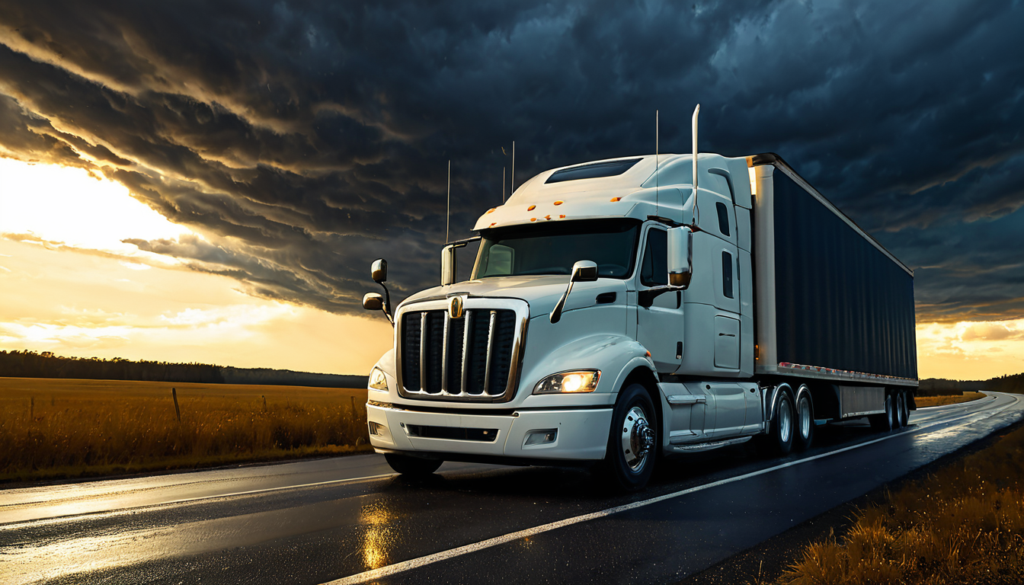
18-Wheeler Accident Attorneys in Yadkin County, North Carolina
When 80,000 Pounds Changes Everything in an Instant
The impact was catastrophic. One moment you’re driving through Yadkin County on US-601 heading toward the Piedmont Triad, and the next an 80,000-pound tractor-trailer is bearing down on your vehicle. In the rolling hills of northwestern North Carolina—where rural farmland meets major interstate corridors—trucking accidents don’t just cause injuries. They shatter lives.
If you’ve been hurt in an 18-wheeler accident in Yadkin County, you’re facing a battle you never asked for. The truck driver has already called their company. Their insurance adjuster is already reviewing ways to pay you less than you deserve. And somewhere in a dispatch office, someone is already checking whether the black box data can be erased.
You have questions. You have pain. And you have a clock ticking against you.
At Attorney911, we’ve spent over 25 years fighting for families devastated by commercial trucking accidents. Ralph Manginello, our managing partner, has been admitted to federal court and has recovered multi-million dollar settlements against some of the largest trucking companies in America. Our associate attorney Lupe Peña spent years defending insurance companies before joining our team—now he uses that insider knowledge to fight for you. When Yadkin County families need someone who understands federal trucking regulations, aggressive litigation, and the local courts serving Yadkin County victims, they call us.
Because here’s the truth: trucking companies count on you feeling overwhelmed. They hope you’ll take their first lowball offer, or worse, give up entirely. That’s not going to happen. Not on our watch.
Call us today at 1-888-ATTY-911 for a free consultation. We work on contingency—you pay nothing unless we win. And we answer the phone 24/7 because truck accidents don’t wait for business hours.
Why Yadkin County Trucking Accidents Are Different
The Geography of Danger
Yadkin County sits at a critical crossroads in northwestern North Carolina. While the county itself maintains its rural agricultural character—tobacco fields and vineyard country stretching across the Piedmont—it’s surrounded by some of the busiest trucking corridors in the Southeast.
Interstate 77 runs just west of the county line, serving as a primary freight route connecting Charlotte to the Virginia border and beyond. Interstate 40 flows east-west through nearby Winston-Salem, carrying container traffic from the Port of Wilmington to inland distribution hubs. US-52, US-601, and NC-67 cut through the heart of Yadkin County, funneling agricultural products from local farms to interstate corridors while bringing heavy commercial traffic through smaller communities like Yadkinville, Jonesville, and Boonville.
This mix creates unique dangers. You’ve got long-haul truckers racing to meet delivery deadlines on I-77 mixing with local agricultural trucks hauling heavy loads on narrow rural roads. Mountain terrain from the nearby Blue Ridge influences weather patterns—sudden fog on early mornings, ice on bridges during winter months, and sharp elevation changes that challenge braking systems.
When a truck driver loses control on a winding stretch of NC-67, or jackknifes on I-77 during a sudden summer thunderstorm, Yadkin County residents pay the price. These aren’t simple fender-benders. The physics are brutal: 80,000 pounds of steel and cargo against your 4,000-pound sedan is never a fair fight.
What Makes These Cases Complex
Unlike a typical car accident between two personal vehicles, 18-wheeler crashes involve federal regulations, multiple liable parties, and corporate rapid-response teams designed to minimize your claim before you’ve even left the hospital.
Within hours of a serious trucking accident in Yadkin County, the trucking company dispatchers are mobilizing. They send investigators to the scene. They begin documenting everything in a way that protects their interests—not yours. Critical evidence like electronic logging device (ELD) data, maintenance records, and the driver’s qualification file can disappear or be “lost” if not immediately preserved.
That’s why evidence preservation matters so much in Yadkin County trucking cases. Black box data can be overwritten in as little as 30 days. Dashcam footage might get deleted within a week. The driver logs that prove whether the trucker was exceeding federal hours of service limits—those are controlled by the same company that hit you.
We’ve seen what happens when Yadkin County families wait too long to call an attorney. By the time they reach out, the trucking company has already built their defense, and evidence that would have proved negligence has vanished.
Don’t let that happen to you. If you’ve been hurt in an 18-wheeler accident anywhere in Yadkin County—whether on the interstate near the I-77 corridor or on rural roads like Old US-421—we need to start protecting your evidence today.
Call 1-888-ATTY-911 now to speak with our team who understands Yadkin County trucking accidents.
North Carolina Law: What Yadkin County Victims Must Know
The Contributory Negligence Trap
Here’s a harsh reality about North Carolina law that every Yadkin County trucking accident victim must understand: we are a contributory negligence state. That means if you’re found even 1% at fault for the accident, you recover nothing. Zero. The trucking company walks away, and you’re left holding the medical bills.
This makes trucking cases in Yadkin County particularly high-stakes. The truck driver’s insurance company will look for any way to blame you. Did you change lanes without signaling? Were you slightly over the speed limit? Insurance adjusters are trained to find that sliver of fault that lets them deny your entire claim.
This is why you cannot afford to handle a Yadkin County trucking accident alone. You need an attorney who understands how to prove the truck driver was 100% at fault. Someone who knows how to use ECM data to prove the truck was speeding, or ELD records to prove the driver was fatigued beyond legal limits.
Attorney911 has been handling catastrophic injury cases in North Carolina for over two decades. We know how the contributory negligence rule works, and we know how to build cases that leave no room for the trucking company to point fingers at you.
Time Limits: The Statute of Limitations
In Yadkin County and all of North Carolina, the clock is ticking from the moment the accident happens:
- Personal Injury Claims: You have 3 years from the date of the accident to file a lawsuit
- Wrongful Death Claims: You have 2 years from the date of death to file
But waiting is dangerous. Evidence disappears. Witnesses move away or forget what they saw. And trucking companies use delay to their advantage.
We recommend contacting a Yadkin County trucking accident attorney within 24-48 hours of the crash. This allows us to send immediate spoliation letters demanding preservation of critical evidence before it can be destroyed.
Damage Caps and What You Can Recover
North Carolina law allows victims of trucking accidents to recover:
- Economic Damages: Medical bills (past and future), property damage, lost wages, lost earning capacity
- Non-Economic Damages: Pain and suffering, mental anguish, loss of enjoyment of life, permanent injury
- Punitive Damages: In cases of gross negligence, willful or wanton conduct, or if the trucking company’s conduct rises to malice, you may be entitled to punitive damages. North Carolina caps punitive damages at the greater of three times the compensatory damages or $250,000
Trucking companies carry significant insurance—federal law requires minimum coverage of $750,000 for non-hazmat cargo, $1 million for certain commodities, and $5 million for hazardous materials. Many carriers carry $1-5 million or more. When you’re facing catastrophic injuries, these higher policy limits mean there’s potentially enough coverage to actually compensate you for your losses—but only if you know how to access them.
FMCSA Regulations: The Rules Truckers Break
Federal Law and Your Yadkin County Case
Every 18-wheeler operating in Yadkin County, North Carolina must comply with Federal Motor Carrier Safety Administration (FMCSA) regulations found in Title 49 of the Code of Federal Regulations (49 CFR). These aren’t suggestions—they’re federal law. And when trucking companies violate them, it proves negligence in court.
Here are the critical regulations that apply to every truck accident case in Yadkin County:
49 CFR Part 390 – General Applicability
Establishes who must comply with federal regulations. Applies to all commercial motor vehicles (CMVs) operating in interstate commerce, including those traveling through Yadkin County on I-77 or I-40.
49 CFR Part 391 – Driver Qualification Standards
Trucking companies must maintain a Driver Qualification (DQ) File for every driver containing:
- Employment application and background check
- Motor vehicle record from licensing authority
- Medical examiner’s certificate (valid maximum 2 years)
- Road test certificate or equivalent
- Annual driving record review
- Previous employer inquiries for 3-year history
- Drug and alcohol test records
If the trucking company failed to properly vet their driver—missed a history of DUIs, ignored a medical condition, or hired someone without a valid CDL—that’s negligent hiring under federal law.
49 CFR Part 392 – Driving of Commercial Motor Vehicles
Critical safety rules include:
- § 392.3: No driver shall operate while impaired by fatigue, illness, or any cause making operation unsafe. This covers both the driver AND the trucking company.
- § 392.4: Prohibits drivers from being on duty while under the influence of Schedule I substances or amphetamines
- § 392.5: Prohibits alcohol use within 4 hours before duty, while on duty, or possession while operating
- § 392.6: No motor carrier shall schedule a run requiring speeds exceeding legal limits
- § 392.11: Drivers must not follow more closely than is “reasonable and prudent”
- § 392.80: Prohibits texting while driving
- § 392.82: Prohibits using hand-held mobile phones while driving
49 CFR Part 393 – Parts and Accessories for Safe Operation
Equipment and cargo standards:
- § 393.40-55: Brake system requirements. All CMVs must have properly functioning service brakes, parking brakes, and meet specific air brake standards.
- § 393.100-136: Cargo securement rules. Cargo must be contained to prevent leaking, spilling, or shifting. Aggregate working load limits must be at least 50% of cargo weight for loose cargo.
49 CFR Part 395 – Hours of Service (HOS) Regulations
These are the fatigue rules truckers break most often:
- 11-Hour Driving Limit: Cannot drive more than 11 hours after 10 consecutive hours off duty
- 14-Hour Duty Window: Cannot drive beyond the 14th consecutive hour after coming on duty
- 30-Minute Break: Required after 8 cumulative hours of driving
- 60/70 Hour Weekly Limit: Cannot drive after 60 hours in 7 days or 70 hours in 8 days
- 34-Hour Restart: Can restart the clock with 34 consecutive hours off duty
Since December 2017, most drivers must use Electronic Logging Devices (ELD) that automatically record driving time and synchronize with the vehicle engine. This data is objective proof of HOS violations.
49 CFR Part 396 – Inspection, Repair, and Maintenance
- § 396.3: Motor carriers must systematically inspect, repair, and maintain all vehicles
- § 396.11: Drivers must prepare written post-trip reports on vehicle condition, specifically noting defects in brakes, steering, tires, lights, and other safety systems
- § 396.13: Pre-trip inspection required before driving—drivers must be satisfied the vehicle is in safe operating condition
When a trucking company in Yadkin County pushes their drivers to skip inspections, falsify logs, or drive fatigued, they’re violating federal law. And those violations become the foundation of your personal injury case.
The 18-Wheeler Accidents That Devastate Yadkin County Families
Jackknife Accidents on I-77
A jackknife occurs when the trailer swings out perpendicular to the cab, often blocking multiple lanes. On Interstate 77 near Yadkin County—where heavy truck traffic flows through rolling terrain—jackknifes can trigger catastrophic multi-vehicle pileups.
These accidents usually happen because of sudden braking on wet pavement, improper braking technique, or an empty/light trailer that lacks sufficient weight to maintain traction. When a trucker hits the brakes hard on a rainy day heading north on I-77 toward the Virginia line, that trailer can swing across all lanes before the driver knows what’s happening.
The FMCSA violations often include § 393.48 (brake system malfunction), § 393.100 (improper cargo securement affecting weight distribution), and § 392.6 (speeding for conditions). We investigate ECM data to prove exactly when and how the driver lost control.
Rollover Crashes on Rural Roads
Yadkin County’s rural highways—winding routes like those near East Bend or the tight curves on some agricultural access roads—create perfect conditions for rollover accidents. These occur when a truck’s center of gravity shifts, often because of:
- Speeding on curves or ramps
- Improperly loaded or unbalanced cargo (liquid cargo “slosh” is particularly dangerous)
- Taking turns too sharply
- Overcorrection after a tire blowout or lane departure
When an 80,000-pound truck rolls over on a narrow Yadkin County road, it doesn’t just hurt the driver. It blocks traffic, spills cargo, and creates secondary accidents as other drivers try to avoid the wreckage. These accidents frequently violate 49 CFR § 393.100-136 (cargo securement) and § 392.6 (excessive speed).
Underride Collisions: The Most Traumatic
Underride accidents are uniquely horrific. They happen when a smaller vehicle slides under the truck’s trailer—either from the rear or the side. The trailer height often shears off the passenger compartment at windshield level.
Rear underride usually happens when a truck stops suddenly on the interstate (I-77 near Yadkinville has seen these tragedies) and the following vehicle cannot stop in time. Side underride often occurs during lane changes or wide turns when the trucker’s blind spot obscures a nearby vehicle.
Federal law requires rear impact guards under 49 CFR § 393.86 for trailers manufactured after January 26, 1998. Guards must prevent underride at 30 mph impact. However, there’s NO federal requirement for side underride guards—meaning many trucks on Yadkin County roads have no protection against side underride at all.
These accidents are almost always fatal or cause catastrophic head and neck trauma.
Rear-End Collisions: Physics Brutality
An 18-wheeler traveling at 65 mph needs approximately 525 feet to stop—nearly two football fields. A passenger car needs about 300 feet. This 225-foot difference means that when traffic slows suddenly on I-77 near the Yadkin River, truckers often cannot stop in time.
Rear-end truck crashes often involve:
- Following too closely (violating § 392.11)
- Driver distraction from cell phones or dispatch communications (violating § 392.82)
- Fatigued driving with delayed reaction times (violating § 392.3)
- Brake failure from poor maintenance (violating § 396.3)
The impact forces in these collisions cause severe whiplash, traumatic brain injuries, spinal cord damage, and often push the smaller vehicle into other traffic, creating multi-car pileups.
Wide Turn Accidents (“Squeeze Play”)
Yadkin County’s mix of rural roads and growing commercial areas creates dangerous scenarios when trucks make wide right turns. The truck swings left first to accommodate the trailer’s tracking, creating a gap that smaller vehicles enter. Then the truck completes its turn, crushing or striking the vehicle in the gap.
These accidents often happen at intersections in developing areas of Yadkin County where commercial construction is booming. Violations include unsafe lane changes and failure to properly signal turns.
Blind Spot (“No-Zone”) Accidents
Commercial trucks have massive blind spots—called “No-Zones”—on all four sides:
- Front No-Zone: 20 feet directly ahead
- Rear No-Zone: 30 feet behind
- Left Side: Extends from the cab door back
- Right Side: Much larger blind spot extending from cab to end of trailer
On the narrow lanes of some Yadkin County highways, or when trucks are maneuvering through the county’s growing commercial districts, drivers who linger in these zones become invisible to the trucker. When the truck changes lanes without checking mirrors or properly adjusting blind spot mirrors, the result is a sideswipe or crushing collision.
Federal regulations under 49 CFR § 393.80 require mirrors providing clear view to the rear on both sides. Failure to maintain proper mirrors is a violation that proves negligence.
Tire Blowouts and Brake Failures
The mountain descents and elevation changes near Yadkin County create perfect conditions for brake fade and tire blowouts. When truckers ride their brakes down long grades, the brakes overheat and fail. When tires are underinflated or worn beyond legal limits (minimum 4/32″ on steer tires, 2/32″ on others per § 393.75), they explode under stress.
A tire blowout at highway speeds causes immediate loss of control. The “road gator” (shredded tire debris) left behind causes secondary accidents for vehicles following behind. These accidents violate § 396.3 (maintenance requirements) and § 393.75 (tire standards).
Cargo Spill and Shift Accidents
Yadkin County’s agricultural economy means sharing the road with trucks hauling grain, produce, and equipment. When cargo isn’t secured properly under 49 CFR § 393.100-136, it shifts during transit—destabilizing the truck—or falls onto the roadway, creating hazards for everyone behind.
Improperly secured loads cause rollovers when the center of gravity changes. Spilled cargo on NC-67 or I-77 causes chain-reaction accidents as drivers swerve to avoid debris.
All the Liable Parties in Your Yadkin County Trucking Case
One of the most critical differences between car accidents and trucking accidents is the number of potentially liable parties. While a car crash usually involves just two drivers, 18-wheeler accidents often involve a web of companies and entities who all share responsibility for putting that dangerous truck on Yadkin County roads.
1. The Truck Driver
The person behind the wheel may be personally liable for speeding, distracted driving, fatigued operation, impairment, or traffic violations. We examine their driving record, training history, and conduct during the crash.
2. The Trucking Company / Motor Carrier
Under the doctrine of respondeat superior, employers are responsible for employees’ negligent acts within the scope of employment. But trucking companies can also be directly liable for:
- Negligent Hiring: Failing to check the driver’s background or hiring someone with a poor safety record
- Negligent Training: Inadequate safety training on cargo securement, hours of service, or mountain driving
- Negligent Supervision: Failing to monitor ELD compliance or driver behavior
- Negligent Maintenance: Deferring repairs to save money
3. Cargo Owner / Shipper
The company that shipped the cargo may be liable if they demanded overweight loading, failed to disclose hazardous materials, or provided improper loading instructions that contributed to the accident.
4. Cargo Loading Company
Third-party loaders who physically loaded the truck may be responsible if they failed to secure cargo properly, creating weight distribution problems or shifting loads that caused the driver to lose control.
5. Truck and Trailer Manufacturer
If the accident was caused by a design defect—faulty brakes, defective steering, or stability control failures—the manufacturer may be liable under product liability theory.
6. Parts Manufacturer
Companies that manufactured specific defective components (brakes, tires, steering mechanisms) may share liability when their product fails and causes the crash.
7. Maintenance Company
Third-party mechanics who performed negligent repairs, failed to identify critical safety issues, or used substandard parts may be liable when their faulty work causes an accident.
8. Freight Broker
Brokers who arrange transportation but don’t operate trucks may be liable for negligent carrier selection—choosing a trucking company with a poor safety record or inadequate insurance.
9. Truck Owner (if different from carrier)
In owner-operator situations, the person or entity that owns the truck may have separate liability for negligent entrustment or failure to maintain the vehicle.
10. Government Entities
If dangerous road design, inadequate signage, or poor maintenance (potholes, debris, worn markings) contributed to the accident, federal, state, or local government may bear partial responsibility. Note: claims against government entities in North Carolina have strict notice requirements and shorter deadlines.
At Attorney911, we investigate every possible defendant. Why? Because more liable parties mean more insurance policies, and more insurance policies mean the potential for fuller compensation for your Yadkin County trucking accident injuries. We don’t just sue the driver—we look at the trucking company that pushed them to skip breaks, the broker that hired the unsafe carrier, the maintenance company that ignored brake wear, and anyone else who contributed to your pain.
The 48-Hour Evidence Preservation Protocol
Why Time Is Your Enemy
Evidence in Yadkin County trucking accidents has a short lifespan. Critical data that proves negligence can disappear within days or weeks if not immediately preserved:
| Evidence Type | Destruction Risk |
|---|---|
| ECM/Black Box Data | Overwrites in 30 days or with new driving events |
| ELD Data | May be retained only 6 months |
| Dashcam Footage | Often deleted within 7-14 days |
| Surveillance Video | Business cameras overwrite in 7-30 days |
| Witness Memory | Fades significantly within weeks |
| Physical Evidence | Vehicle repaired, sold, or scrapped |
The trucking company isn’t waiting. They have rapid-response teams and lawyers working to protect their interests within hours of the crash. While you’re in the hospital in Winston-Salem or at the scene talking to Yadkin County Sheriff’s deputies, they’re already building their defense.
The Spoliation Letter: Your Legal Shield
When you hire Attorney911 for your Yadkin County trucking accident, we send spoliation letters within 24 hours. This formal legal notice puts the trucking company, their insurer, and all potentially liable parties on notice that they must preserve all evidence related to the accident.
Under North Carolina law, once a party is on notice of potential litigation, destroying evidence becomes “spoliation”—which can result in serious sanctions including:
- Adverse inference instructions (jury told to assume destroyed evidence was unfavorable)
- Monetary sanctions
- Default judgment in extreme cases
- Punitive damages awards
Our spoliation letters demand preservation of:
Electronic Data:
- Engine Control Module (ECM) and Event Data Recorder (EDR) data
- Electronic Logging Device (ELD) records showing hours of service
- GPS and telematics data tracking speed and location
- Dashcam and forward-facing camera footage
- Dispatch communications and messaging
- Cell phone records proving distraction
Driver Records:
- Complete Driver Qualification File
- Employment application and background checks
- Medical certification and exam records
- Drug and alcohol test results
- Training records and certifications
- Previous accident and violation history
Vehicle Records:
- Maintenance and repair logs
- Inspection reports (pre-trip, post-trip, annual)
- Brake inspection and adjustment records
- Tire replacement history
- Out-of-service orders and repairs
Company Records:
- Hours of service records for 6 months prior
- Dispatch logs showing schedule pressure
- Bills of lading and cargo documentation
- Safety policies and training curricula
- Hiring and supervision protocols
We also deploy accident reconstruction experts to Yadkin County crash scenes when necessary, documenting physical evidence before weather, traffic, or repair crews alter the scene.
Catastrophic Injuries and Your Future
The Physics of Devastation
When an 80,000-pound truck hits a 4,000-pound passenger vehicle at highway speed, the energy transfer is devastating. The human body cannot absorb those forces without serious trauma. In Yadkin County, where emergency response times may be longer in rural areas and the nearest Level 1 trauma center might be in Winston-Salem or Greensboro, these injuries compound quickly.
Traumatic Brain Injuries (TBI)
From concussions to severe brain damage, TBIs affect cognition, memory, personality, and independence. Symptoms may not appear immediately but can include headaches, confusion, mood changes, and permanent disability. Settlements for moderate to severe TBI typically range from $1.5 million to $9.8 million+ depending on long-term care needs and cognitive impairment.
Spinal Cord Injuries
Paralysis—whether paraplegia (lower body) or quadriplegia (all four limbs)—requires lifetime care, home modifications, and loss of employment. The lifetime cost of care can exceed $5 million, with settlements ranging from $4.7 million to $25.8 million+ for high quadriplegia cases.
Amputations
When crash forces are so severe that limbs cannot be saved—or when infections following the accident necessitate removal—victims face prosthetics, rehabilitation, and permanent disability. Settlements typically range from $1.9 million to $8.6 million depending on age and earning capacity.
Severe Burns
Fuel fires from ruptured tanks or hazmat exposure cause disfigurement, chronic pain, and multiple surgeries. Settlement values vary widely based on percentage of body burned and location (facial burns command higher values).
Wrongful Death
When trucking accidents kill Yadkin County residents—whether on I-77, US-601, or local roads—surviving families may recover lost income, funeral expenses, loss of companionship, and mental anguish. Punitive damages may be available if gross negligence is proven. Settlements typically range from $1.9 million to $9.5 million+.
Why Maximum Recovery Matters
As client Glenda Walker told us after her case settled, “They fought for me to get every dime I deserved.” That’s not about greed—it’s about justice. It’s about ensuring that when a trucking company’s negligence costs you your health, your ability to work, or your loved one’s life, they pay for the lifetime of consequences they’ve created.
Medical bills for catastrophic injuries can reach millions. Lost earning capacity over a 30-year career can exceed $2 million. Pain and suffering—the loss of enjoyment of life, the phantom pain, the emotional trauma—is real and deserves compensation.
The trucking companies carry insurance specifically for this purpose—$750,000 to $5 million policies. But they’ll only pay if you have an attorney who knows how to prove the full extent of your damages and hold every liable party accountable.
Frequently Asked Questions: Yadkin County 18-Wheeler Accidents
What should I do immediately after a truck accident in Yadkin County?
Call 911, seek medical attention immediately even if you feel okay, document the scene with photos if you’re able, get the truck’s DOT number and company information, collect witness contacts, and call Attorney911 before speaking with any insurance company.
How long do I have to file a lawsuit for a trucking accident in Yadkin County, North Carolina?
North Carolina gives you 3 years from the accident date for personal injury claims, and 2 years for wrongful death. But waiting risks losing evidence. Contact us immediately.
Can I recover compensation if I was partially at fault?
North Carolina’s contributory negligence rule is harsh—if you’re found even 1% at fault, you cannot recover. This makes proving the truck driver was 100% responsible critical. Don’t admit fault at the scene. Let us investigate.
What is a truck’s “black box” and why does it matter?
The Event Data Recorder (EDR) and Electronic Control Module (ECM) record speed, braking, throttle position, and other operational data in the moments before the crash. This objective evidence often proves the truck driver was speeding or didn’t brake properly, contradicting their story.
Who pays for my medical bills after a Yadkin County trucking accident?
Initially, your own health insurance or MedPay auto coverage may cover treatment. Ultimately, the trucking company’s liability insurance should pay. We work with medical providers throughout the Yadkin County and Piedmont Triad areas who understand catastrophic injury treatment and may accept liens against your settlement.
What if the trucking company offers me a quick settlement?
Early offers are almost always “lowball” offers designed to pay you far less than your case is worth before you understand the full extent of your injuries. Never accept a settlement without consulting an attorney. Once you accept, you waive your right to additional compensation.
How much is my Yadkin County trucking accident case worth?
Values depend on injury severity, long-term prognosis, lost wages, and available insurance. Trucking companies carry $750,000 to $5 million+ in coverage. We’ve recovered multi-million dollar settlements for catastrophic injury victims and will evaluate your specific case factors during a free consultation.
Do I really need a lawyer for a trucking accident?
Yes, absolutely. Trucking cases involve federal regulations, multiple liable parties, complex insurance issues, and aggressive corporate defense teams. Studies show that represented parties recover significantly more than unrepresented parties, even after attorney fees. Plus, we work on contingency—you pay nothing upfront.
What if the truck driver was an independent contractor?
Both the driver and the company that hired them may be liable. We investigate employment relationships, lease agreements, and insurance coverage to ensure all responsible parties are held accountable.
Can undocumented immigrants file trucking accident claims in Yadkin County?
Yes. Immigration status does not affect your right to compensation after a trucking accident caused by someone else’s negligence. We represent all Yadkin County residents regardless of status.
How do I choose the right attorney for my Yadkin County trucking case?
Look for experience with federal trucking regulations (FMCSA), a track record of multi-million dollar results, and someone who understands North Carolina’s contributory negligence rules. Our firm includes a former insurance defense attorney who knows exactly how trucking companies evaluate claims—giving you an insider advantage.
About Attorney911 and The Manginello Law Firm
For over 25 years, Ralph Manginello has fought for injury victims across North Carolina and beyond. With admission to federal court and experience litigating against Fortune 500 companies in cases like the BP Texas City Refinery explosion (which claimed 15 lives and resulted in over $2.1 billion in settlements), he brings the resources and tenacity needed to take on major trucking companies.
Our firm has recovered over $50 million for families devastated by catastrophic accidents, including:
- $5+ million for a traumatic brain injury victim in a workplace accident
- $3.8+ million for an amputation victim following a car accident
- $2.5+ million in truck accident recoveries
- Multi-million dollar settlements for wrongful death cases
Currently, we’re litigating a $10 million lawsuit against the University of Houston for hazing-related injuries, demonstrating our ability to handle complex, high-stakes litigation against well-funded defendants.
Associate Attorney Lupe Peña spent years defending insurance companies before joining our team. He knows exactly how trucking insurers evaluate claims, train their adjusters to minimize payouts, and determine settlement values. Now he uses that insider knowledge to fight for Yadkin County families against those same companies.
Client Chad Harris put it best: “You are NOT a pest to them and you are NOT just some client… You are FAMILY to them.” That’s how we treat every case. Whether you’re from Yadkinville, Jonesville, Boonville, or anywhere in Yadkin County, you’ll get personal attention from attorneys who care about your recovery, not just your case file.
We have offices in Houston, Austin, and Beaumont, Texas, and handle cases throughout the United States, including North Carolina. For Yadkin County residents, we offer remote consultations and travel to you when necessary.
Call Attorney911 Today: 1-888-ATTY-911
The trucking company has lawyers. Their insurance company has adjusters. They have teams working right now to minimize what they pay you.
You deserve someone in your corner who fights just as hard for you.
If you or a loved one suffered catastrophic injuries in an 18-wheeler accident in Yadkin County—whether on I-77, US-601, NC-67, or any local road—call Attorney911 now at 1-888-ATTY-911 (1-888-288-9911). We answer 24/7 because truck accidents don’t wait for business hours.
Hablamos Español. Attorney Lupe Peña provides fluent Spanish representation for Yadkin County’s Hispanic community. Llame al 1-888-ATTY-911 para una consulta gratis.
We work on contingency. You pay zero upfront costs. We advance all investigation expenses. You only pay if we win your case.
Don’t let the trucking company decide what your Yadkin County accident case is worth. Don’t let evidence disappear while you wait. Don’t settle for less than you deserve.
The call is free. The consultation is confidential. And your future may depend on it.
Attorney911. Because trucking companies shouldn’t get away with it.
Call 1-888-ATTY-911 now.