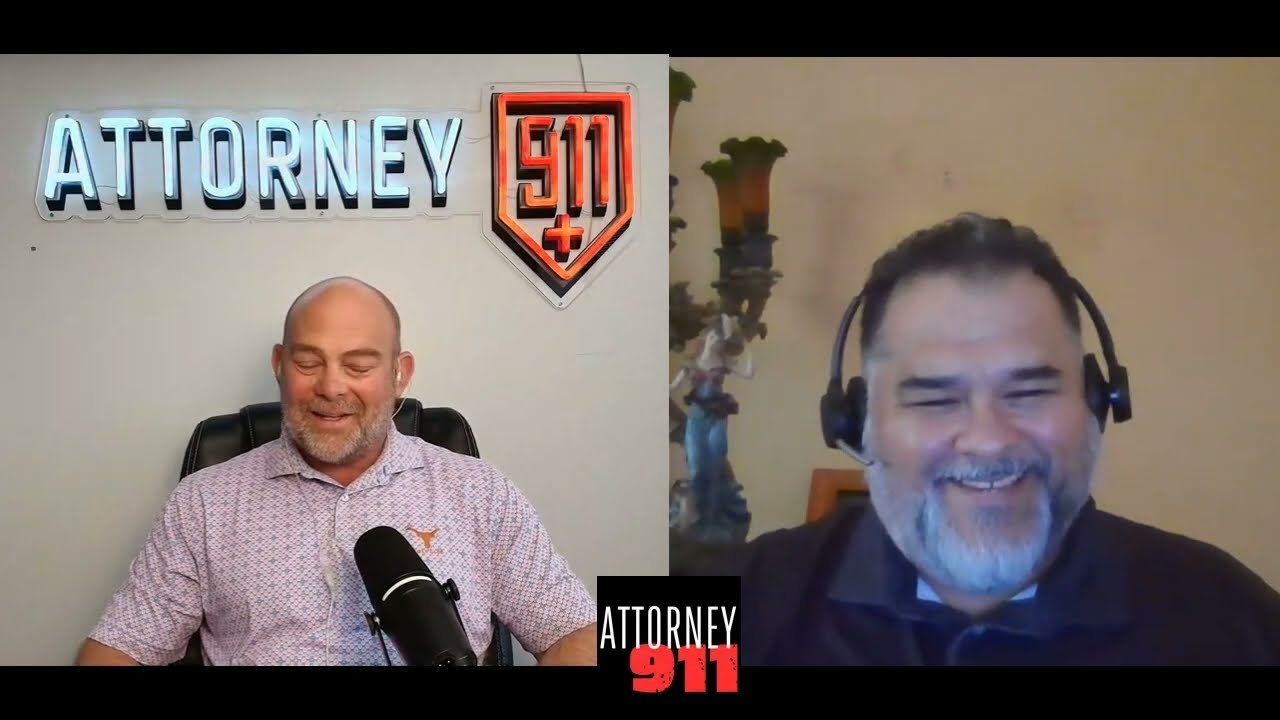
🎬 Watch the Full Video
Welcome to Attorney911: Your First Responder to a Legal Emergency
You’ve just been in a car collision. Your heart is racing, your body aches, and your mind is swirling with questions. What do you do first? Who do you call? How will you pay for medical treatment? In this moment of crisis, you need clear guidance from someone who has been there for thousands of Texans facing the same legal emergency. Welcome to Attorney911—the Legal Emergency Lawyers™. For over 24 years, our firm has served as the first responder for injured Texans, helping more than 20,000 people and families navigate the aftermath of accidents. In this comprehensive guide, we draw from our inaugural Attorney911 podcast conversation between founding attorney Ralph Manginello and paralegal Leo Lopez—the backbone of our firm for over two decades—to give you the exact medical and legal steps you must take after an accident in Texas.
The Attorney911 Foundation: 25+ Years of Texas Legal Excellence
Before we dive into the critical medical steps, you deserve to know who’s giving you this advice. Attorney Ralph Manginello isn’t just another lawyer with a website—he’s a Texas attorney with deep roots in our community and a track record that speaks for itself. Admitted to the Texas Bar in 1998, Ralph has spent 25+ years fighting for injured Texans. His credentials include admission to the U.S. District Court for the Southern District of Texas, handling complex federal litigation including the BP Texas City explosion case that demonstrated our firm’s capability against billion-dollar corporations. Ralph didn’t just move to Texas—he grew up here, attending Memorial High School in Houston before earning his journalism degree at the University of Texas at Austin and his law degree at South Texas College of Law Houston.
But what truly sets Attorney911 apart isn’t just Ralph’s experience—it’s our team approach. As Ralph explains in our podcast: “We have Leo, Leonel Lopez, the backbone and spirit of Attorney 9-1-1 and the Manganiello Law Firm for over 20 years.” Leo started in personal injury law right out of high school and was already working at the firm that hired Ralph out of law school. “We became friends right off the bat because I didn’t know what the hell I was doing,” Ralph recalls with characteristic honesty. “And you were helping me learn the ropes of being in a law firm and handling personal injury cases.” This 20-year partnership forms the foundation of our firm’s philosophy: treat every client like family, because that’s how we would want our own family treated.
Our firm also includes Associate Attorney Lupe Peña, a third-generation Texan with a critical advantage: years of experience working at a national insurance defense firm. Lupe knows exactly how insurance companies value claims, what tactics they use to minimize payouts, and how they build cases against injured people—because he used to do it for them. Now, he uses that insider knowledge exclusively for our clients. This combination of 25+ years of plaintiff-side experience with former defense counsel insight gives Attorney911 what we call “the unfair advantage”—we know the insurance playbook because we’ve seen it from both sides of the courtroom.
The First and Most Critical Step: Seek Medical Attention Immediately
In our podcast, Ralph asks Leo the fundamental question: “What do you think someone who’s been in a car collision… what do you think they’re looking for like right off the bat?” Leo’s answer is immediate and unequivocal: “They should right away if they’re hurt, they need to go see a doctor right away and then call us.” This isn’t just good advice—it’s legally and medically essential. When we speak with new clients, Ralph notes, “The first thing we ask them a lot of times is, ‘Have you seen a doctor yet?’ And you’d be surprised, right? Like a lot of people say no, no.”
Why People Delay Medical Care—And Why It’s Dangerous
People give us three common reasons for not seeking immediate medical attention, as Leo explains: “Well, I don’t have health insurance or I can’t afford to take the ambulance to the hospital, or I don’t know what kind of doctor I need to see.” Let’s address each concern with the truth from our 20+ years of experience:
“I don’t have health insurance”—This is the most common concern we hear from injured Texans. Here’s what you need to know: In Texas personal injury cases, you can receive medical treatment through what’s called a “letter of protection” or medical lien. This means qualified doctors will treat you now and get paid from your settlement or verdict later. At Attorney911, we have established relationships with medical providers throughout Texas who understand this system and will provide quality care without upfront payment. The critical point is this: Not having health insurance is NOT a reason to delay treatment. In fact, delaying treatment because of insurance concerns can severely damage your case, as insurance adjusters will argue your injuries couldn’t have been serious if you didn’t seek immediate care.
“I can’t afford an ambulance”—If you’re seriously injured, call 911. The ambulance ride, while expensive, creates critical documentation of your condition immediately after the accident. EMS records, vital signs, and initial observations become part of your medical record and establish the timeline of your injuries. If your injuries are less severe but still concerning, have someone drive you to an emergency room or urgent care center. The key is documentation from a medical professional as soon as possible after the accident.
“I don’t know what kind of doctor to see”—Start with the emergency room or urgent care. They will conduct an initial assessment and refer you to appropriate specialists. Common referrals after car accidents include orthopedists for bone and joint injuries, neurologists for head and nerve injuries, physical therapists for rehabilitation, and chiropractors for spinal alignment issues. The important thing is to start somewhere—anywhere—with professional medical documentation.
The Medical-Legal Connection: Why Timing Matters
Texas law recognizes that some injuries have delayed onset. However, insurance companies exploit gaps in treatment to minimize your claim. Here’s the legal reality: The longer you wait to seek treatment, the easier it is for insurance adjusters to argue that your injuries weren’t caused by the accident or aren’t as serious as you claim. They’ll use phrases like “gap in treatment” and “failure to mitigate damages” to reduce your compensation. From a medical standpoint, many serious conditions—including traumatic brain injuries, internal bleeding, and soft tissue damage—may not show immediate symptoms due to shock and adrenaline. By the time you feel the full effects, critical documentation time has been lost.
As Ralph emphasizes in our conversation: “They need to get there right away. And then once they’re there, you know, get all the treatment, figure out what exactly is wrong with them.” Leo adds the crucial follow-up: “And if they need to go to someone else after that, they’re still injured, hurt. They need to call us and go see your primary care doctor if you have one… just get yourself checked out. Cause it could be a little pain, but that little pain could turn into something really serious, really quick.”
The Documentation Imperative: Tell Your Doctor EVERYTHING
Once you’re at the hospital or doctor’s office, our advice becomes even more specific. Ralph explains: “We still do this to this day, but telling people, yeah, when you go to the hospital or your first doctor appointment, whether it’s at the hospital or urgent care or your treating doctor, make sure you tell them everything that’s bothering you. So even if you’re, you know, your pinky’s hurting. I mean, make sure you tell them.”
The Insurance Company’s Favorite Weapon: Missing Medical Records
Why is this so critical? Because insurance companies meticulously review every page of your medical records looking for inconsistencies or omissions. Ralph explains what happens if you don’t mention an injury initially: “These insurance companies come back and they tell us… ‘Well, there’s nothing mentioned in the medical records when they went to the hospital about their pinky or their foot or whatever.'” Leo confirms: “They have to say it, have to say every little thing that’s wrong with them, because it’s going to come up and they’re going to use that against them not to, you know, take care of that or pay them for that pain and suffering or that injury.”
This isn’t speculation—it’s daily reality in our practice. Insurance adjusters are trained to look for what’s called “contemporaneous complaints.” If your medical records from the emergency room don’t mention back pain, but you claim back pain two months later, they’ll argue it wasn’t accident-related. Even if you were in too much shock to notice or prioritize that particular pain initially, the insurance company will use the omission against you. This is where Lupe Peña’s insurance defense experience becomes invaluable—he knows exactly how they review records and what arguments they’ll make, so we can document your case to prevent those arguments from gaining traction.
Commonly Overlooked Injuries That Impact Your Claim
Based on our experience with thousands of Texas car accident cases, here are the injuries clients most frequently forget to mention initially:
- Headaches: Ralph identifies this as a major one: “One of the big ones that people seem to miss a lot is headaches. Most of our clients that have been in a car collision, they’ll say they’ve had ongoing headaches and then we’ll say, okay, you know, have you talked to the doctor about it? Like, oh, well, not the beginning, but now I am. And so again, if you don’t mention it and it’s not documented, it’s really hard for us to fight the insurance companies and say, oh, they’ve had this problem the whole time.” Headaches can indicate concussions, traumatic brain injuries, whiplash, or cervical spine issues—all serious conditions that require documentation from day one.
- Teeth and Jaw Pain: Leo points out: “There was a couple of like teeth injuries too, man. Like some people have really bad teeth injuries because they hit their mouth on the steering wheel and stuff like that. And they can get compensated for that. And they don’t know it, you know, they think it’s just a minor toothache, but it’s really because of the impact.” Dental injuries are frequently overlooked because people focus on more obvious pains, but they can lead to expensive dental work and ongoing issues.
- Emotional and Psychological Symptoms: Anxiety, sleep disturbances, fear of driving, and mood changes are common after traumatic accidents but often go unreported. These are legitimate components of pain and suffering damages in Texas.
- Subtle Neurological Symptoms: Tingling, numbness, blurred vision, dizziness, memory problems, and concentration difficulties should all be reported immediately, as they can indicate nerve damage or mild traumatic brain injury.
The rule is simple: If it hurts, tingles, feels strange, or isn’t normal for you—tell your doctor. Create a list before your appointment if you need to. Better to document something that turns out to be minor than to omit something that becomes major.
From Minor to Catastrophic: Real Cases from Our 20,000+ Clients
In our podcast, Ralph asks Leo to reflect on their decades of work together: “Do you remember, or can you remember the first, like real legal emergency that we had to handle where we jumped on it, we did X, Y, and Z and made sure that our client was taken care of way back 20 years ago?” While specific early cases blend together, the pattern is clear: We go where our clients need us, even to hospital bedsides. “We had to go to the hospital cause they wanted us to go up there and talk to them,” Leo recalls. “They were injured and they didn’t know, they were scared. They didn’t have no family to turn to.”
Catastrophic Injury Cases That Define Our Commitment
Some cases stay with you forever. Leo shares one that still affects him: “I remember the one that was really heartbreaking for me was the little girl that the mom, the baby and the mom died and the dad was helping us. We had to go see grandma and that was heartbreaking for me. She was hit by someone who was fleeing from the cops and was intoxicated and it was hard to get recovery for them.” These are the cases that test a firm’s mettle—wrongful death claims involving multiple family members, complex liability issues, and unimaginable grief. Ralph adds: “I remember us really strapping on our boots and going to work, trying to figure out who can we go after, investigating every little bit, every little detail for the accident.”
Another catastrophic case involved a young child: “Remember the baby that got her feet burned because the apartment complex hot water heater was set too high,” Ralph recalls. “The hot water heater was like 25 years old and they didn’t maintain it. That was terrible. But I remember we had to visit her and her family in the hospital.” These premises liability cases require meticulous investigation into property maintenance records, building codes, and corporate responsibility. The result? “We did get a good recovery… an annuity over time. Cause she was only like two or three. It was going to turn into like $13 million over time… She was going to have enough to go to college and have some reconstructive surgery.”
These cases demonstrate our firm’s capacity for complex, high-stakes litigation. They’re also why we’re one of the few Texas firms involved in BP explosion litigation—we have the experience and resources to take on powerful defendants.
Not Every Case Is Catastrophic—And That’s Okay
As Ralph notes, “There’s also the ones that are not too serious.” He shares a memorable example: “I remember one in particular… he wanted to sue or go after the parking lot people in the Galleria. He was walking around and he wasn’t paying attention. He ran into a pole.” This case illustrates an important point about our firm’s ethics. Ralph explains: “Plaintiff’s lawyers sometimes have a bad reputation that we’ll just sue anybody for anything. And we’re greedy and we’re this or that, and I have no doubt there are lawyers like that. But we’ve turned down… probably a hundred thousand cases that someone’s like, yeah, I got in a wreck, but really only my car was damaged. I’m not hurt.”
We maintain this ethical standard because our purpose is to help genuinely injured people, not to chase every potential dollar. As Ralph says: “We’re here to help people.” This integrity is reflected in our 4.9-star Google rating with 251+ reviews from real clients who appreciate that we treat them with honesty and respect.
The Attorney911 Difference: Why We Treat Clients Like Family
The core philosophy that has guided our firm for 24 years is simple: Treat every client like they’re our own family. Ralph explains how this philosophy began with his partnership with Leo: “When I called you and I was like, Hey man, cause you worked at that first firm with me and I opened this firm and I called you. I was like, I really want you to come work for me.” Leo recalls his decision: “It’s always eerie to start a new adventure… but the thing that gave me the confidence was you’ve always been a positive person. And I really see a lot of heart in you… you’ve helped a lot of people without anything in return sometimes.”
Our “No Return” Cases: Helping When Others Won’t
This commitment to helping extends beyond cases with clear financial returns. Ralph describes the dynamic that still exists today: “Sometimes we’re so busy, and you get that call and it’s like, Ralph, man, I really got to help this person out. We’re not going to take their case. And I’m like, yeah, of course. Like, of course you got to help them.” Leo confirms: “There’s been plenty of those. And what’s satisfying is you help them out. And they’re some of them just, they really, really appreciate it a lot.”
This approach creates lasting relationships and community trust. As Leo notes: “They end up sending their family to us. Cause that’s just the trust… what they did good for me, then they’re going to do good for my family too.” This isn’t marketing—it’s our daily reality. Client testimonials consistently mention this family feeling. As client Chad Harris writes in his Google review: “You are NOT a pest to them and you are NOT just some client… You are FAMILY to them.” Another client, Glenda Walker, says: “They make you feel like family and even though the process may take some time, they make it feel like a breeze.”
The Practical Application of “Family First”
What does treating clients like family actually look like in practice? Ralph gives a current example: “When we get calls that someone’s like, oh, well, I didn’t get my doctor canceled on me and I didn’t get a new appointment or whatever. And then whatever the issue is, we’re like, okay, we stop what we’re doing to make sure that they feel taken care of.” This level of attention is why clients like Ambur Hamilton say: “I never felt like ‘just another case’ they were working on.”
It also means being honest when we can’t help. As Leo states: “If we can’t do it, we’re going to give you someone that’s got the experience that knows what they’re doing. And we’re going to take care of you, you know, at the end of the day, that’s all that counts.” This referral practice ensures that even when your case isn’t right for our firm, you get connected with qualified Texas attorneys who can help.
Building Community: 20 Years of Texas Clients Who Became Family
In our podcast, Ralph takes time to “send some shout outs to current and former clients that are like family that we’ve just known for years and years and years.” This isn’t just nostalgia—it demonstrates the lasting relationships we build. He mentions Darryl Strong: “Such a great guy. I’ve known him for 25 years because the first case I ever had, he came to the office.” These long-term relationships show our commitment to the Texas community. Jerry Wyatt, Senior, another long-time client, served as a Missouri City councilman for 30+ years. We’ve represented multiple generations of these families because trust, once earned, extends through referrals.
This community connection is why Houston legend Trae Tha Truth recommends our firm. As client Jacqueline Johnson notes in her review: “One of Houston’s Great Men Trae Tha Truth has recommended this law firm. So if he is vouching for them then I know they do good work.” When a Houston icon who could choose any lawyer trusts us with his referrals, it speaks volumes about our reputation in our community.
The Insurance Battlefield: What Happens After You Seek Medical Care
Once you’ve taken the critical first step of seeking medical attention and documenting your injuries, the battle with insurance companies begins. This is where most injury victims make costly mistakes without even realizing it. Here’s what you need to know about the Texas insurance landscape:
The Friendly Adjuster Trap
Insurance adjusters often present themselves as helpful allies. They might say things like “We want to make this right” or “Let’s get this settled quickly.” What they’re really doing is gathering information to minimize your claim. As former insurance defense attorney Lupe Peña explains: “I’ve taken hundreds of recorded statements for insurance companies. I know exactly which questions are designed to trap you into admitting something that will reduce your claim value.”
Common tactics include:
- Recorded Statements: They’ll ask for a “simple statement” about what happened. Every word is analyzed for inconsistencies with the police report or medical records.
- Quick Settlement Offers: Before you’ve reached maximum medical improvement, they’ll offer a low settlement hoping you’ll take it out of financial desperation.
- Surveillance: They may follow you or check your social media looking for any activity they can use to argue your injuries aren’t as severe as claimed.
- IME Doctors: “Independent” Medical Examinations are often conducted by doctors who regularly work for insurance companies and systematically minimize injuries.
How Attorney911’s Insider Knowledge Protects You
Because Lupe Peña spent years working for insurance companies, he knows their valuation methods inside and out. Insurance companies use software like Colossus to calculate claim values based on specific injury codes, treatment duration, and other factors. Lupe knows how to properly code injuries and document treatment to ensure the software calculates appropriate values. He also knows the settlement authority structure—exactly how much authority each level of adjuster has and when to escalate for better results.
More importantly, we know when insurance companies are acting in bad faith. Texas law prohibits insurance companies from engaging in unfair settlement practices. When they delay without reason, deny valid claims, or offer substantially less than a claim is worth, they may be liable for additional damages. Our experience on both sides of these cases means we recognize bad faith when we see it.
Understanding Texas Personal Injury Law: Key Concepts
To fully understand why immediate medical attention and proper documentation matter, you need to understand some Texas legal principles:
Modified Comparative Fault (51% Bar Rule)
Texas follows a modified comparative fault system (Texas Civil Practice & Remedies Code § 33.001). If you’re found to be 50% or less at fault for the accident, you can recover damages reduced by your percentage of fault. If you’re 51% or more at fault, you recover nothing. This is why thorough investigation matters—insurance companies will try to assign you more fault than you deserve to reduce or eliminate their liability.
The Two-Year Statute of Limitations
Texas gives you exactly two years from the date of your accident to file a personal injury lawsuit (Texas Civil Practice & Remedies Code § 16.003). Miss this deadline by one day, and your case is barred forever. Insurance companies know this and may delay negotiations hoping you’ll get desperate as the deadline approaches.
Damages Available in Texas
Proper documentation affects every category of damages:
- Medical Expenses: Past and future treatment costs. Without documentation, insurance companies argue treatment wasn’t necessary.
- Lost Wages: Income lost due to injury and reduced future earning capacity.
- Pain and Suffering: Physical pain and emotional distress. Subjective but must be supported by medical evidence.
- Physical Impairment: Loss of enjoyment of life, inability to perform normal activities.
- Disfigurement: Scarring or permanent marks from injuries.
When to Call Attorney911: The Legal Emergency Timeline
Based on our conversation with thousands of injured Texans, here’s when you should call us:
IMMEDIATELY (Day of Accident): If you’re seriously injured and going to the hospital, have a family member call us at 1-888-ATTY-911. We can start preserving evidence while you focus on medical care.
WITHIN 24-48 HOURS: Even for less serious injuries, call us within the first couple of days. Evidence disappears quickly—surveillance footage is often deleted after 7-30 days, witnesses forget details, and the insurance company is already building their case against you.
BEFORE Giving Any Statement: Call us before you give any recorded statement to the other driver’s insurance company. We’ll prepare you for their questions and prevent common traps.
WHEN Treatment Becomes Complex: If your doctor recommends surgery, extended therapy, or refers you to multiple specialists, call us. Serious injuries require serious legal representation.
WHEN Insurance Contacts You: If the insurance adjuster calls with a settlement offer or requests, call us first. We’ll evaluate whether it’s fair and advise you.
Our Results: Multi-Million Dollar Recoveries for Texans
While every case is unique and past results don’t guarantee future outcomes, our documented case results demonstrate our capability:
- Logging Brain Injury: Multi-million dollar settlement for client who suffered brain injury with vision loss when log dropped on him at logging company.
- Car Accident Amputation: “In a recent case, our client’s leg was injured in a car accident. Staff infections during treatment led to a partial amputation. This case settled in the millions.”
- Trucking Wrongful Death: “At Attorney911, our personal injury attorneys have helped numerous injured individuals and families facing trucking-related wrongful death cases recover millions of dollars in compensation.”
- Maritime Back Injury: “In a recent case, our client injured his back while lifting cargo on a ship. Our investigation revealed that he should have been assisted in this duty, and we were able to reach a significant cash settlement.”
- Active High-Stakes Litigation: We’re currently litigating Bermudez v. Pi Kappa Phi Fraternity, Inc.—a $10 million lawsuit against the University of Houston and Pi Kappa Phi fraternity, demonstrating our willingness to take on major institutions.
Frequently Asked Questions About Post-Accident Medical Care
What if I don’t have health insurance?
This is one of the most common concerns we hear. In Texas, you can receive medical treatment through letters of protection or medical liens. Qualified doctors will treat you now and get paid from your settlement or verdict later. At Attorney911, we have established relationships with medical providers throughout Texas who understand this system. Never delay treatment because of insurance concerns—it can severely damage both your health and your case.
How soon after an accident should I see a doctor?
Immediately. If you have any pain, discomfort, or even just “feel off” after an accident, seek medical attention the same day. Many serious injuries like traumatic brain injuries, internal bleeding, and soft tissue damage have delayed symptoms. Early documentation creates a medical record that directly connects your injuries to the accident, which is essential for your claim.
What should I tell my doctor about my injuries?
Tell them everything. Even minor aches or pains that seem insignificant. Create a list before your appointment if needed. Be specific about location, type of pain (sharp, dull, throbbing), when it started, and what makes it better or worse. Insurance companies meticulously review medical records looking for inconsistencies or omissions. If you don’t mention an injury initially but claim it later, they’ll argue it wasn’t accident-related.
What if I already delayed seeking medical attention?
Go now. While immediate care is ideal, getting treatment now is better than never. We can often explain delays in treatment (shock, financial concerns, hope it would improve), but the longer you wait, the harder it becomes. Call us at 1-888-ATTY-911 so we can help you navigate this situation.
Should I follow up with my primary care doctor or see a specialist?
Start with the emergency room or urgent care for immediate documentation. They will often refer you to appropriate specialists. Common referrals after car accidents include orthopedists, neurologists, physical therapists, and chiropractors. If you have a primary care doctor, follow up with them as they know your medical history. The key is consistent, documented care.
How do I pay for treatment if I can’t work due to my injuries?
This is where having an experienced personal injury attorney becomes critical. We can help you access medical treatment through liens, connect you with providers who understand the personal injury process, and include lost wages in your claim. Don’t avoid treatment because of financial concerns—that’s exactly what insurance companies hope you’ll do.
Your Next Step: Call 1-888-ATTY-911 Today
If you’ve been injured in a car accident in Texas, the most important call you’ll make after seeking medical attention is to Attorney911. As Ralph Manginello says in our podcast: “We’re here to help people. That’s the purpose.” With 25+ years of experience, federal court admission, BP explosion litigation experience, and a former insurance defense attorney on our team, we have the knowledge and resources to fight for you.
We operate on a contingency fee basis—we don’t get paid unless we win your case (33.33% before trial, 40% if your case goes to trial). We advance all case costs and you pay nothing upfront. We serve Houston, Austin, Beaumont, and throughout Texas with offices conveniently located across the state. Hablamos Español—all consultations available in Spanish with our bilingual staff.
Don’t face the insurance companies alone. They’re already building their case against you. Call the Legal Emergency Lawyers™ at 1-888-ATTY-911 (1-888-288-9911) for your free, no-obligation consultation. Visit our website at attorney911.com to learn more about our firm, read our 251+ 4.9-star Google reviews, and watch our Attorney911 podcast for more legal insights. When you have a legal emergency, we’re your first responder.
Frequently Asked Questions
How soon after a car accident should I see a doctor in Texas?
You should seek medical attention immediately after an accident, ideally the same day. Many serious injuries like traumatic brain injuries, internal bleeding, and soft tissue damage have delayed symptoms. Early documentation creates a medical record that directly connects your injuries to the accident, which is essential for your insurance claim or lawsuit. Insurance companies use gaps in treatment to argue your injuries aren’t serious or aren’t accident-related.
What if I don’t have health insurance after my car accident?
In Texas personal injury cases, you can receive medical treatment through letters of protection or medical liens. This means qualified doctors will treat you now and get paid from your settlement or verdict later. At Attorney911, we have relationships with medical providers who understand this system. Never delay treatment because of insurance concerns—it can severely damage both your health and your case. Call us at 1-888-ATTY-911 to learn about your options.
What injuries do people most commonly forget to tell their doctor about?
Based on our experience with thousands of Texas car accident cases, the most commonly overlooked injuries include headaches (which can indicate concussions or whiplash), teeth and jaw pain from impact with steering wheels, emotional symptoms like anxiety and sleep disturbances, and subtle neurological symptoms like tingling, numbness, or dizziness. Tell your doctor about EVERY symptom—better to document something minor than omit something that becomes major.
Why do insurance companies care about when I first mentioned my injuries to a doctor?
Insurance adjusters meticulously review medical records looking for inconsistencies. If your initial medical records don’t mention back pain but you claim it two months later, they’ll argue it wasn’t accident-related. This is called looking for ‘contemporaneous complaints.’ They use missing documentation to reduce or deny claims for pain and suffering. That’s why it’s critical to tell your doctor every symptom during your first visit.
What makes Attorney911 different from other personal injury firms?
Attorney911 combines 25+ years of plaintiff-side experience with insider knowledge from former insurance defense attorney Lupe Peña. We know exactly how insurance companies value claims and what tactics they use because Lupe used to work for them. We also treat clients like family—our 251+ 4.9-star Google reviews consistently mention this. With federal court experience, BP explosion litigation involvement, and multi-million dollar results, we have the proven track record to fight for you.
When should I call a lawyer after a car accident?
Call Attorney911 immediately at 1-888-ATTY-911. If you’re seriously injured, have a family member call while you’re receiving medical care. Evidence disappears quickly—surveillance footage is often deleted after 7-30 days, witnesses forget details, and insurance companies start building their case against you immediately. Call us before giving any statement to the other driver’s insurance company, as they use recorded statements to trap you into admissions that reduce your claim value.