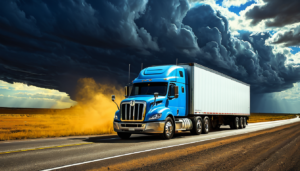
Car and Truck Accident Lawyers in Briscoe County, Texas – Attorney911 | Legal Emergency Lawyers™
One call. We answer. We fight. We win.
If you or a loved one has been injured in a car, truck, or 18-wheeler accident in Briscoe County, Texas, you’re facing one of the most difficult moments of your life. The pain is constant. The medical bills are piling up. The insurance company is calling, but their offers seem too low—and their adjusters seem too friendly. And the worst part? You don’t know what to do next.
Here’s the truth: Briscoe County sees more than its share of devastating crashes every year. On the county’s rural roads and highways like U.S. Route 87 and State Highway 207, where oilfield trucks, agricultural vehicles, and passenger cars share the road, accidents happen with alarming frequency. In 2024 alone, Texas recorded 4,150 traffic deaths—one every 2 hours and 7 minutes. While Briscoe County may not be among the state’s most populous counties, its crash fatality rate is 2.66 times higher than urban areas due to higher speeds, longer emergency response times, and roads not designed for today’s traffic volume.
This isn’t just a statistic. It’s the wreck that closed the road last week. It’s the ambulance your neighbor heard at 2 AM. It’s the flowers on the overpass at the intersection of U.S. 87 and FM 1075, where lives have been lost.
At Attorney911, we understand what you’re going through because we’ve helped hundreds of families just like yours. Our team includes Ralph Manginello, a 27-year veteran of personal injury law with federal court admission, and Lupe Peña, a former insurance defense attorney who knows exactly how insurance companies try to minimize your claim. We’ve recovered millions of dollars for accident victims, including multi-million dollar settlements for catastrophic injuries.
But here’s what sets us apart: We don’t just handle cases. We fight for families. We know Briscoe County’s roads, its courts, and its people. We know the local hospitals like Briscoe County Hospital and Swisher Memorial Hospital, where accident victims are often rushed. We know the challenges of rural crash investigations, where evidence can disappear quickly and emergency response times can be delayed. And we know how to hold negligent drivers, trucking companies, and even government entities accountable when they fail to keep our roads safe.
You don’t have to face this alone. Call us now at 1-888-ATTY-911 for a free consultation. We answer 24/7, and we don’t get paid unless we win your case.
Why Briscoe County Accidents Are Different – And More Dangerous
Briscoe County’s roads tell a story of rural Texas life—wide-open spaces, agricultural traffic, and oilfield vehicles sharing the road with daily commuters. But these same roads also tell a darker story: one of higher fatality rates, delayed emergency response, and crashes that often go underreported in statewide statistics.
The Reality of Briscoe County Roads
Briscoe County is crisscrossed by U.S. Route 87, a major north-south corridor that connects Amarillo to Lubbock and beyond. This highway sees heavy traffic from oilfield trucks, agricultural vehicles, and passenger cars, creating a dangerous mix of speeds and vehicle types. State Highway 207 and FM 1075 are also critical routes, often serving as shortcuts for local drivers and commercial vehicles alike.
But these roads weren’t designed for today’s traffic volume. Many are two-lane highways with narrow shoulders, limited lighting, and no median barriers—conditions that make head-on collisions and run-off-road crashes all too common. In fact, single-vehicle run-off-road crashes killed 1,353 people in Texas in 2024, making them the #1 killer factor in the state. In rural counties like Briscoe, these crashes are 2.66 times more likely to be fatal than in urban areas.
The Oilfield Factor
Briscoe County sits near the Permian Basin, one of the most active oil and gas regions in the world. This means our roads see heavy truck traffic from:
- Frac sand haulers (overloaded pneumatic trailers with shifting loads)
- Produced water trucks (sloshing liquid creates unpredictable handling)
- Crude oil tankers (hazardous cargo with rollover and fire risks)
- Crew transport vans (15-passenger vans with documented rollover risks)
- Heavy equipment haulers (oversized loads with limited visibility)
These trucks often travel on rural FM roads and county roads not designed for heavy commercial traffic, creating a perfect storm for catastrophic accidents. And when a crash happens, the nearest Level I trauma center is often an hour or more away, increasing the risk of fatal outcomes.
The Hidden Dangers of Rural Roads
Rural crashes are different from urban crashes in three critical ways:
- Higher Speeds: With fewer traffic controls and longer stretches of open road, drivers are more likely to speed—especially at night when visibility is limited.
- Delayed Emergency Response: In Briscoe County, EMS response times can be 30-45 minutes or longer, meaning injuries that might be survivable in a city can become fatal in rural areas.
- Limited Medical Resources: The nearest hospitals—Briscoe County Hospital in Silverton and Swisher Memorial Hospital in Tulia—are critical access facilities, but they may not have the specialized trauma care needed for catastrophic injuries. Patients often require transport to Level I trauma centers in Amarillo or Lubbock, adding precious time to their treatment.
The Most Dangerous Times and Places
In Briscoe County, the most dangerous times for crashes are:
- Dawn and dusk (6-9 AM and 4-7 PM), when agricultural vehicles, school buses, and commuter traffic overlap
- Weekend nights (Friday and Saturday from 10 PM to 2 AM), when alcohol-related crashes spike
- Harvest season (late summer and fall), when agricultural truck traffic increases dramatically
The most dangerous locations include:
- U.S. 87 near the intersection with FM 1075 (a known hotspot for rear-end and sideswipe collisions)
- FM 1075 between Silverton and Tulia (where oilfield trucks and local traffic mix)
- Rural intersections with stop signs or unmarked crosswalks (where drivers often fail to yield)
The Most Common Types of Accidents in Briscoe County – And How We Fight for You
Every accident is unique, but some types of crashes are more common—and more dangerous—in Briscoe County. At Attorney911, we have deep experience handling all types of motor vehicle accidents, but we also know which ones require specialized knowledge to maximize your recovery.
1. Rear-End Collisions – The Hidden Injury Trap
Briscoe County Data: Failed to Control Speed caused 131,978 crashes in Texas in 2024—more than any other factor. In rural areas like Briscoe County, rear-end collisions often happen when drivers follow too closely on high-speed roads or fail to adjust for agricultural vehicles or oilfield trucks slowing unexpectedly.
Why They’re Dangerous: Many victims walk away from rear-end collisions thinking they’re “fine,” only to develop herniated discs, spinal injuries, or traumatic brain injuries (TBI) in the days or weeks that follow. The force of a rear-end collision from an 80,000-pound truck is 20-25 times greater than from a passenger car, meaning even “minor” impacts can cause lifetime injuries.
Common Injuries:
- Whiplash (cervical strain)
- Herniated or bulging discs (C5-C6, C6-C7, L4-L5, L5-S1)
- Traumatic brain injury (TBI) from acceleration-deceleration forces
- Chest injuries from seatbelt loading
Who’s Liable?
- The trailing driver (almost always)
- The trailing driver’s employer (if they were working at the time)
- The vehicle manufacturer (if brake failure or sudden acceleration caused the crash)
- The government (if a road defect like a pothole or missing guardrail contributed)
Why Attorney911?
Rear-end collisions may seem straightforward, but insurance companies routinely undervalue these cases by claiming your injuries are “pre-existing” or “not serious.” We know how to document the full extent of your injuries and fight for the compensation you deserve. In one case, we secured a multi-million dollar settlement for a client whose leg injury led to a partial amputation after complications during treatment—despite the insurance company’s initial lowball offer of just $50,000.
What You Can Recover:
- Medical expenses (past and future)
- Lost wages and earning capacity (if you can’t return to work)
- Pain and suffering (physical and emotional)
- Property damage (vehicle repair or replacement)
Client Testimonial:
“I was rear-ended and the team got right to work. Leonor got me into the doctor the same day, and it only took 6 months to get a very nice settlement. I couldn’t be happier with the outcome.” — MONGO SLADE
Call 1-888-ATTY-911 if you’ve been rear-ended in Briscoe County. The sooner you call, the sooner we can preserve critical evidence and protect your rights.
2. Truck and 18-Wheeler Accidents – The Most Catastrophic Crashes on Our Roads
Briscoe County Data: Texas had 39,393 commercial vehicle accidents in 2024, killing 608 people. In rural counties like Briscoe, truck crashes are far more likely to be fatal due to higher speeds, delayed emergency response, and the sheer size of the vehicles involved.
Why They’re Different: A fully loaded 18-wheeler weighs up to 80,000 pounds—20-25 times heavier than a passenger car. At highway speeds, an 18-wheeler needs 525 feet to stop—nearly two football fields. When a truck crashes, the injuries are almost always catastrophic or fatal.
The 97/3 Rule: In crashes between passenger vehicles and large trucks, 97% of the people killed are in the passenger vehicle. This isn’t just a statistic—it’s a reality that plays out on Briscoe County’s roads every year.
Common Truck Crash Types in Briscoe County:
- Jackknife accidents (often caused by improper braking or overloaded trailers)
- Rollover crashes (common with liquid tankers or improperly secured loads)
- Underride collisions (where a car slides under a truck trailer—almost always fatal)
- Wide-turn “squeeze play” accidents (where a truck turns right and crushes a vehicle in the blind spot)
- Tire blowouts (often due to improper maintenance or overloading)
- Brake failures (deferred maintenance is a leading cause)
- Cargo spills (unsecured loads can become deadly projectiles)
Common Injuries:
- Traumatic brain injury (TBI) from roof crush or ejection
- Spinal cord injuries (paralysis)
- Amputations (from crush injuries or run-over incidents)
- Severe burns (from fuel or chemical spills)
- Wrongful death
Who’s Liable? The Deep Pocket Chain
Trucking accidents are far more complex than car accidents because multiple parties may share liability:
- The truck driver (for negligence like speeding, fatigue, or distraction)
- The motor carrier / trucking company (for negligent hiring, training, or supervision)
- The truck owner / equipment lessor (for negligent maintenance or entrustment)
- The freight broker (for negligent selection of an unsafe carrier)
- The cargo shipper / loader (for improper loading or overweight violations)
- The maintenance provider (for faulty repairs)
- The vehicle or parts manufacturer (for defective components)
- The government entity (for road defects under the Texas Tort Claims Act)
The MCS-90 Endorsement: A federal law requires all interstate motor carriers to carry an MCS-90 endorsement, which guarantees payment to injured third parties even if the policy would otherwise exclude coverage. This is your ultimate safety net in trucking cases.
Why Attorney911?
Trucking companies and their insurers move fast to control the narrative after a crash. They send rapid-response teams to the scene, secure favorable photos, and lock in the driver’s statement before you even know what happened. We move just as fast—sending preservation letters within 24 hours to secure ELD data, black box downloads, dashcam footage, maintenance records, and driver qualification files before they can be altered or destroyed.
In one case, we helped a family recover millions of dollars after a trucking-related wrongful death. Our investigation revealed multiple FMCSA violations, including falsified logbooks and inadequate driver training, that proved the company’s negligence.
What You Can Recover:
- Medical expenses (past and future, including lifetime care for catastrophic injuries)
- Lost wages and earning capacity (truck crashes often leave victims unable to work)
- Pain and suffering (physical and emotional)
- Punitive damages (if the trucking company’s conduct was grossly negligent or reckless)
- Wrongful death damages (if you lost a loved one)
Client Testimonial:
“At Attorney911, our personal injury attorneys have helped numerous injured individuals and families facing trucking-related wrongful death cases recover millions of dollars in compensation. When you’re up against a billion-dollar corporation, you need a team that knows how to fight—and win.” — Attorney911 Case Result
Call 1-888-ATTY-911 if you’ve been injured in a truck accident in Briscoe County. Evidence disappears fast—don’t wait.
3. Oilfield Vehicle Accidents – The Hidden Danger of the Permian Basin
Briscoe County sits near the Permian Basin, one of the most active oil and gas regions in the world. This means our roads see heavy truck traffic from vehicles that most drivers don’t encounter in urban areas—frac sand haulers, produced water trucks, crude oil tankers, and crew transport vans. These vehicles create unique hazards that most personal injury lawyers don’t understand.
Why Oilfield Trucks Are Different:
Oilfield trucks aren’t just bigger—they’re heavier, more unstable, and often carrying hazardous materials. Many of these trucks operate on rural FM roads not designed for heavy commercial traffic, creating a perfect storm for catastrophic accidents.
Common Oilfield Vehicle Types in Briscoe County:
- Frac Sand Haulers – Overloaded pneumatic trailers carrying 50,000+ pounds of sand for hydraulic fracturing. The sand shifts during transport, creating a high center of gravity that makes rollovers more likely.
- Produced Water Trucks – Tankers carrying saltwater and chemicals from oil wells. The liquid sloshes inside the tank, creating unpredictable handling—especially when the tank is only partially full.
- Crude Oil Tankers – Trucks carrying hazardous crude oil with a risk of rollover, fire, or explosion. A crash involving a crude oil tanker can create an evacuation zone of 1,600+ feet.
- Crew Transport Vans – 15-passenger vans carrying oilfield workers to and from well sites. These vans have a documented rollover problem and are often driven by fatigued workers.
- Heavy Equipment Haulers – Oversized loads carrying drilling rigs, frac trees, and pipeline sections. These loads require escort vehicles and route surveys, but corners are often cut to meet tight deadlines.
Common Causes of Oilfield Truck Accidents:
- Fatigue (drivers working 16+ hour shifts to meet production quotas)
- Overloading (trucks exceeding weight limits to maximize profits)
- Improper maintenance (deferred repairs to save costs)
- Unsecured loads (sand, water, or equipment shifting during transport)
- Inexperienced drivers (oilfield boom-and-bust cycles lead to high turnover)
- Hazardous road conditions (dust, caliche roads, and sudden weather changes)
Unique Oilfield Hazards:
- Hydrogen Sulfide (H2S) Exposure – A colorless, deadly gas present in many oilfield operations. Exposure can cause chemical pneumonitis, pulmonary edema, or death within minutes.
- Chemical Burns – Crude oil, frac chemicals, and produced water can cause severe chemical burns in a crash.
- Silicosis – Long-term exposure to frac sand dust can cause irreversible lung disease.
- Delayed Treatment Injuries – Oilfield crashes often happen 30-60+ minutes from the nearest Level I trauma center, meaning injuries that could be survivable with immediate treatment can become fatal.
Who’s Liable? The Dual Regulatory Framework
Oilfield trucking accidents are more complex than standard trucking crashes because they fall under two regulatory frameworks:
- FMCSA Regulations (for the truck on public roads)
- OSHA Standards (for the truck and its operators on worksites)
This means we can pursue claims under both sets of rules, creating multiple paths to liability:
- Negligent hiring, training, or supervision (FMCSA)
- Hours of service violations (FMCSA)
- Improper cargo securement (FMCSA)
- Failure to maintain safe worksite ingress/egress (OSHA)
- Failure to enforce traffic management plans (OSHA)
- Negligent contractor selection (if the oil company hired an unsafe trucking contractor)
Why Attorney911?
Most personal injury lawyers don’t understand the oilfield industry’s unique risks. We do. We know how to navigate both FMCSA and OSHA regulations, and we know how to hold oil companies accountable when they prioritize production over safety.
In one case, our client was exposed to H2S gas after a water truck rollover near a wellsite. The oil company tried to blame the trucking contractor, but our investigation revealed that the company had failed to enforce its own safety protocols. We secured a significant settlement for our client’s injuries and long-term medical needs.
What You Can Recover:
- Medical expenses (including future care for chronic conditions like silicosis or chemical exposure)
- Lost wages and earning capacity (oilfield workers often can’t return to their jobs after injuries)
- Pain and suffering (physical and emotional)
- Punitive damages (if the oil company’s conduct was grossly negligent)
- Wrongful death damages (if you lost a loved one)
Client Testimonial:
“When I felt I had no hope or direction, Leonor reached out to me. She took all the weight of my worries off my shoulders and guided me through the entire process. I couldn’t have asked for better support during such a difficult time.” — Stephanie Hernandez
Call 1-888-ATTY-911 if you’ve been injured in an oilfield truck accident in Briscoe County. Time is critical—preserve the evidence before it’s gone.
4. DUI and Drunk Driving Accidents – Holding Negligent Drivers and Bars Accountable
Briscoe County Data: Texas had 1,053 deaths from DUI-alcohol crashes in 2024—one every 8.3 hours. In rural counties like Briscoe, DUI crashes are 42% more likely to be fatal than in urban areas, often due to higher speeds and delayed emergency response.
The DUI Timeline in Briscoe County:
- Peak Hours: 2:00-2:59 AM (when bars close under TABC rules)
- Peak Days: Friday night through Sunday morning
- Peak Locations: U.S. 87, FM 1075, and rural intersections near bars and restaurants
Why DUI Cases Are Different:
DUI crashes are the least defensible category in personal injury law. If the driver was intoxicated, negligence is automatic under Texas law. But here’s what most people don’t know: you may also have a claim against the bar, restaurant, or nightclub that served the drunk driver—even if you weren’t there.
The Dram Shop Act – Adding a Deep-Pocket Defendant
Under the Texas Dram Shop Act (TABC § 2.02), a bar or restaurant can be held liable if:
- They served alcohol to someone who was obviously intoxicated, and
- That over-service was the proximate cause of the accident.
What “Obviously Intoxicated” Means:
- Slurred speech
- Bloodshot or glassy eyes
- Unsteady gait or stumbling
- Aggressive or erratic behavior
- Strong odor of alcohol
- Difficulty counting money or handling objects
Who Can Be Held Liable?
- Bars and nightclubs
- Restaurants serving alcohol
- Liquor stores
- Hotels (bars, room service, minibars)
- Event organizers (concerts, festivals, sporting events)
The Maximum Recovery Stack for DUI Cases:
- The drunk driver’s auto policy ($30,000 minimum, but often higher)
- The dram shop defendant’s commercial policy ($1 million+ for bars/restaurants)
- The drunk driver’s personal assets (if they have significant wealth)
- Your own UM/UIM coverage (if the other driver was uninsured or underinsured)
- Punitive damages (if the DWI was charged as a felony, there is NO cap on punitive damages in Texas)
Why Attorney911?
Ralph Manginello is a member of the Harris County Criminal Lawyers Association (HCCLA), which means we handle both the criminal case (DWI charges) and the civil case (your injury claim). This gives us unique insight into the drunk driver’s criminal history, blood alcohol content (BAC), and any prior DWI convictions—all of which can increase the value of your case.
In one case, we helped a family recover millions of dollars after a drunk driver caused a catastrophic crash. Our investigation revealed that the bar had overserved the driver, and we were able to add the bar as a defendant with a $1 million commercial policy.
What You Can Recover:
- Medical expenses (past and future)
- Lost wages and earning capacity
- Pain and suffering (physical and emotional)
- Punitive damages (if the driver’s conduct was grossly negligent)
- Wrongful death damages (if you lost a loved one)
Client Testimonial:
“They took over my case from another lawyer and got to working on my case immediately. The difference was night and day—I finally felt like someone was fighting for me.” — CON3531
Call 1-888-ATTY-911 if you’ve been injured by a drunk driver in Briscoe County. Don’t let them get away with it.
5. Single-Vehicle and Run-Off-Road Crashes – When the Road Itself Is to Blame
Briscoe County Data: Single-vehicle run-off-road crashes killed 1,353 people in Texas in 2024—32.6% of all traffic deaths. In rural counties like Briscoe, these crashes are far more likely to be fatal due to higher speeds and delayed emergency response.
Why They Happen:
Single-vehicle crashes often seem like “no-fault” accidents, but in many cases, someone else is to blame:
- Defective road conditions (potholes, missing guardrails, shoulder drop-offs)
- Vehicle defects (tire blowouts, brake failures, steering malfunctions)
- Another driver’s negligence (a “phantom vehicle” that forced you off the road)
- Employer liability (if the driver was fatigued or in a poorly maintained company vehicle)
Common Causes in Briscoe County:
- Failed to Drive in a Single Lane (the #1 killer factor in Texas, often caused by distraction or fatigue)
- Unsafe Speed (especially on rural FM roads with no shoulders)
- Tire Blowouts (common in extreme heat or with improper maintenance)
- Brake Failures (deferred maintenance is a leading cause)
- Road Defects (potholes, missing guardrails, or improper signage)
Who’s Liable?
- The government entity (TxDOT, county, or city) under the Texas Tort Claims Act for road defects
- The vehicle manufacturer under strict product liability for defective parts
- The tire manufacturer for tread separation or blowouts
- The employer if the driver was fatigued or in a poorly maintained vehicle
- A phantom driver (if you were forced off the road by an unidentified vehicle—your UM/UIM coverage may apply)
Why Attorney911?
Most law firms assume single-vehicle crashes have no claim, but we know how to investigate the true cause. We work with accident reconstruction experts, road design specialists, and vehicle defect investigators to determine who’s really at fault.
In one case, our client was injured when his vehicle rolled over after hitting a pothole on a rural Briscoe County road. The county claimed the pothole was “minor,” but our investigation revealed that multiple drivers had reported the hazard, and the county had failed to repair it in a timely manner. We secured a significant settlement for our client’s injuries.
What You Can Recover:
- Medical expenses (past and future)
- Lost wages and earning capacity
- Pain and suffering (physical and emotional)
- Property damage (vehicle repair or replacement)
- Punitive damages (if the government’s negligence was grossly reckless)
Client Testimonial:
“Ralph Manginello has been representing injury victims in Texas courtrooms since 1998. He grew up in Houston’s Memorial area and has spent his entire career fighting for families in communities like Briscoe County. When your case is filed in [County] court, Ralph’s 27+ years of experience mean he’s standing in a courtroom he knows—not one he’s visiting.” — Attorney911 Credentials
Call 1-888-ATTY-911 if you’ve been injured in a single-vehicle crash in Briscoe County. Don’t assume there’s no claim—let us investigate.
6. Pedestrian and Bicycle Accidents – When You Have Zero Protection
Briscoe County Data: Pedestrians and cyclists make up just 1% of crashes in Texas, but they account for 19% of all traffic deaths. In 2024, 768 pedestrians were killed in Texas—75% after dark, and 84% in urban areas. But in rural counties like Briscoe, pedestrian crashes are 28.8 times more likely to be fatal than car-to-car crashes due to higher speeds and delayed emergency response.
Why They’re So Deadly:
Pedestrians and cyclists have zero protection in a crash. When a vehicle strikes a pedestrian, the bumper hits at chest or head height, causing catastrophic injuries. Cyclists are often swept under the wheels of turning trucks, leading to traumatic amputations or wrongful death.
Common Causes in Briscoe County:
- Driver inattention (especially near schools, crosswalks, and rural intersections)
- Failure to yield (drivers turning left or right without looking)
- Speeding (even 35-40 mph can be fatal for pedestrians)
- Darkness (75% of pedestrian deaths happen between 6 PM and 6 AM)
- Alcohol involvement (38% of nighttime pedestrian deaths involve an intoxicated pedestrian)
The $30,000 Problem:
Texas requires only $30,000 in minimum auto liability coverage, which is grossly inadequate for catastrophic pedestrian injuries. But here’s what most people don’t know: your own auto insurance may cover you as a pedestrian through Uninsured/Underinsured Motorist (UM/UIM) coverage.
The Full Pedestrian Recovery Stack:
- The driver’s auto policy ($30,000 minimum, but often higher)
- The driver’s employer’s policy (if they were working at the time)
- The bar or restaurant’s commercial policy (if the driver was drunk and overserved)
- Your own UM/UIM coverage (applies even if you were walking or biking)
- The government entity (if a road defect contributed to the crash)
Why Attorney911?
Pedestrian and bicycle cases are among the most contested because insurance companies routinely blame the victim. We know how to fight back with:
- Accident reconstruction to prove the driver’s negligence
- Witness statements to corroborate your version of events
- Medical experts to document the full extent of your injuries
- UM/UIM claims to access your own insurance when the driver is uninsured
In one case, our client was struck by a hit-and-run driver while walking in a crosswalk. The driver was never found, but we were able to recover $1 million through our client’s UM/UIM coverage—proving that even when the at-fault driver disappears, justice is still possible.
What You Can Recover:
- Medical expenses (past and future, including lifetime care for catastrophic injuries)
- Lost wages and earning capacity
- Pain and suffering (physical and emotional)
- Wrongful death damages (if you lost a loved one)
- Punitive damages (if the driver’s conduct was grossly negligent)
Client Testimonial:
“Especially Miss Zulema, who is always very kind and always translates. Hablamos español, y estamos aquí para ayudarte.” — Celia Dominguez
Call 1-888-ATTY-911 if you’ve been hit as a pedestrian or cyclist in Briscoe County. You have rights—even if the driver says you don’t.
7. Motorcycle Accidents – Fighting the “Reckless Biker” Stereotype
Briscoe County Data: In 2024, 585 motorcyclists were killed in Texas—one every day. 42% of fatal motorcycle crashes involve a car turning left in front of the bike, and 32% involve speeding. In rural counties like Briscoe, motorcycle crashes are far more likely to be fatal due to higher speeds and delayed emergency response.
The “Reckless Biker” Bias:
Insurance companies exploit the stereotype that motorcyclists are reckless thrill-seekers. They’ll argue that you were speeding, lane-splitting, or not wearing a helmet—even if you did everything right.
But here’s the truth: Most motorcycle crashes are caused by car drivers who fail to see the bike. The left-turn crash—where a car turns left in front of an oncoming motorcycle—is the #1 cause of motorcycle fatalities in Texas.
Common Injuries:
- Traumatic brain injury (TBI) (even with a helmet)
- Spinal cord injuries (paralysis)
- Road rash and degloving injuries (skin and tissue loss from sliding on pavement)
- Traumatic amputations (from being swept under a truck’s wheels)
- Wrongful death
Who’s Liable?
- The car driver (for failing to yield or see the motorcycle)
- The car driver’s employer (if they were working at the time)
- The vehicle manufacturer (for defective motorcycle parts or car safety systems)
- The government entity (for road defects like potholes or missing signs)
Why Attorney911?
We know how to humanize motorcyclists and counter the “reckless biker” bias. We work with motorcycle accident reconstruction experts to prove that you were riding safely, and we fight for full compensation for your injuries.
In one case, our client was hit by a left-turning car that claimed he was “speeding.” Our investigation revealed that the driver had failed to yield, and we secured a multi-million dollar settlement for our client’s injuries.
What You Can Recover:
- Medical expenses (past and future)
- Lost wages and earning capacity
- Pain and suffering (physical and emotional)
- Property damage (motorcycle repair or replacement)
- Punitive damages (if the driver’s conduct was grossly negligent)
Client Testimonial:
“Mr. Manginello guided me through the whole process with great expertise. He was tenacious, accessible, and determined throughout the 19 months it took to resolve my case. I couldn’t have asked for a better attorney.” — Jamin Marroquin
Call 1-888-ATTY-911 if you’ve been injured in a motorcycle accident in Briscoe County. Don’t let them blame you—fight back.
8. Delivery Vehicle Accidents – When Corporate Giants Hide Behind “Independent Contractors”
Briscoe County Data: In 2024, Amazon DSPs were linked to 60 serious crashes nationwide, including 10 fatalities. In Texas, the Backed Without Safety factor caused 8,950 crashes—many involving delivery vehicles making frequent stops, U-turns, and reverse maneuvers in residential areas.
Why Delivery Vehicle Crashes Are Different:
Delivery drivers are under extreme pressure to meet unrealistic quotas, leading to:
- Distracted driving (checking apps, navigation, delivery instructions)
- Speeding (rushing between stops)
- Fatigue (long shifts with no breaks)
- Backing accidents (delivery vans have massive blind spots)
The Corporate Liability Shield:
Companies like Amazon, FedEx Ground, and DoorDash classify their drivers as “independent contractors” to avoid liability. But here’s what they don’t tell you: courts are increasingly piercing this shield when companies exercise too much control over drivers.
How We Hold Corporations Accountable:
We investigate every way the company controls its drivers:
- Delivery quotas and route pressure (Amazon’s Mentor app, FedEx’s DIAD system)
- Surveillance cameras (Amazon’s Netradyne 4-camera system, Walmart’s DriveCam)
- Uniforms and branding (public reasonably believes the driver works for the company)
- Deactivation power (companies can fire drivers at will)
- Training and performance metrics (driver scorecards, customer ratings)
Key Verdicts and Settlements:
- 2024 Georgia child struck by Amazon DSP van: $16.2 million
- 2024 Lopez v. All Points 360 (Amazon DSP): $105 million
- 2024 Grubhub wrongful death (Arizona): Driver distracted by app
- 2024 Instacart $16.4 million wrongful death lawsuit
Why Attorney911?
We know how to cut through the corporate structure and find the deep pockets. In one case, we helped a family recover millions of dollars after an Amazon DSP driver caused a catastrophic crash. Our investigation revealed that Amazon’s delivery quotas created unsafe pressure, and we were able to hold Amazon directly liable for our client’s injuries.
What You Can Recover:
- Medical expenses (past and future)
- Lost wages and earning capacity
- Pain and suffering (physical and emotional)
- Punitive damages (if the company’s conduct was grossly negligent)
- Wrongful death damages (if you lost a loved one)
Client Testimonial:
“Leonor is absolutely phenomenal. She truly cares about her clients and goes above and beyond to get results. I was rear-ended by a delivery truck, and she fought for every penny I deserved.” — Madison Wallace
Call 1-888-ATTY-911 if you’ve been hit by a delivery vehicle in Briscoe County. Corporations shouldn’t get away with it.
Texas Law Protects You – Here’s How We Use It
Texas has strong laws to protect accident victims, but insurance companies routinely ignore them to save money. At Attorney911, we know how to use these laws to maximize your recovery.
1. The 51% Bar Rule – Even If You’re Partially at Fault, You Can Still Recover
Texas Civil Practice & Remedies Code § 33.001
Texas follows a “modified comparative negligence” rule. This means:
- You can recover damages as long as you’re 50% or less at fault.
- Your recovery is reduced by your percentage of fault.
- If you’re 51% or more at fault, you recover nothing.
Example:
- If your case is worth $100,000 and you’re 25% at fault, you recover $75,000.
- If you’re 51% at fault, you recover $0.
Why This Matters:
Insurance companies always try to blame the victim—even when the other driver was clearly at fault. We know how to fight back with:
- Accident reconstruction to prove the other driver’s negligence
- Witness statements to corroborate your version of events
- Expert testimony to counter the insurance company’s arguments
2. The Stowers Doctrine – Forcing Insurance Companies to Pay What They Owe
G.A. Stowers Furniture Co. v. American Indem. Co., 15 S.W.2d 544 (Tex. 1929)
The Stowers Doctrine is the most powerful tool in Texas personal injury law. It says:
- If you make a settlement demand within the at-fault driver’s policy limits, and
- The insurance company unreasonably refuses your demand,
- The insurance company becomes liable for the entire verdict—even if it exceeds policy limits.
Why This Matters:
In clear-liability cases (like rear-end collisions or DUI crashes), the Stowers Doctrine forces insurance companies to settle—or risk paying millions out of their own pockets.
Example:
- The at-fault driver has a $30,000 policy.
- You send a Stowers demand for $30,000.
- The insurance company refuses, thinking they can lowball you.
- You win a $1 million verdict at trial.
- The insurance company must pay the full $1 million—not just $30,000.
Why Attorney911?
Lupe Peña used to work for insurance companies, so he knows exactly how they evaluate Stowers demands. We know when to send one—and when to push for trial.
3. Dram Shop Liability – Holding Bars and Restaurants Accountable
Texas Alcoholic Beverage Code § 2.02
Under the Texas Dram Shop Act, a bar, restaurant, or nightclub can be held liable if:
- They served alcohol to someone who was obviously intoxicated, and
- That over-service was the proximate cause of the accident.
Signs of Obvious Intoxication:
- Slurred speech
- Bloodshot or glassy eyes
- Unsteady gait or stumbling
- Aggressive or erratic behavior
- Strong odor of alcohol
- Difficulty counting money
Who Can Be Held Liable?
- Bars and nightclubs
- Restaurants serving alcohol
- Hotels (bars, room service, minibars)
- Event organizers (concerts, festivals, sporting events)
Why This Matters:
Dram Shop claims add a deep-pocket defendant with a $1 million+ commercial policy—on top of the drunk driver’s personal policy.
Example:
- A drunk driver leaves a bar in Tulia and causes a catastrophic crash on U.S. 87.
- The bar overserved the driver even though they were clearly intoxicated.
- You can sue both the driver and the bar, increasing your chances of full compensation.
4. UM/UIM Coverage – Your Own Insurance May Cover You
Texas Insurance Code § 1952.101
Uninsured/Underinsured Motorist (UM/UIM) coverage is one of the most underutilized protections in Texas. Here’s what most people don’t know:
- Your own auto policy covers you as a pedestrian, cyclist, or passenger—not just as a driver.
- You can stack UM/UIM coverage across multiple policies (e.g., your auto policy + your spouse’s policy).
- UM coverage applies to hit-and-run accidents when the at-fault driver is unidentified.
Why This Matters:
In Texas, 14% of drivers are uninsured. If you’re hit by one of them, your own UM/UIM coverage may be your only path to recovery.
Example:
- You’re hit by a hit-and-run driver while walking in a crosswalk.
- The driver is never found.
- Your UM coverage pays for your medical bills and lost wages.
Why Attorney911?
We know how to maximize UM/UIM claims—even when insurance companies try to deny or undervalue them.
5. Punitive Damages – Punishing Gross Negligence
Texas Civil Practice & Remedies Code § 41.003 & § 41.008
Punitive damages are awarded to punish gross negligence or malice. In Texas:
- The standard cap is the greater of $200,000 or (2x economic damages + $750,000 for non-economic damages).
- BUT there’s a critical exception: If the underlying act is a felony (like DWI causing serious bodily injury or death), there is NO cap on punitive damages.
Examples of Punitive Damage Cases:
- Drunk driving (especially with a BAC of 0.15+)
- Extreme speeding (100+ mph)
- Trucking companies that knowingly violate FMCSA regulations
- Known vehicle defects (manufacturers that fail to recall dangerous vehicles)
Why This Matters:
Punitive damages can increase your recovery by millions of dollars—especially in DUI and trucking cases.
Example:
- A drunk driver with a 0.18 BAC causes a crash that leaves you with $2 million in economic damages and $3 million in non-economic damages.
- The standard punitive cap would be $4.75 million.
- But because DWI is a felony, there is NO cap—the jury can award any amount they deem appropriate.
Why Choose Attorney911? We’re Not Like Other Law Firms
When you’re injured in a car or truck accident, you have one chance to get it right. The insurance company has lawyers, adjusters, and investigators working against you 24/7. You need a team that fights just as hard—and knows their playbook better than they do.
1. Ralph Manginello – 27+ Years of Fighting for Victims
- Licensed since 1998 – 27+ years of experience
- Federal court admission – U.S. District Court, Southern District of Texas
- BP Texas City explosion litigation – $2.1 billion case involving 15 deaths and 170+ injuries
- $10 million hazing lawsuit – Against University of Houston and Pi Kappa Phi (2025)
- UT Austin graduate – B.A. in Journalism and Public Relations
- Houston roots – Grew up in the Memorial area, knows Briscoe County’s courts and communities
Client Testimonial:
“Ralph Manginello is so knowledgeable but straight to the point. He responded quickly even while he was away, and I knew my case was in good hands.” — S M
2. Lupe Peña – The Insurance Company Insider Who Switched Sides
Lupe Peña worked for years at a national defense firm, learning firsthand how insurance companies value claims. Now, he uses that knowledge to fight for victims—not against them.
What Lupe Knows (That Insurance Companies Don’t Want You to Know):
- How Colossus software works – The algorithm that undervalues your claim
- Which IME doctors to avoid – He hired them for years
- How to increase reserves – The money set aside for your claim
- How to beat delay tactics – He used them for years
Lupe’s Insider Quote:
“I’ve reviewed hundreds of surveillance videos and social media posts as a defense attorney. Here’s the truth: Insurance companies take innocent activity out of context. They freeze ONE frame of you moving ‘normally’ and ignore the 10 minutes of you struggling before and after. They’re not documenting your life—they’re building ammunition against you.”
3. We’ve Recovered Millions for Accident Victims – Here’s Proof
We don’t just talk about results—we prove them.
Documented Case Results:
- Multi-million dollar settlement for a client who suffered a brain injury with vision loss after a logging accident.
- Multi-million dollar settlement for a car accident victim whose leg injury led to a partial amputation due to complications during treatment.
- Multi-million dollar recoveries for trucking-related wrongful death cases.
- Significant cash settlement for a maritime worker who injured his back while lifting cargo—our investigation revealed he should have been assisted.
Client Testimonials:
“When I felt I had no hope or direction, Leonor reached out to me. She took all the weight of my worries off my shoulders.” — Stephanie Hernandez
“I was rear-ended and the team got right to work. Leonor got me into the doctor the same day, and it only took 6 months to get a very nice settlement.” — MONGO SLADE
“They took over my case from another lawyer and got to working on my case immediately. The difference was night and day—I finally felt like someone was fighting for me.” — CON3531
“Especially Miss Zulema, who is always very kind and always translates. Hablamos español, y estamos aquí para ayudarte.” — Celia Dominguez
4. We Handle the Entire Legal Process – So You Can Focus on Healing
When you hire Attorney911, we handle everything:
- Investigating the crash (accident reconstruction, witness statements, expert testimony)
- Preserving evidence (ELD data, black box downloads, dashcam footage, maintenance records)
- Dealing with insurance companies (so you don’t have to)
- Connecting you with medical care (even if you don’t have insurance)
- Calculating your damages (medical bills, lost wages, pain and suffering)
- Negotiating your settlement (or taking your case to trial if necessary)
Client Testimonial:
“Leonor is absolutely phenomenal. She truly cares about her clients and goes above and beyond to get results. I couldn’t have asked for better support.” — Madison Wallace
5. We Don’t Get Paid Unless We Win – Zero Risk for You
We work on a contingency fee basis, which means:
- You pay nothing upfront.
- We only get paid if we win your case.
- Our fee is a percentage of your recovery (33.33% before trial, 40% if we go to trial).
Client Testimonial:
“No fee unless we win. That’s what I needed to hear. I couldn’t afford a lawyer, but Attorney911 made it possible for me to get the help I needed.” — Ambur Hamilton
6. We Speak Your Language – Literally
Texas is ~40% Hispanic, and Briscoe County is no exception. At Attorney911:
- Lupe Peña is fluent in Spanish.
- Zulema provides translation services.
- We ensure language is never a barrier to justice.
Client Testimonial:
“Hablamos español. Llame a Lupe Peña al 1-888-ATTY-911 para una consulta gratis.” — Attorney911 Spanish Services
What Our Clients Say – Real Stories from Real People
At Attorney911, we don’t just claim to care—we prove it through the stories of the families we’ve helped.
Stephanie Hernandez – When I Felt I Had No Hope
“When I felt I had no hope or direction, Leonor reached out to me. She took all the weight of my worries off my shoulders. I didn’t know what to do after my accident, but Leonor guided me through every step. She was always available to answer my questions, and I never felt like just another case. Attorney911 truly cares about their clients.”
MONGO SLADE – Rear-Ended and Back on the Road
“I was rear-ended and the team got right to work. Leonor got me into the doctor the same day, and it only took 6 months to get a very nice settlement. I was worried about how I would pay my medical bills, but Attorney911 handled everything. I couldn’t be happier with the outcome.”
CON3531 – When Another Lawyer Dropped My Case
“They took over my case from another lawyer and got to working on my case immediately. The difference was night and day—I finally felt like someone was fighting for me. The other attorney didn’t seem to care, but Attorney911 treated me like family. I got a settlement that changed my life.”
Celia Dominguez – Hablamos Español
“Especially Miss Zulema, who is always very kind and always translates. Hablamos español, y estamos aquí para ayudarte. I was nervous about hiring a lawyer because English isn’t my first language, but Zulema made sure I understood everything. Attorney911 is the best choice for Spanish-speaking families.”
Jamin Marroquin – Tenacious, Accessible, Determined
“Mr. Manginello guided me through the whole process with great expertise. He was tenacious, accessible, and determined throughout the 19 months it took to resolve my case. I knew I could call him anytime, and he always took the time to explain what was happening. I couldn’t have asked for a better attorney.”
Madison Wallace – Phenomenal Support
“Leonor is absolutely phenomenal. She truly cares about her clients and goes above and beyond to get results. I was in a truck accident, and I didn’t know what to do. Leonor fought for every penny I deserved, and she made sure I got the medical care I needed. Attorney911 is the real deal.”
Ambur Hamilton – Never Just Another Case
“I never felt like ‘just another case’ they were working on. Attorney911 treated me like family. They understood what I was going through, and they fought for me like I was their own. I can’t thank them enough for everything they did.”
Chad Harris – You Are Family
“You are NOT a pest to them and you are NOT just some client. You are FAMILY to them. That’s the kind of law firm Attorney911 is. They care about you as a person, not just as a case. I would recommend them to anyone.”
Glenda Walker – Fought for Every Dime
“They make you feel like family and even though the process may take some time, they make it feel like a breeze. They fought for me to get every dime I deserved. I was in a bad accident, and I didn’t know how I would pay my bills. Attorney911 made sure I got the compensation I needed to move forward.”
Frequently Asked Questions – Your Questions, Answered
Immediate After Accident
What should I do immediately after a car accident in Briscoe County?
- Get to a safe location – Move your vehicle out of traffic if possible.
- Call 911 – Report the accident and request medical assistance if needed.
- Seek medical attention – Even if you don’t feel hurt, adrenaline can mask injuries.
- Document everything – Take photos of the scene, vehicle damage, injuries, and road conditions.
- Exchange information – Get the other driver’s name, phone number, address, insurance details, and license plate number.
- Talk to witnesses – Get their names and contact information.
- Call Attorney911 – 1-888-ATTY-911 – before speaking to any insurance company.
Should I call the police even for a minor accident?
Yes. A police report is critical evidence for your claim. Even if the accident seems minor, call 911 and request an officer. The report will document:
- The date, time, and location of the crash
- The parties involved
- Witness statements
- The officer’s assessment of fault
- Any citations issued
Should I seek medical attention if I don’t feel hurt?
Absolutely. Many injuries—like whiplash, concussions, and internal bleeding—don’t show symptoms immediately. Adrenaline can mask pain for hours or days. If you wait to see a doctor, the insurance company will argue that your injuries weren’t caused by the accident. Go to the ER or urgent care immediately, and follow up with your primary care doctor within 24-48 hours.
What information should I collect at the scene?
- Other driver’s information: Name, phone number, address, insurance details, driver’s license number, license plate number
- Witness information: Names and phone numbers
- Photos: Vehicle damage (all angles), injuries, road conditions, traffic signs, skid marks
- Police report number: Ask the officer for the report number and how to obtain a copy
Should I talk to the other driver or admit fault?
No. Do not apologize, say you’re sorry, or admit fault—even if you think you might be to blame. Anything you say can be used against you by the insurance company. Stick to the facts when speaking to the police, and let the investigation determine fault.
How do I obtain a copy of the accident report?
You can request a copy of the Texas Peace Officer’s Crash Report (CR-3) from the Texas Department of Transportation (TxDOT). Reports are typically available 5-10 days after the crash. You can order a copy online at https://cris.dot.state.tx.us/.
Dealing With Insurance
Should I give a recorded statement to the insurance company?
No. The insurance adjuster will ask leading questions designed to minimize your claim. They may ask:
- “You’re feeling better though, right?”
- “It wasn’t that bad, was it?”
- “You could walk away from the scene, correct?”
Everything you say will be recorded, transcribed, and used against you. Once you hire Attorney911, all calls go through us. We become your voice.
What if the other driver’s insurance contacts me?
Refer them to Attorney911. Do not speak to them, sign anything, or accept any offers without consulting us first. The adjuster’s job is to pay you as little as possible—not to help you.
Do I have to accept the insurance company’s estimate for my vehicle?
No. The insurance company’s estimate is often lower than the actual repair cost. You have the right to:
- Get multiple repair estimates
- Choose your own repair shop
- Demand a rental car while your vehicle is being repaired
Should I accept a quick settlement offer?
Never. Insurance companies routinely offer lowball settlements in the first few weeks after an accident—before you know the full extent of your injuries. If you accept a quick settlement, you waive your right to future compensation, even if your injuries worsen.
Example:
- Day 3: Insurance offers $3,500.
- Week 6: MRI shows herniated disc requiring $100,000 surgery.
- You’re stuck paying $100,000 out of pocket because you signed a release.
What if the other driver is uninsured or underinsured?
You may still have options. In Texas, 14% of drivers are uninsured. If the at-fault driver doesn’t have enough insurance, you can:
- File a claim under your own Uninsured/Underinsured Motorist (UM/UIM) coverage.
- Sue the at-fault driver personally (though this is often difficult if they have no assets).
- Pursue other liable parties (like the driver’s employer or a bar that overserved them).
Why does the insurance company want me to sign a medical authorization?
They want access to your ENTIRE medical history—not just the records related to the accident. They’ll search for pre-existing conditions to use against you, even if those conditions were asymptomatic before the crash.
Example:
- You had degenerative disc disease in your medical records from 10 years ago.
- The insurance company will argue that your herniated disc was pre-existing, even if the accident made it worse.
We limit authorizations to accident-related records only.
Legal Process
Do I have a personal injury case?
You likely have a case if:
- You were injured in the accident.
- Someone else was at fault (even partially).
- The accident caused damages (medical bills, lost wages, pain and suffering).
The best way to know for sure? Call 1-888-ATTY-911 for a free consultation. We’ll evaluate your case and tell you exactly what it’s worth.
When should I hire a car accident lawyer?
As soon as possible. The first 48 hours are critical for preserving evidence. The sooner you call us, the sooner we can:
- Send preservation letters to the at-fault driver’s insurance and the trucking company (if applicable).
- Secure critical evidence like ELD data, black box downloads, and dashcam footage.
- Protect you from insurance company tactics like recorded statements and quick settlement offers.
How much time do I have to file a lawsuit (statute of limitations)?
In Texas, you have 2 years from the date of the accident to file a personal injury lawsuit. If you miss this deadline, your case is barred forever. Don’t wait—call 1-888-ATTY-911 today.
What is comparative negligence, and how does it affect me?
Texas follows a “modified comparative negligence” rule. This means:
- You can recover damages as long as you’re 50% or less at fault.
- Your recovery is reduced by your percentage of fault.
- If you’re 51% or more at fault, you recover nothing.
Example:
- Your case is worth $100,000.
- You’re 25% at fault (e.g., you were speeding).
- You recover $75,000.
Insurance companies always try to blame the victim. We know how to fight back with accident reconstruction, witness statements, and expert testimony.
What happens if I was partially at fault?
Even if you were partially at fault, you may still be able to recover compensation—as long as you’re 50% or less at fault. Don’t let guilt prevent you from getting the compensation you deserve.
Will my case go to trial?
Most cases settle out of court. We prepare every case as if it’s going to trial, which gives us leverage in negotiations. Insurance companies know which lawyers are willing to go to court—and they offer better settlements to clients with trial-ready attorneys.
How long will my case take to settle?
It depends on:
- The severity of your injuries (we wait until you reach Maximum Medical Improvement (MMI) before settling).
- The complexity of your case (trucking cases and catastrophic injuries take longer).
- The insurance company’s willingness to negotiate (some drag their feet to pressure you into accepting a low offer).
Most cases settle within 6-12 months, but some take 18-24 months or longer.
What is the legal process step-by-step?
- Free Consultation – We evaluate your case and explain your options.
- Case Acceptance – If we take your case, we start investigating immediately.
- Investigation – We gather evidence, interview witnesses, and consult experts.
- Medical Care – We connect you with doctors and ensure you get the treatment you need.
- Demand Letter – We send a comprehensive demand to the insurance company.
- Negotiation – We negotiate aggressively for the maximum settlement.
- Litigation (if necessary) – If the insurance company refuses to offer a fair settlement, we file a lawsuit and prepare for trial.
- Resolution – Most cases settle, but we’re fully prepared to go to trial if necessary.
Compensation
What is my case worth?
It depends on:
- The severity of your injuries (catastrophic injuries = higher value).
- The cost of your medical treatment (past and future).
- The impact on your ability to work (lost wages and earning capacity).
- The pain and suffering you’ve endured.
- The strength of the evidence (clear liability = higher value).
The best way to find out? Call 1-888-ATTY-911 for a free case evaluation. In 15 minutes, we’ll tell you exactly what your case may be worth.
What types of damages can I recover?
You can recover three types of damages:
- Economic Damages (No Cap in Texas):
- Medical expenses (past and future)
- Lost wages and earning capacity
- Property damage
- Out-of-pocket expenses (transportation, home modifications, household help)
- Non-Economic Damages (No Cap except in medical malpractice):
- Pain and suffering
- Mental anguish
- Physical impairment
- Disfigurement
- Loss of consortium (impact on marriage/family relationships)
- Loss of enjoyment of life
- Punitive Damages (Capped unless felony DWI):
- Awarded for gross negligence or malice (e.g., drunk driving, extreme speeding).
- No cap if the underlying act is a felony (like DWI causing serious bodily injury).
Can I get compensation for pain and suffering?
Yes. Pain and suffering is one of the largest components of your claim. It includes:
- Physical pain from your injuries (past and future)
- Emotional distress (anxiety, depression, fear, PTSD)
- Loss of enjoyment of life (inability to participate in activities you once enjoyed)
- Physical impairment (disability, limitations)
How is pain and suffering calculated?
We use the multiplier method:
- Total medical expenses × multiplier (1.5-5+) + lost wages + property damage
- The multiplier depends on the severity of your injuries and the impact on your life.
Example:
- Medical expenses: $50,000
- Lost wages: $20,000
- Multiplier: 3 (for severe injuries)
- Pain and suffering: $150,000
- Total settlement: $220,000
What if I have a pre-existing condition?
You can still recover compensation. Texas follows the “eggshell plaintiff” rule, which means:
- The at-fault party takes you as they find you.
- If the accident worsened your pre-existing condition, you’re entitled to compensation for the worsening.
Example:
- You had degenerative disc disease but were asymptomatic before the accident.
- The accident herniated your disc, requiring surgery.
- You can recover compensation for the herniation and surgery, even though you had a pre-existing condition.
Will I have to pay taxes on my settlement?
Generally, no. Compensation for physical injuries is not taxable under federal law. However:
- Punitive damages are taxable as ordinary income.
- Interest on your settlement is taxable.
- Lost wages are taxable (because they would have been taxed if you had earned them).
We work with tax professionals to minimize your tax liability.
How is the value of my claim determined?
We calculate your claim using:
- Medical Expenses – Past and future (including lifetime care for catastrophic injuries).
- Lost Wages – Past and future (including lost earning capacity if you can’t return to work).
- Pain and Suffering – Physical and emotional (using the multiplier method).
- Property Damage – Vehicle repair or replacement.
- Other Damages – Out-of-pocket expenses, home modifications, household help.
We also consider:
- The strength of the evidence (clear liability = higher value).
- The insurance policy limits (we investigate ALL available coverage).
- The jury verdict history in Briscoe County and similar cases.
Attorney Relationship
How much do car accident lawyers cost?
At Attorney911, you pay nothing upfront. We work on a contingency fee basis, which means:
- We only get paid if we win your case.
- Our fee is a percentage of your recovery (33.33% before trial, 40% if we go to trial).
- There are no hidden fees or surprises.
What does “no fee unless we win” mean?
It means:
- You pay nothing to hire us.
- We advance all case expenses (investigation, experts, court costs).
- If we don’t win, you owe us nothing.
- If we win, our fee comes out of your settlement or verdict.
How often will I get updates on my case?
We update you every 2-3 weeks, or more often if there’s significant progress. You’ll work with a dedicated case manager who will:
- Answer your questions
- Keep you informed about your case
- Connect you with medical care
- Handle all communication with the insurance company
Client Testimonial:
“Leonor was excellent. She kept me informed and when she said she would call me back, she did. I got to speak with Ralph Manginello once and knew quickly the way his firm was run.” — Brian Butchee
Who will actually handle my case?
You’ll work with:
- Ralph Manginello – 27+ years of experience, federal court admission, lead attorney on your case.
- Lupe Peña – Former insurance defense attorney, handles complex liability and insurance issues.
- Your case manager – Dedicated support staff who keeps you updated and answers your questions.
- Medical and accident reconstruction experts – We consult the best experts in Texas to maximize your recovery.
What if I already hired another attorney but I’m not happy?
You can switch attorneys at any time. If your current attorney isn’t:
- Returning your calls
- Updating you on your case
- Fighting for the maximum compensation
- Preparing your case for trial
Call 1-888-ATTY-911. We’ll review your case for free and tell you if we can get you a better result.
Mistakes to Avoid
What common mistakes can hurt my case?
- Not seeking medical attention immediately – Delays can be used against you.
- Giving a recorded statement to the insurance company – Everything you say will be used to minimize your claim.
- Posting about your accident on social media – Insurance companies monitor your accounts.
- Signing anything without consulting an attorney – Releases are permanent and final.
- Not hiring an attorney soon enough – Evidence disappears fast.
- Missing the statute of limitations – In Texas, you have 2 years to file a lawsuit.
- Accepting a quick settlement offer – Insurance companies routinely lowball victims.
- Not documenting everything – Photos, witness statements, and medical records are critical evidence.
Should I post about my accident on social media?
No. Insurance companies monitor your social media accounts for:
- Photos of you doing physical activities (they’ll claim you’re “not really injured”).
- Posts about your recovery (they’ll use it to minimize your pain and suffering).
- Check-ins at bars or restaurants (they’ll claim you’re “not taking your injuries seriously”).
7 Rules for Social Media After an Accident:
- Make your profiles private.
- Don’t post about the accident or your injuries.
- Don’t accept friend requests from strangers.
- Tell your friends not to tag you in posts.
- Don’t check in at locations.
- Assume everything you post is being monitored.
- Best option: Stay off social media entirely until your case is resolved.
Why shouldn’t I sign anything without a lawyer?
Insurance companies will ask you to sign:
- Medical authorizations (they want your entire medical history).
- Settlement releases (they’ll offer a lowball amount and make it seem like your only option).
- Property damage releases (they’ll try to undervalue your vehicle).
Once you sign, you waive your right to future compensation—even if your injuries worsen.
What if I didn’t see a doctor right away?
It’s not too late. Many injuries—like whiplash, concussions, and internal bleeding—don’t show symptoms immediately. Go to the doctor as soon as possible and explain that your symptoms started after the accident.
The insurance company will argue that your injuries weren’t caused by the accident. We know how to counter this argument with medical records and expert testimony.
Additional Questions
What if I have a pre-existing condition? (Eggshell Plaintiff Rule)
You can still recover compensation. Texas follows the “eggshell plaintiff” rule, which means:
- The at-fault party takes you as they find you.
- If the accident worsened your pre-existing condition, you’re entitled to compensation for the worsening.
Example:
- You had degenerative disc disease but were asymptomatic before the accident.
- The accident herniated your disc, requiring surgery.
- You can recover compensation for the herniation and surgery, even though you had a pre-existing condition.
Can I switch attorneys if I’m unhappy with my current one?
Yes. You have the right to switch attorneys at any time. If your current attorney isn’t:
- Returning your calls
- Updating you on your case
- Fighting for the maximum compensation
- Preparing your case for trial
Call 1-888-ATTY-911. We’ll review your case for free and tell you if we can get you a better result.
What about UM/UIM claims against my own insurance?
Uninsured/Underinsured Motorist (UM/UIM) coverage is one of the most underutilized protections in Texas. Here’s what you need to know:
- Your own auto policy covers you as a pedestrian, cyclist, or passenger—not just as a driver.
- You can stack UM/UIM coverage across multiple policies (e.g., your auto policy + your spouse’s policy).
- UM coverage applies to hit-and-run accidents when the at-fault driver is unidentified.
Why This Matters:
In Texas, 14% of drivers are uninsured. If you’re hit by one of them, your own UM/UIM coverage may be your only path to recovery.
Example:
- You’re hit by a hit-and-run driver while walking in a crosswalk.
- The driver is never found.
- Your UM coverage pays for your medical bills and lost wages.
How do lawyers calculate pain and suffering?
We use the multiplier method:
- Calculate your economic damages (medical bills + lost wages + property damage).
- Multiply by a factor (1.5-5+) based on the severity of your injuries and the impact on your life.
- Add the result to your economic damages to get your total settlement value.
Factors That Increase the Multiplier:
- Catastrophic injuries (TBI, spinal cord, amputation)
- Permanent disability
- Long recovery time
- Clear liability (the other party is 100% at fault)
- Egregious conduct (drunk driving, extreme speeding)
Example:
- Medical expenses: $50,000
- Lost wages: $20,000
- Multiplier: 3 (for severe injuries with permanent impairment)
- Pain and suffering: $150,000
- Total settlement: $220,000
What if I was hit by a government vehicle?
If you were hit by a government vehicle (e.g., a city bus, county truck, or state vehicle), you must follow special rules:
- File a tort claim notice within 6 months (much shorter than the 2-year statute of limitations for private parties).
- The government has sovereign immunity, which means they can only be sued for specific types of negligence (e.g., motor vehicle accidents, premise defects).
- Damage caps apply ($250,000 per person, $500,000 per occurrence for state/county; $100,000 per person, $300,000 per occurrence for municipalities).
Why Attorney911?
We know how to navigate the complex rules for suing government entities. In one case, we helped a client recover $250,000 after a city bus ran a red light and caused a catastrophic crash.
What if the other driver fled the scene (hit and run)?
If the at-fault driver fled the scene, you may still have options:
- File a claim under your own Uninsured Motorist (UM) coverage.
- Pursue other liable parties (e.g., the driver’s employer, a bar that overserved them).
- Work with law enforcement to identify the driver.
Why Attorney911?
We know how to track down hit-and-run drivers and maximize UM claims. In one case, we helped a family recover $1 million after a hit-and-run driver killed their loved one.
Can undocumented immigrants file personal injury claims in Texas?
Yes. Immigration status does not affect your right to compensation in Texas. You can file a claim regardless of your immigration status, and your information will remain confidential.
Why Attorney911?
We hablamos español and have helped hundreds of Spanish-speaking families in Texas. We ensure language is never a barrier to justice.
What if I was injured in a parking lot accident?
Parking lot accidents are more common than you think, and they can still cause serious injuries. Common causes include:
- Backing accidents (drivers failing to check blind spots)
- Failure to yield (at stop signs or crosswalks)
- Distracted driving (drivers looking for parking spots)
- Speeding (in parking lots with pedestrians)
Who’s Liable?
- The at-fault driver
- The property owner (if a hazard like a pothole or poor lighting contributed)
- The driver’s employer (if they were working at the time)
What if I was a passenger in the at-fault vehicle?
You can still recover compensation. As a passenger, you’re almost always blameless, which means:
- You can file a claim against both drivers (if both were at fault).
- You can file a claim against the driver of the vehicle you were in (if they were at fault).
- You can file a claim against your own UM/UIM coverage (if the at-fault driver is uninsured or underinsured).
What if the other driver died in the accident?
If the at-fault driver died, you can still pursue compensation from:
- The driver’s auto insurance policy (if they had one).
- The driver’s estate (if they had assets).
- The driver’s employer (if they were working at the time).
- Your own UM/UIM coverage (if the driver was uninsured or underinsured).
Why Attorney911?
We handle wrongful death claims with compassion and expertise. In one case, we helped a family recover millions of dollars after a drunk driver killed their loved one.
Rideshare Accidents (Uber/Lyft)
How does Uber or Lyft insurance work after an accident in Briscoe County?
Rideshare companies have a three-tier insurance system that depends on the driver’s app status at the time of the crash:
| Period | Driver Status | Coverage |
|---|---|---|
| Period 0 | App off | Driver’s personal insurance only ($30,000/$60,000/$25,000) |
| Period 1 | App on, waiting for ride request | Contingent coverage ($50,000/$100,000/$25,000) |
| Period 2 | Ride accepted, en route to pick up | Full commercial coverage ($1,000,000 liability) |
| Period 3 | Passenger in vehicle | Full commercial coverage ($1,000,000 liability + $1,000,000 UM/UIM) |
Who Gets Hurt?
- 21% riders
- 21% drivers
- 58% third parties (other drivers, pedestrians, cyclists)
Why This Matters:
Many victims don’t realize that third parties (people not in the rideshare vehicle) can access the $1 million policy if the driver was in Period 2 or 3.
Example:
- You’re hit by an Uber driver who was en route to pick up a passenger (Period 2).
- The driver’s personal insurance is $30,000, but Uber’s $1 million policy applies.
- You can recover up to $1 million for your injuries.
Can I sue Uber or Lyft if I was injured as a passenger?
Yes. As a passenger, you’re effectively blameless, which means:
- You can file a claim against Uber/Lyft’s $1 million policy.
- You can file a claim against the driver’s personal insurance (though this is often inadequate).
- You can file a claim against your own UM/UIM coverage (if the driver was uninsured or underinsured).
Why Attorney911?
We know how to navigate the complex rideshare insurance system. In one case, we helped a passenger recover $1 million after an Uber driver caused a catastrophic crash.
Delivery Vehicle Accidents (Amazon, FedEx, UPS)
Can I sue Amazon if an Amazon delivery driver or DSP vehicle hit me in Briscoe County?
Yes. Amazon’s Delivery Service Partner (DSP) model is designed to shield Amazon from liability, but courts are increasingly piercing this shield when Amazon exercises too much control over drivers.
How Amazon Controls Its DSPs:
- Delivery quotas (Amazon sets the number of packages and expected delivery times).
- Routing software (Amazon’s algorithm determines the driver’s route).
- Surveillance cameras (Amazon’s Netradyne 4-camera system monitors drivers in real time).
- Driver scorecards (Amazon tracks speeding, hard braking, and phone use).
- Deactivation power (Amazon can fire DSPs at will).
Why This Matters:
If Amazon controls the driver’s work, they may be liable for the driver’s negligence—even if the driver is classified as an “independent contractor.”
Key Verdicts:
- 2024 Lopez v. All Points 360 (Amazon DSP): $105 million
- 2024 Georgia child struck by Amazon DSP van: $16.2 million
Why Attorney911?
We know how to cut through Amazon’s corporate structure and find the deep pockets. In one case, we helped a family recover millions of dollars after an Amazon DSP driver caused a catastrophic crash.
What if a FedEx or UPS truck hit me?
FedEx and UPS have different liability models:
- FedEx Ground uses Independent Service Providers (ISPs), similar to Amazon’s DSPs.
- FedEx Express and UPS use company-employed drivers, making vicarious liability straightforward.
Why This Matters:
- If you’re hit by a FedEx Express or UPS driver, the company is directly liable.
- If you’re hit by a FedEx Ground ISP driver, we can challenge the independent contractor classification if FedEx exercises too much control.
Why Attorney911?
We’ve handled hundreds of cases against FedEx and UPS. We know their insurance structures, corporate policies, and defense tactics.
Pedestrian and Cyclist Accidents
Does my own car insurance cover me if I was hit as a pedestrian or cyclist in Briscoe County?
Yes. Most people don’t realize that Uninsured/Underinsured Motorist (UM/UIM) coverage applies even if you were walking or biking at the time of the accident.
Why This Matters:
In Texas, 14% of drivers are uninsured. If you’re hit by one of them, your own UM/UIM coverage may be your only path to recovery.
Example:
- You’re hit by a hit-and-run driver while walking in a crosswalk.
- The driver is never found.
- Your UM coverage pays for your medical bills and lost wages.
Why Attorney911?
We know how to maximize UM/UIM claims—even when insurance companies try to deny or undervalue them.
Trucking-Specific Questions
What should I do immediately after an 18-wheeler accident in Briscoe County?
- Call 911 – Report the accident and request medical assistance.
- Document everything – Take photos of the scene, vehicle damage, injuries, and road conditions.
- Get the truck driver’s information – Name, phone number, employer, USDOT number, insurance details.
- Talk to witnesses – Get their names and contact information.
- Call Attorney911 – 1-888-ATTY-911 – before speaking to any insurance company.
Critical Evidence to Preserve:
- ELD (Electronic Logging Device) data – Shows the driver’s hours of service.
- ECM/Black Box data – Records speed, braking, and throttle position.
- Dashcam footage – May show the accident or the driver’s behavior.
- Driver Qualification File – Contains the driver’s employment history, training records, and medical certification.
- Maintenance records – May reveal deferred repairs or known defects.
What is a spoliation letter, and why is it critical in trucking cases?
A spoliation letter is a legal demand that requires the trucking company to preserve all evidence related to your accident. Without it, the company may destroy or alter evidence—like ELD data, dashcam footage, or maintenance records.
Why This Matters:
- ELD data is only retained for 6 months (sometimes less).
- Dashcam footage may be overwritten in 7-30 days.
- Maintenance records may be “lost” if not preserved.
We send spoliation letters within 24 hours of being hired to protect your case.
What is a truck’s “black box,” and how does it help my case?
A truck’s “black box” (ECM/EDR) is an electronic control module that records:
- Speed before the crash
- Brake application (when and how hard the driver braked)
- Throttle position (whether the driver was accelerating or coasting)
- Following distance (calculated from speed and deceleration data)
- Hours of service (from the ELD)
- Fault codes (may reveal known mechanical issues)
Why This Matters:
Black box data is objective and tamper-resistant. It directly contradicts driver claims like:
- “I wasn’t speeding.”
- “I hit my brakes immediately.”
- “I was following at a safe distance.”
How long does the trucking company keep black box and ELD data?
- ELD data: 6 months (but may be overwritten sooner if the device has limited storage).
- ECM/Black Box data: Varies by manufacturer (some retain data for 30 days, others for 6 months).
- Dashcam footage: 7-30 days (unless the system is set to retain “event-triggered” clips longer).
Why This Matters:
Evidence disappears fast. We send spoliation letters within 24 hours to preserve this data before it’s gone.
Who can I sue after an 18-wheeler accident in Briscoe County?
You can sue multiple parties, including:
- The truck driver (for negligence like speeding, fatigue, or distraction).
- The motor carrier / trucking company (for negligent hiring, training, or supervision).
- The truck owner / equipment lessor (for negligent maintenance or entrustment).
- The freight broker (for negligent selection of an unsafe carrier).
- The cargo shipper / loader (for improper loading or overweight violations).
- The maintenance provider (for faulty repairs).
- The vehicle or parts manufacturer (for defective components).
- The government entity (for road defects under the Texas Tort Claims Act).
Why This Matters:
The more parties you sue, the more insurance policies you can access—increasing your chances of full compensation.
Is the trucking company responsible even if the driver caused the accident?
Yes. Under the legal doctrine of respondeat superior, an employer is liable for an employee’s negligence committed within the course and scope of employment.
Exceptions:
- The driver was not working at the time (e.g., personal errand).
- The driver was grossly negligent (e.g., drunk driving).
Why This Matters:
Trucking companies often try to blame the driver to avoid liability. We know how to prove the company’s negligence through:
- Driver Qualification Files (showing inadequate training or background checks).
- Hours of Service records (showing fatigue violations).
- Maintenance records (showing deferred repairs).
What if the truck driver says the accident was my fault?
Don’t accept their version of events without investigation. Truck drivers and their companies routinely blame victims to avoid liability. We know how to counter their arguments with:
- Accident reconstruction (to prove the driver’s negligence).
- Witness statements (to corroborate your version of events).
- Black box data (to show the driver’s speed, braking, and throttle position).
- Dashcam footage (to show the driver’s behavior).
What is an owner-operator, and does that affect my case?
An owner-operator is a truck driver who owns their own truck and contracts with a motor carrier. The carrier may argue that the owner-operator is an independent contractor, not an employee—shielding the carrier from liability.
But here’s the truth:
- If the carrier controls the driver’s work (routes, schedules, equipment), they may still be liable under respondeat superior.
- If the carrier failed to vet the owner-operator properly, they may be liable for negligent hiring.
We know how to challenge the independent contractor defense.
How do I find out if the trucking company has a bad safety record?
We investigate the trucking company’s safety record using:
- FMCSA SAFER System (https://safer.fmcsa.dot.gov/) – Shows the company’s crash history, inspection violations, and out-of-service rates.
- FMCSA Crash Preventability Program – Shows whether the company has preventable crashes on record.
- Court records – Shows whether the company has been sued for negligence in the past.
Why This Matters:
A bad safety record can be used to prove the company’s negligence and increase your settlement value.
What are hours of service regulations, and how do violations cause accidents?
Hours of Service (HOS) regulations (49 CFR Part 395) limit how long truck drivers can work to prevent fatigue. Key rules:
- 11-hour driving limit after 10 consecutive hours off duty.
- 14-hour duty window (cannot drive beyond the 14th consecutive hour after coming on duty).
- 30-minute break after 8 cumulative hours of driving.
- 60/70-hour weekly limit (cannot drive after 60 hours in 7 days or 70 hours in 8 days).
Why This Matters:
Fatigue is a leading cause of truck crashes. Violations of HOS regulations are negligence per se, meaning the driver and carrier are automatically liable if they caused the crash.
We subpoena ELD data to prove HOS violations and increase your settlement value.
What FMCSA regulations are most commonly violated in accidents?
The most common FMCSA violations that cause accidents are:
- Hours of Service violations (fatigue)
- False log entries (falsifying ELD or paper records)
- Failure to maintain brakes (worn brakes, improper adjustment)
- Cargo securement failures (inadequate tiedowns, shifting loads)
- Unqualified drivers (no valid CDL, expired medical certificate)
- Drug/alcohol violations (operating impaired)
- Mobile phone use (texting or hand-held phone while driving)
- Failure to inspect (no pre-trip inspection, ignored defects)
Why This Matters:
FMCSA violations are negligence per se, meaning the driver and carrier are automatically liable if they caused the crash.
What is a Driver Qualification File, and why does it matter?
A Driver Qualification (DQ) File (49 CFR § 391.51) is a mandatory record that motor carriers must maintain for every driver. It includes:
- Employment application and resume
- Background check and driving record
- Medical certification and exam records
- Drug and alcohol test results
- Training records and certifications
- Previous accident and violation history
- Performance reviews and disciplinary records
Why This Matters:
A missing or incomplete DQ File is negligence per se. We subpoena DQ Files to:
- Prove the driver was unqualified (e.g., no valid CDL, expired medical certificate).
- Prove the company failed to conduct background checks.
- Prove the company ignored red flags (e.g., prior accidents or violations).
How do pre-trip inspections relate to my accident case?
Pre-trip inspections (49 CFR § 396.13) are mandatory for all commercial drivers. The driver must inspect:
- Brakes
- Tires
- Lights
- Steering
- Coupling devices
- Emergency equipment
Why This Matters:
If the driver failed to conduct a pre-trip inspection or ignored a known defect, the company is liable for negligence.
We subpoena inspection records to prove the company’s negligence.
What injuries are common in 18-wheeler accidents in Briscoe County?
The most common injuries in truck crashes are catastrophic due to the sheer size and weight of the vehicles:
- Traumatic brain injury (TBI) – From roof crush or ejection.
- Spinal cord injuries – Often resulting in paralysis.
- Amputations – From crush injuries or run-over incidents.
- Severe burns – From fuel or chemical spills.
- Wrongful death – Truck crashes are 97% fatal for car occupants.
Why This Matters:
Truck crashes often result in lifetime injuries that require millions of dollars in medical care. We work with life care planners to calculate the full cost of your future needs.
How much are 18-wheeler accident cases worth in Briscoe County?
Trucking cases are among the highest-value cases in personal injury law. Settlement ranges:
- Minor injuries (soft tissue, whiplash): $50,000-$150,000
- Moderate injuries (broken bones, surgery required): $150,000-$500,000
- Severe injuries (TBI, spinal cord, amputation): $500,000-$5,000,000+
- Wrongful death: $1,000,000-$10,000,000+
- Nuclear verdicts (gross negligence): $10,000,000-$100,000,000+
Why This Matters:
Trucking companies carry $750,000 to $5 million in insurance, and many have excess or umbrella policies that can increase your recovery.
What if my loved one was killed in a trucking accident in Briscoe County?
If you lost a loved one in a trucking accident, you may have a wrongful death claim. You can recover:
- Funeral and burial expenses
- Loss of financial support (the income your loved one would have provided)
- Loss of companionship and guidance (the emotional support your loved one provided)
- Mental anguish (the emotional pain of losing your loved one)
- Punitive damages (if the trucking company’s conduct was grossly negligent)
Why Attorney911?
We handle wrongful death claims with compassion and expertise. In one case, we helped a family recover millions of dollars after a trucking company’s negligence killed their loved one.
How long do I have to file an 18-wheeler accident lawsuit in Briscoe County?
In Texas, you have 2 years from the date of the accident to file a personal injury lawsuit. If you miss this deadline, your case is barred forever.
Exceptions:
- Discovery rule (if the injury wasn’t immediately discoverable).
- Defendant’s absence (if the defendant left Texas).
- Mental incapacity (if you were incapacitated at the time).
Why This Matters:
Don’t wait. The sooner you call us, the sooner we can preserve evidence and build your case.
How long do trucking accident cases take to resolve?
It depends on:
- The severity of your injuries (we wait until you reach Maximum Medical Improvement (MMI) before settling).
- The complexity of your case (trucking cases are more complex than car accidents).
- The insurance company’s willingness to negotiate (some drag their feet to pressure you into accepting a low offer).
Most cases settle within 6-12 months, but some take 18-24 months or longer.
Will my trucking accident case go to trial?
Most cases settle out of court. We prepare every case as if it’s going to trial, which gives us leverage in negotiations. Insurance companies know which lawyers are willing to go to court—and they offer better settlements to clients with trial-ready attorneys.
How much insurance do trucking companies carry?
Federal law requires minimum insurance coverage for commercial trucks:
- $750,000 for most interstate trucks.
- $1,000,000 for household goods carriers.
- $5,000,000 for hazardous materials (other than oil).
But here’s the truth:
Many trucking companies carry $1 million to $5 million in primary coverage, plus excess or umbrella policies that can increase your recovery.
We investigate ALL available coverage to maximize your settlement.
What if multiple insurance policies apply to my accident?
In trucking cases, multiple policies may apply, including:
- The truck driver’s personal auto policy (often minimal).
- The trucking company’s commercial auto policy ($750,000-$5,000,000).
- The freight broker’s policy (if applicable).
- The cargo shipper’s policy (if applicable).
- The maintenance provider’s policy (if applicable).
- Umbrella/excess policies (can add millions in coverage).
Why This Matters:
The more policies we can access, the higher your potential recovery.
Will the trucking company’s insurance try to settle quickly?
Yes. Insurance companies routinely offer quick settlements to minimize their payouts. They may offer $5,000-$10,000 in the first few weeks—before you know the full extent of your injuries.
Why This Matters:
If you accept a quick settlement, you waive your right to future compensation, even if your injuries worsen.
We never settle before you reach MMI.
Can the trucking company destroy evidence?
Yes—but only if we don’t stop them. Trucking companies routinely destroy evidence like:
- ELD data (overwritten in 6 months or less).
- Dashcam footage (overwritten in 7-30 days).
- Maintenance records (lost or “misplaced”).
- Driver Qualification Files (destroyed after 3 years).
Why This Matters:
Evidence disappears fast. We send spoliation letters within 24 hours to preserve critical evidence.
What if the truck driver was an independent contractor?
Many trucking companies classify their drivers as independent contractors to avoid liability. But here’s what they don’t tell you:
- If the company controls the driver’s work (routes, schedules, equipment), they may still be liable under respondeat superior.
- If the company failed to vet the driver properly, they may be liable for negligent hiring.
We know how to challenge the independent contractor defense.
What if a tire blowout caused my trucker accident?
Tire blowouts are a leading cause of truck crashes, especially in extreme heat (like Texas summers). Common causes:
- Underinflation (causes overheating and blowouts).
- Overloading (exceeding the tire’s weight limit).
- Worn tread (minimum 4/32″ for steer tires, 2/32″ for others).
- Manufacturing defects (tread separation, sidewall failures).
Who’s Liable?
- The trucking company (for failing to inspect or replace worn tires).
- The tire manufacturer (for defective tires).
- The maintenance provider (for improper tire installation or repair).
Why Attorney911?
We work with tire experts to determine the cause of the blowout and hold the responsible parties accountable.
How do brake failures get investigated?
Brake failures are a leading cause of truck crashes, especially on long descents (like mountain passes). Common causes:
- Worn brake pads/shoes
- Improper adjustment (brakes too loose)
- Air brake system leaks
- Overheated brakes (brake fade on long descents)
- Contaminated fluid
- Defective components
How We Investigate:
- Inspection of the brake system (by an expert).
- Review of maintenance records (to see if repairs were deferred).
- Analysis of black box data (to see if the driver applied the brakes).
- Accident reconstruction (to determine the stopping distance).
Why This Matters:
Brake failures are preventable. If the trucking company failed to maintain the brakes, they’re liable for negligence.
What to Do Right Now – Your Next Steps
If you or a loved one has been injured in a car, truck, or 18-wheeler accident in Briscoe County, time is critical. Evidence is disappearing right now, and the insurance company is already building their case against you.
Step 1: Call Attorney911 – 1-888-ATTY-911
- We answer 24/7 – Not an answering service.
- Free consultation – No obligation, no pressure.
- No fee unless we win – Zero risk for you.
Step 2: Preserve the Evidence
- Don’t repair your vehicle – It may contain critical evidence.
- Don’t delete anything – Save all photos, texts, and messages.
- Don’t post on social media – Insurance companies are watching.
Step 3: Get Medical Attention
- Go to the ER or urgent care immediately – Even if you don’t feel hurt.
- Follow up with your doctor – Many injuries don’t show symptoms right away.
- Keep all medical records – They’re critical evidence for your claim.
Step 4: Let Us Handle the Insurance Company
- Don’t give a recorded statement – Everything you say will be used against you.
- Don’t sign anything – Releases are permanent and final.
- Don’t accept a quick settlement – Insurance companies routinely lowball victims.
Step 5: Focus on Your Recovery
- We’ll handle everything else – Investigation, negotiations, paperwork.
- We’ll fight for the maximum compensation – Medical bills, lost wages, pain and suffering.
- We’ll take your case to trial if necessary – Insurance companies know we’re not bluffing.
Why Briscoe County Families Choose Attorney911
1. We Know Briscoe County – And Its Roads
We understand the unique dangers of Briscoe County’s roads:
- U.S. Route 87 – A major north-south corridor with heavy truck traffic.
- State Highway 207 and FM 1075 – Rural roads with narrow shoulders and limited lighting.
- Oilfield truck traffic – Frac sand haulers, produced water trucks, and crew transport vans sharing the road with daily commuters.
- Delayed emergency response – In rural areas, EMS response times can be 30-45 minutes or longer, increasing the risk of fatal outcomes.
We know the local hospitals (Briscoe County Hospital, Swisher Memorial Hospital), the courts, and the people. When you hire Attorney911, you’re hiring Briscoe County advocates—not an out-of-state 800 number.
2. We’ve Recovered Millions for Accident Victims – Here’s Proof
We don’t just talk about results—we prove them.
Documented Case Results:
- Multi-million dollar settlement for a client who suffered a brain injury with vision loss after a logging accident.
- Multi-million dollar settlement for a car accident victim whose leg injury led to a partial amputation due to complications during treatment.
- Multi-million dollar recoveries for trucking-related wrongful death cases.
- Significant cash settlement for a maritime worker who injured his back while lifting cargo—our investigation revealed he should have been assisted.
Client Testimonials:
“When I felt I had no hope or direction, Leonor reached out to me. She took all the weight of my worries off my shoulders.” — Stephanie Hernandez
“I was rear-ended and the team got right to work. Leonor got me into the doctor the same day, and it only took 6 months to get a very nice settlement.” — MONGO SLADE
“They took over my case from another lawyer and got to working on my case immediately. The difference was night and day—I finally felt like someone was fighting for me.” — CON3531
“Especially Miss Zulema, who is always very kind and always translates. Hablamos español, y estamos aquí para ayudarte.” — Celia Dominguez
3. We Have the Insurance Company Insider – Lupe Peña
Lupe Peña worked for years at a national defense firm, learning firsthand how insurance companies value claims. Now, he uses that knowledge to fight for victims—not against them.
What Lupe Knows (That Insurance Companies Don’t Want You to Know):
- How Colossus software works – The algorithm that undervalues your claim.
- Which IME doctors to avoid – He hired them for years.
- How to increase reserves – The money set aside for your claim.
- How to beat delay tactics – He used them for years.
Lupe’s Insider Quote:
“I’ve reviewed hundreds of surveillance videos and social media posts as a defense attorney. Here’s the truth: Insurance companies take innocent activity out of context. They freeze ONE frame of you moving ‘normally’ and ignore the 10 minutes of you struggling before and after. They’re not documenting your life—they’re building ammunition against you.”
4. We Don’t Get Paid Unless We Win – Zero Risk for You
We work on a contingency fee basis, which means:
- You pay nothing upfront.
- We only get paid if we win your case.
- Our fee is a percentage of your recovery (33.33% before trial, 40% if we go to trial).
- There are no hidden fees or surprises.
Client Testimonial:
“No fee unless we win. That’s what I needed to hear. I couldn’t afford a lawyer, but Attorney911 made it possible for me to get the help I needed.” — Ambur Hamilton
5. We Speak Your Language – Literally
Texas is ~40% Hispanic, and Briscoe County is no exception. At Attorney911:
- Lupe Peña is fluent in Spanish.
- Zulema provides translation services.
- We ensure language is never a barrier to justice.
Client Testimonial:
“Hablamos español. Llame a Lupe Peña al 1-888-ATTY-911 para una consulta gratis.” — Attorney911 Spanish Services
Final Call to Action – Don’t Wait, Call Now
The insurance company has lawyers, adjusters, and investigators working against you 24/7. You need a team that fights just as hard—and knows their playbook better than they do.
Call 1-888-ATTY-911 now for a free consultation. We answer 24/7, and we don’t get paid unless we win your case.
One call. We answer. We fight. We win.
Hablamos español. Llame ahora: 1-888-ATTY-911.