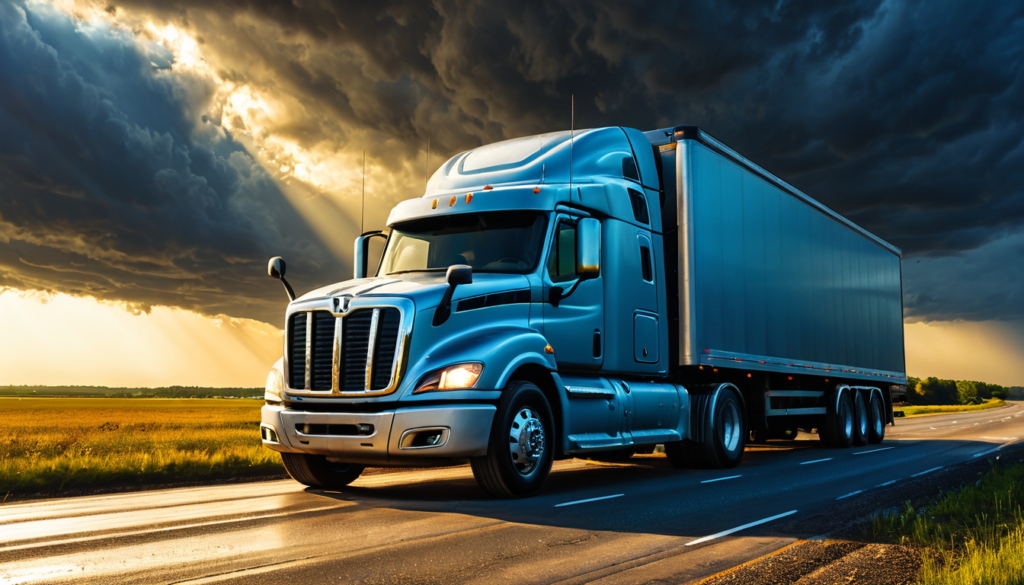
Interstate 57 cuts through the heart of Coles County like an artery, pulsing with 80,000-pound steel behemoths hauling everything from grain to manufactured goods between Chicago and Memphis. When one of those 18-wheelers loses control on the ice outside Charleston, drifts across the center line near Mattoon, or jackknifes on the overpass during an Illinois winter storm, the physics are brutal. Your sedan weighs 4,000 pounds. That truck? Up to 80,000 pounds. That difference isn’t just unfair—it’s catastrophic.
We’ve seen what happens when trucking companies cut corners on safety. We’ve held them accountable. And if you or someone you love has been hurt in an 18-wheeler accident anywhere in Coles County—from the I-57 corridor through Mattoon to the rural routes near Charleston and Lake Land College—we’re here to help you fight back.
Why 18-Wheeler Accidents in Coles County Demand Specialized Legal Experience
Trucking accidents aren’t just big car wrecks. They’re complex, high-stakes cases involving federal regulations, multiple liable parties, and evidence that disappears unless someone acts fast to preserve it. At Attorney911, we’ve spent over 25 years handling these exact cases. Ralph Manginello, our managing partner, has been fighting for injury victims since 1998. He’s admitted to federal court in the Southern District of Texas, and he’s recovered multi-million dollar settlements for families devastated by commercial truck crashes—$5 million for a traumatic brain injury victim, $3.8 million for a client who suffered an amputation after a crash, and settlements ranging from $1.9 million to $9.8 million for catastrophic injuries.
But here’s what really makes us different: Our team includes Lupe Peña, a former insurance defense attorney who spent years working for the very companies he’s now fighting against. He knows their playbook. He understands how adjusters are trained to minimize your claim, and he uses that insider knowledge to maximize your recovery. When you’re dealing with a trucking company that has a rapid-response team lawyers at the scene before the ambulance arrives, you need someone on your side who knows exactly how they think.
The FMCSA Regulations That Protect You (And Prove Negligence)
Every commercial truck operating in Coles County must comply with Federal Motor Carrier Safety Administration (FMCSA) regulations under Title 49 of the Code of Federal Regulations. These aren’t just suggestions—they’re federal law. When trucking companies violate these rules, they’re breaking the law, and those violations prove negligence in your case.
49 CFR Part 391 – Driver Qualification Standards
Before a trucking company ever puts a driver on I-57 or any Coles County highway, that driver must meet strict federal qualifications under 49 CFR § 391.11. They must be at least 21 years old, medically certified by a DOT examiner every two years, and maintain a Driver Qualification File that includes background checks, driving records, and training documentation.
We subpoena these files in every case. If the trucking company failed to check the driver’s history—if they hired someone with a pattern of violations or failed to verify their CDL—they’re liable for negligent hiring. Ralph Manginello has secured multi-million dollar settlements by proving trucking companies knowingly put dangerous drivers on the road.
49 CFR Part 395 – Hours of Service (HOS) Regulations
This is where most trucking companies in Coles County get caught. Federal law limits property-carrying drivers to:
- 11 hours maximum driving after 10 consecutive hours off duty
- 14 hours total duty window—they cannot drive beyond the 14th consecutive hour after coming on duty
- 30-minute mandatory break after 8 cumulative hours of driving
- 60/70 hour weekly limits—no driving after 60 hours in 7 days or 70 hours in 8 days
Since December 2017, trucks must use Electronic Logging Devices (ELDs) that automatically record this data. That ELD data proves whether the driver was fatigued—drowsy driving causes approximately 31% of fatal truck crashes. And here’s the critical part: ELD data can be overwritten or deleted in as little as 30 days. We send spoliation letters within 24 hours of being retained to lock down that evidence before it disappears.
49 CFR Part 393 – Parts and Accessories for Safe Operation
Federal law mandates specific equipment standards. Under 49 CFR § 393.40-55, air brake systems must be properly maintained with specific pushrod travel limits. Cargo must be secured according to 49 CFR § 393.100-136 with tiedowns that can withstand 0.8g deceleration. Lighting devices must function properly.
When a truck’s brakes fail on the downgrade approaching Charleston, or when improperly secured cargo shifts causing a rollover on US-45, these federal violations become the foundation of your negligence claim.
49 CFR Part 392 – Driving of Commercial Motor Vehicles
Under 49 CFR § 392.3, no driver can operate a commercial motor vehicle while fatigued or ill. Section 392.11 prohibits following too closely—which is critical on Coles County’s high-speed rural highways. Section 392.82 bans hand-held mobile phone use, and § 392.5 prohibits alcohol use within four hours of duty.
Accident Types We See on Coles County Roads
Coles County’s mix of interstate highway (I-57), major US routes (US-45), and rural agricultural roads creates specific dangers. Here are the accident types we handle—and why they happen here:
Rear-End Collisions: The Rural Highway Danger
An 80,000-pound truck traveling at 65 mph needs approximately 525 feet to stop—that’s nearly two football fields. On I-57 or US-45 through Coles County, where speed limits are high and traffic can slow suddenly, rear-end collisions are devastating.
These often happen because the driver was distracted (texting, per 49 CFR § 392.82), fatigued (violating Part 395), or following too closely (violating § 392.11). The ECM (Electronic Control Module) data from the truck’s black box will show exactly when brakes were applied—or if they weren’t applied at all.
Jackknife Accidents: Winter Weather Risks
Coles County sees severe Illinois winters. When a truck jackknives on I-57 during a snowstorm, it’s usually because the driver braked improperly on ice, was speeding for conditions (violating 49 CFR § 392.6), or had an empty or lightly loaded trailer that lost traction. These accidents often block multiple lanes and create multi-vehicle pileups with catastrophic injuries.
Underride Collisions: The Most Deadly
When a passenger vehicle slides under the rear or side of a trailer, the roof gets sheared off at windshield level. Federal law requires rear impact guards meeting 49 CFR § 393.86 standards, but many trucks have inadequate or damaged guards. Side underride guards aren’t federally mandated yet, but trucking companies can still be held liable for these devastating accidents.
Cargo Spill and Shift Accidents: Agricultural Transport Risks
Coles County is agricultural heartland. When grain trucks or equipment haulers transport loads on US-45 or rural routes, improperly secured cargo can shift, causing rollovers, or spill onto the roadway, creating secondary accidents. Federal cargo securement rules under 49 CFR § 393.100-136 require specific tiedown strength—aggressive weight limits must be followed.
Wide Turn Accidents (“Squeeze Play”)
When an 18-wheeler swings wide to make a right turn in Charleston or Mattoon, smaller vehicles often get caught in the blind spot and crushed against the curb or another vehicle. These accidents happen because drivers fail to check mirrors or signal properly under 49 CFR § 393.80.
Blind Spot Accidents
Trucks have massive blind spots—20 feet in front, 30 feet behind, and significant areas on both sides. When a truck changes lanes on I-57 without properly checking these “No-Zones,” cars get sideswiped or forced off the road.
Tire Blowout Accidents
Truck tires must maintain 4/32″ tread depth on steer tires per 49 CFR § 393.75. In the heat of summer or the cold of Illinois winter, underinflated or worn tires blow out, causing drivers to lose control and creating “road gator” debris hazards.
Brake Failure Accidents
Brake problems contribute to approximately 29% of large truck crashes. Under 49 CFR § 396, trucking companies must maintain systematic inspection programs. When they defer brake maintenance to save money, devastating high-speed collisions result.
All Liable Parties—Not Just the Driver
One of the biggest mistakes people make is assuming only the truck driver is responsible. In Coles County 18-wheeler accidents, we pursue every liable party:
1. The Truck Driver: Direct negligence for speeding, distraction, fatigue, or impairment.
2. The Trucking Company: Vicarious liability under respondeat superior, plus direct negligence for negligent hiring (49 CFR § 391.51), negligent training, negligent supervision, or pressuring drivers to violate HOS regulations.
3. Cargo Owner/Shipper: The company that loaded grain or equipment onto that truck may have provided improper loading instructions or required overweight loads.
4. Loading Company: Third-party loaders who failed to secure cargo properly under FMCSA standards.
5. Truck/Trailer Manufacturer: Defective brakes, tires, or stability control systems.
6. Parts Manufacturer: Defective brake components or tires that failed.
7. Maintenance Company: Third-party mechanics who failed to inspect or repair known defects.
8. Freight Broker: Companies that arranged the shipment but negligently selected carriers with poor safety records.
9. Truck Owner: In owner-operator situations, the owner who failed to maintain the vehicle.
10. Government Entities: If road design defects or inadequate signage on Coles County roads contributed to the crash.
Lupe Peña’s insurance defense background is crucial here. He knows how trucking insurers try to shift blame to other parties or claim your injuries were pre-existing. He anticipates every defense tactic because he’s used them himself—and now he fights against them.
Critical Evidence That Disappears Unless You Act Fast
Evidence in Coles County trucking accidents has a shelf life. Black box ECM data can be overwritten in 30 days. Dashcam footage gets deleted within weeks. Cell phone records showing distraction require subpoenas that take time. Witness memories fade.
That’s why we act immediately:
- We send spoliation letters within 24 hours to all parties demanding preservation of ECM/ELD data, driver qualification files, maintenance records, and the physical truck itself
- We photograph the accident scene and vehicles before they’re repaired
- We obtain police reports from the Coles County Sheriff’s Office or Illinois State Police
- We preserve GPS and telematics data showing the truck’s route and speed
- We interview witnesses while memories are fresh
As client Chad Harris told us, “You are NOT just some client… You are FAMILY to them.” We treat every case with that urgency because we know the trucking company is already building its defense.
Catastrophic Injuries and Life-Long Consequences
The 20:1 weight difference between a truck and car means catastrophic injuries are the norm, not the exception. We’ve recovered settlements in the $1.5 million to $9.8 million range for traumatic brain injuries, $1.9 million to $8.6 million for amputations, and $1.9 million to $9.5 million for wrongful death cases.
Traumatic Brain Injury (TBI): From mild concussions to severe cognitive impairment requiring lifetime care. Symptoms include memory loss, personality changes, and inability to work.
Spinal Cord Injuries: Paraplegia or quadriplegia requiring wheelchairs, home modifications, and lifelong medical care costing $3-5 million over a lifetime.
Amputations: Traumatic limb loss requiring prosthetics (costing $5,000-$50,000 per prosthetic), rehabilitation, and psychological counseling.
Severe Burns: From fuel tank ruptures or hazmat spills requiring skin grafts and reconstructive surgery.
Wrongful Death: When trucking negligence takes a loved one, surviving family members can recover lost income, loss of companionship, mental anguish, and funeral expenses.
Illinois Law: Your Rights in Coles County
Statute of Limitations: In Illinois, you have two years from the date of the accident to file a personal injury lawsuit. For wrongful death, it’s two years from the date of death. Wait longer, and you lose your right to compensation forever—no matter how serious your injuries.
Comparative Negligence: Illinois follows a modified comparative negligence rule (51% bar) under 735 ILCS 5/2-1116. This means you can recover damages even if you were partially at fault, as long as you were 50% or less responsible. Your recovery is reduced by your percentage of fault. But if you’re found 51% or more at fault, you recover nothing. That’s why proving the truck driver’s negligence—and documenting it immediately—is critical.
Damage Caps: Unlike some states, Illinois does not cap compensatory damages for personal injury cases. There’s no limit on what you can recover for medical expenses, lost wages, or pain and suffering. Punitive damages are also available in Illinois when trucking companies act with gross negligence or willful misconduct—though these require clear and convincing evidence.
Trucking Corridors in Coles County: Interstate 57 is the primary north-south trucking route connecting Chicago to Memphis, carrying massive freight volume through Mattoon and Charleston. US-45 runs north-south through the county. Illinois Route 16 and 121 carry significant agricultural truck traffic. These routes see everything from long-haul freight to local grain transport.
What to Do After an 18-Wheeler Accident in Coles County
If you’ve been involved in a truck accident on I-57, US-45, or any Coles County road:
- Call 911 immediately and report all injuries
- Seek medical attention even if you feel okay—adrenaline masks serious injuries
- Document everything—photos of vehicles, the scene, your injuries, and contact info for witnesses
- Get the trucking company’s information—DOT number, company name, driver info
- Do NOT give recorded statements to insurance adjusters
- Call Attorney911 immediately at 1-888-ATTY-911 to preserve critical evidence
Why Choose Attorney911 for Your Coles County Trucking Case
We’ve gone toe-to-toe with Fortune 500 corporations like BP in the Texas City refinery explosion litigation. We’ve taken on Walmart, Amazon, FedEx, and UPS in trucking cases. With offices in Houston, Austin, and Beaumont—and federal court admission allowing us to handle cases nationwide—we have the resources to take on any trucking company, no matter how big.
Our 4.9-star Google rating from over 251 reviews reflects how we treat clients. As Glenda Walker said, “They fought for me to get every dime I deserved.” Donald Wilcox put it this way: “One company said they would not accept my case. Then I got a call from Manginello… I got a call to come pick up this handsome check.”
We work on contingency. You pay nothing—zero—unless we win. We advance all investigation costs. And we offer Hablamos Español through Lupe Peña for Spanish-speaking clients in Coles County.
Frequently Asked Questions About Coles County Trucking Accidents
How long do I have to file a lawsuit in Illinois?
Two years from the accident date. But evidence disappears much faster—call us within days, not months.
Can I recover if I was partially at fault?
Yes, under Illinois law, as long as you were 50% or less at fault. But your recovery is reduced by your percentage of responsibility.
What is a spoliation letter and why does it matter?
It’s a legal notice demanding preservation of evidence. Once we send it, the trucking company faces serious penalties if they destroy black box data, maintenance records, or driver logs.
Who can be sued besides the driver?
The trucking company, cargo loader, maintenance company, manufacturer, freight broker, and potentially government entities if road defects contributed.
How much is my case worth?
It depends on injury severity, medical costs, lost wages, and insurance coverage. Trucking companies carry $750,000 to $5 million in coverage—much more than typical car accidents. We’ve recovered multi-million dollar settlements for catastrophic injuries.
What if the trucking company offers a quick settlement?
Don’t accept it. Early offers are designed to pay you less than you deserve before you know the full extent of your injuries. As Ernest Cano said about our firm, “Will fight tooth and nail for you.”
Do you handle cases in Coles County if you’re based in Texas?
Yes. With federal court admission and experience handling interstate trucking cases nationwide, we can represent you in Coles County, Illinois. We understand Illinois law, federal FMCSA regulations apply nationwide, and we work with local Illinois counsel when necessary to ensure compliance with state-specific rules.
What should I do if the insurance adjuster calls?
Don’t give a recorded statement. They’ll use what you say to minimize your claim. Let us handle all communications.
Can undocumented immigrants file claims?
Yes. Immigration status does not affect your right to compensation for injuries caused by someone else’s negligence.
What if my loved one was killed?
Wrongful death claims in Illinois allow recovery for lost income, loss of consortium, mental anguish, and funeral expenses. Call us immediately to protect that claim.
The trucking company that hit you has lawyers. They have rapid-response teams. They have insurance adjusters trained to pay you as little as possible. You deserve someone fighting just as hard for you.
If you’ve been hurt in an 18-wheeler accident on I-57, US-45, or anywhere in Coles County—whether in Mattoon, Charleston, or the rural roads between—call Attorney911 at 1-888-ATTY-911 or (888) 288-9911. We’re available 24/7 because we know evidence doesn’t wait, and neither should you.
Hablamos Español. Llame al 1-888-ATTY-911.
Don’t let the trucking company push you around. With 25+ years of experience, federal court credentials, and a former insurance defense attorney on your side, we level the playing field. Your fight starts with one call: 1-888-ATTY-911.