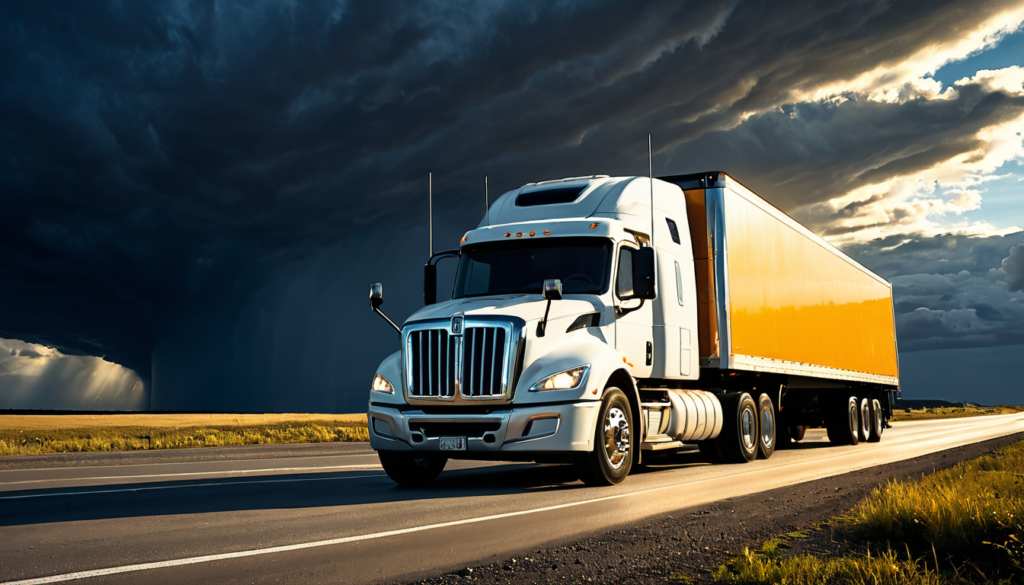
When an 80,000-pound truck slams into your vehicle on the rural highways of Nebraska, everything changes in an instant. The pain is immediate. The confusion overwhelming. And while you’re still in shock, the trucking company has already dispatched its rapid-response team to protect their interests—not yours. At Attorney911, we’ve spent over 25 years fighting for families across Nebraska who’ve been devastated by 18-wheeler accidents in Perkins County and surrounding communities. We know the agricultural trucking corridors, the grain haulers who push too hard during harvest season, and the insurance tactics designed to pay you less than you deserve.
If you’re reading this from a hospital bed in Grant, Ogallala, or right here in Perkins County, you need to know one thing: the clock started ticking the moment that truck hit you. Evidence that could prove your case is disappearing right now. Black box data can be overwritten in 30 days. Witnesses’ memories fade. And the trucking company is already building their defense. But we’re here to stop them—and to fight for every dime you deserve.
Why Perkins County 18-Wheeler Accidents Are Different
Out here in Perkins County, we’re not just dealing with typical highway traffic. We’re dealing with agricultural lifelines—massive grain trucks, livestock haulers, and equipment carriers that crisscross our rural roads from US-30 to Highway 61. These aren’t just delivery trucks; they’re the backbone of Nebraska’s economy, and when they’re driven negligently, they become 80,000-pound weapons.
The physics of a truck accident in Perkins County are brutal. Your car weighs roughly 4,000 pounds. A fully loaded 18-wheeler can weigh 20 times that—80,000 pounds of steel and cargo. When that mass collides with a passenger vehicle at highway speeds, the results are catastrophic. We’ve seen families torn apart on the straight stretches near Madrid, rollovers on the county roads outside Grant, and rear-end collisions on the approaches to Interstate 80. The injuries aren’t just “accidents”—they’re often the result of trucking companies cutting corners on safety, pushing drivers beyond federal limits, and ignoring critical maintenance to maximize profits.
Our managing partner, Ralph Manginello, has handled trucking accident litigation since 1998. With admission to federal court in the Southern District of Texas and 25+ years of experience, he’s gone toe-to-toe with Fortune 500 corporations like BP in the Texas City explosion litigation, securing justice for victims of catastrophic industrial disasters. He knows how to read black box data, interpret FMCSA regulations, and hold negligent carriers accountable. And he brings that expertise to every trucking case we handle in Perkins County.
The FMCSA Regulations That Protect You—or Prove Negligence When Broken
Every 18-wheeler operating in Perkins County must comply with strict Federal Motor Carrier Safety Administration (FMCSA) regulations codified in 49 CFR Parts 390-399. These federal laws exist specifically to prevent the exact tragedies we see too often on Nebraska highways. When trucking companies violate these rules, they’re not just breaking the law—they’re creating the dangerous conditions that cause catastrophic accidents.
49 CFR Part 390 establishes general applicability—meaning these rules apply to every commercial motor vehicle with a gross vehicle weight rating over 10,001 pounds operating in interstate commerce. That includes virtually every big rig you see on Perkins County roads.
49 CFR Part 391 governs driver qualifications. Before a trucking company lets someone behind the wheel of an 80,000-pound vehicle, they must verify that driver has a valid Commercial Driver’s License (CDL), passed a medical examination within the last two years, undergone proper training, and has a clean driving record. The regulations require companies to maintain a Driver Qualification File for every operator, including employment applications, background checks, and previous employer verifications. When we investigate your case, we subpoena these files immediately. If the company skipped background checks or hired a driver with a history of accidents, that’s negligent hiring—and it’s grounds for substantial liability.
49 CFR Part 392 covers the actual driving rules. Section 392.3 prohibits operating while fatigued or ill in a way that makes driving unsafe. Section 392.4 bans drug use, while Section 392.5 sets strict alcohol restrictions—no alcohol within four hours of duty and absolutely no operating with a blood alcohol concentration of 0.04 or higher. Section 392.11 requires drivers to maintain safe following distances, and Section 392.82 prohibits hand-held mobile phone use while driving. These violations are common in rural areas where drivers get complacent on long, straight stretches.
49 CFR Part 393 mandates vehicle safety standards. This includes brake system requirements (Section 393.40-55), lighting equipment (Section 393.11), and crucial cargo securement rules (Sections 393.100-136). For Perkins County’s agricultural trucks hauling grain or livestock, improper securement can cause deadly rollovers or cargo spills. The regulations require cargo to be secured to withstand specific force thresholds—0.8 g deceleration forward, 0.5 g rearward, and 0.5 g lateral. When loaders cut corners or companies overload trucks beyond capacity, they violate these federal standards.
49 CFR Part 395 establishes Hours of Service (HOS) regulations—the rules designed to prevent driver fatigue. For property-carrying drivers, the law is clear: maximum 11 hours of driving after 10 consecutive hours off duty; no driving beyond the 14th consecutive hour after coming on duty; mandatory 30-minute break after 8 cumulative hours of driving; and weekly limits of 60 hours in 7 days or 70 hours in 8 days. Since December 18, 2017, most drivers must use Electronic Logging Devices (ELDs) that automatically record these hours. Fatigued driving causes approximately 31% of fatal truck crashes, and ELD data often proves the driver was violating these limits when they hit you.
49 CFR Part 396 requires systematic inspection, repair, and maintenance. Section 396.3 mandates regular maintenance procedures, while Section 396.11 requires drivers to complete post-trip inspection reports identifying any defects. Section 396.13 requires pre-trip inspections. Brake problems factor into 29% of large truck crashes—often because companies deferred maintenance to save money. When a truck’s brakes fail on a Perkins County road intersection, it’s usually because someone violated Part 396.
The 18-Wheeler Accident Types We See in Perkins County
While every crash is unique, certain accident patterns emerge repeatedly on Nebraska’s rural highways and agricultural routes.
Jackknife Accidents occur when a truck’s trailer swings out perpendicular to the cab, often blocking multiple lanes. On the icy patches of rural Perkins County roads during Nebraska winters, sudden braking can trigger these violent events. The trailer sweeps across the highway, striking vehicles in multiple lanes. Common causes include speeding on curves (especially dangerous on Highway 61), improper braking on wet or icy roads (common during Plains blizzards), and empty or lightly loaded trailers that lack stability. Jackknifes often involve violations of 49 CFR § 393.48 (brake system malfunction) or § 392.6 (speeding for conditions).
Rollover Accidents are particularly deadly on rural Nebraska roads. A fully loaded grain truck or livestock hauler has a high center of gravity. When drivers take curves too quickly—especially on County Roads J or M outside Grant—the truck tips onto its side or roof. These accidents account for a disproportionate share of fatalities in agricultural areas. Causes include speeding on curves, improperly secured cargo that shifts during turns (violating 49 CFR § 393.100-136), and driver fatigue causing delayed reaction. The cargo “slosh” of liquid tankers or shifting grain can destabilize the vehicle instantly.
Underride Collisions are among the most horrific accidents we handle. When a passenger vehicle strikes the rear or side of a trailer and slides underneath, the trailer height shears off the vehicle’s passenger compartment at windshield level. Approximately 400-500 underride deaths occur annually nationwide. While 49 CFR § 393.86 requires rear impact guards on trailers manufactured after January 26, 1998, there remains no federal requirement for side underride guards—though advocacy continues. These accidents often occur at night on unlit rural highways when trucks slow unexpectedly or make wide turns across traffic.
Rear-End Collisions involving trucks are devastating because of stopping distance physics. An 18-wheeler at 65 mph needs approximately 525 feet to stop—nearly two football fields. On the straight stretches of US-30 approaching Perkins County, following too closely (violating 49 CFR § 392.11) or distracted driving causes trucks to slam into smaller vehicles. Driver fatigue, cell phone use (violating § 392.82), and brake failures (violating § 393.40-55) are common culprits.
Cargo Spill and Shift Accidents are frequent in agricultural Perkins County. When grain haulers overload trucks or fail to properly secure loads, cargo shifts during transit, changing the vehicle’s center of gravity and causing rollovers. Spilled grain on rural roads creates secondary accidents when other vehicles lose control. These cases often involve the cargo owner (the farmer or elevator), the loading company, and the trucking company as liable parties.
Wide Turn Accidents (“squeeze play”) occur when 18-wheelers swing wide before making right turns—often into oncoming traffic or across the path of vehicles attempting to pass on the right. In small towns like Grant or Madrid, these accidents can crush vehicles between the truck and curbs or buildings.
Tire Blowouts on hot summer Nebraska days can cause immediate loss of control. Underinflated tires, overloaded vehicles exceeding tire capacity, and worn treads (violating 49 CFR § 393.75) create deadly “road gators”—tire debris that strikes following vehicles or causes multi-car pileups.
Brake Failure Accidents result from systematic maintenance neglect. On the steep grades of western Nebraska (though less severe than mountain states), overheated brakes or air brake system failures (violating 49 CFR § 393.40) prevent drivers from stopping in time.
Every Party Who Could Be Liable for Your Perkins County Accident
Unlike car accidents with one at-fault driver, 18-wheeler accidents involve multiple potentially liable parties—each with their own insurance policies. We investigate and pursue claims against every responsible party to maximize your recovery.
The Truck Driver bears direct responsibility for negligent driving—speeding, distracted driving, fatigue, or impairment. We examine their driving record, ELD logs, cell phone records, and drug/alcohol test results.
The Trucking Company/Motor Carrier is often our primary target under the doctrine of respondeat superior (employer liability for employee negligence). Beyond vicarious liability, we pursue direct negligence claims for negligent hiring (failing to check backgrounds), negligent training (inadequate safety education), negligent supervision (ignoring HOS violations), and negligent maintenance (deferring brake or tire repairs). Trucking companies carry $750,000 to $5 million in insurance—far exceeding typical auto policies.
The Cargo Owner/Shipper—often a grain elevator, farm cooperative, or livestock operation—may be liable if they demanded overloaded trucks, provided improper loading instructions, or pressured drivers to violate safety regulations to meet delivery schedules. During harvest season in Perkins County, these pressures intensify.
The Cargo Loading Company (if different from the shipper) bears responsibility for proper cargo securement under 49 CFR § 393.100. Unbalanced loads or insufficient tiedowns directly cause rollovers.
Truck and Trailer Manufacturers face liability for defective designs—brake systems prone to failure, unstable fuel tank placement, or defective safety systems. We research recall notices and similar defect complaints through NHTSA databases.
Parts Manufacturers—particularly brake component or tire makers—can be liable when their products fail catastrophically. We’ve pursued claims against major tire manufacturers for blowouts that caused rollovers.
Maintenance Companies that serviced the truck but performed negligent repairs—such as improper brake adjustments or using substandard parts—can be liable for their negligence.
Freight Brokers who arranged the transportation may be liable for negligent carrier selection—choosing unsafe trucking companies with poor safety records to save money.
The Truck Owner (if different from the carrier or driver) can be liable for negligent entrustment of a dangerous vehicle or failure to maintain equipment.
Government Entities may bear responsibility for dangerous road design, inadequate signage, or failure to maintain rural roads—though sovereign immunity limits require careful navigation.
The 48-Hour Evidence Preservation Protocol
In Perkins County trucking cases, evidence disappears fast. We cannot emphasize this enough: the trucking company is already building their defense while you’re receiving medical treatment.
Critical Timelines:
- ECM/Black Box data can be overwritten in 30 days or with new driving events
- ELD data may only be retained for 6 months under FMCSA minimums
- Dashcam footage often deletes within 7-14 days
- Surveillance video from nearby businesses typically overwrites in 7-30 days
- Witness memories fade significantly within weeks
- Physical evidence (the truck itself) may be repaired, sold, or scrapped
The Spoliation Letter:
Within 24-48 hours of being retained, we send formal spoliation letters to the trucking company, their insurer, and all potentially liable parties. This legal notice demands preservation of:
- ECM/EDR data (speed, braking, throttle position)
- ELD logs (hours of service violations)
- Driver Qualification Files
- Maintenance and inspection records
- Dispatch communications
- Cell phone records
- GPS and telematics data
- Dashboard camera footage
Once this letter is sent, destroying evidence constitutes spoliation—a serious legal violation. Courts can instruct juries to assume destroyed evidence was unfavorable to the trucking company, impose monetary sanctions, or even enter default judgment.
Catastrophic Injuries and Their Devastating Impact
The physics of an 80,000-pound truck versus a 4,000-pound car inevitably causes catastrophic injuries. We regularly help Perkins County families dealing with:
Traumatic Brain Injuries (TBI): From mild concussions to severe brain damage causing permanent cognitive impairment, personality changes, and inability to work. Lifetime care costs range from $85,000 to over $3 million. Our firm has secured settlements ranging from $1.5 million to $9.8 million for TBI victims.
Spinal Cord Injuries: Depending on the level of injury, victims may suffer paraplegia (loss of function below the waist) or quadriplegia (loss of function in all four limbs). These injuries require wheelchairs, home modifications, and 24/7 care. Lifetime costs exceed $5 million in severe cases.
Amputations: Whether traumatic (severed at the scene) or surgical (required due to crushing injuries or infection), amputations necessitate prosthetics ($5,000-$50,000 each), replacement prosthetics throughout life, and extensive rehabilitation. Our firm has recovered $1.9 million to $8.6 million for amputation cases.
Severe Burns: Fuel tank ruptures or hazmat spills can cause third and fourth-degree burns requiring skin grafts, reconstructive surgeries, and lifelong pain management.
Wrongful Death: When trucking negligence kills a loved one, surviving family members can recover lost future income, loss of consortium, mental anguish, and funeral expenses. We’ve recovered $1.9 million to $9.5 million for wrongful death cases.
Understanding Commercial Truck Insurance in Nebraska
Federal law mandates substantial insurance coverage for commercial trucks—recognizing the catastrophic damage they can cause.
Minimum Coverage Requirements:
- Non-hazardous freight: $750,000
- Oil/Petroleum: $1,000,000
- Hazardous materials: $5,000,000
Many carriers carry $1-5 million in coverage. Additionally, multiple policies may apply—the motor carrier’s policy, the trailer interchange coverage, the cargo insurer, and excess/umbrella policies. Our job is to identify and access every available coverage to maximize your recovery.
In Nebraska (Perkins County), you have four years from the date of the accident to file a personal injury lawsuit. However, waiting is dangerous. Evidence disappears, and Nebraska follows “modified comparative negligence” with a 50% bar rule—if you’re found 50% or more at fault, you recover nothing. Early investigation allows us to document the truck driver’s negligence before conditions change.
Why Choose Attorney911 for Your Perkins County Trucking Case
Our firm offers distinct advantages that trucking companies fear:
Ralph Manginello’s 25+ Years of Experience: Since 1998, Ralph has fought for injury victims, securing multi-million dollar settlements. His federal court admission allows him to handle complex interstate trucking cases that require federal jurisdiction.
The Insurance Defense Advantage: Associate attorney Lupe Peña spent years working at a national insurance defense firm. He knows exactly how adjusters evaluate claims, what tactics they use to minimize payouts, and when they’re bluffing about settlement authority. Now he uses that insider knowledge to fight for Perkins County families. As one of our clients, Chad Harris, said: “You are NOT just some client… You are FAMILY to them.”
Federal Court Experience: Unlike many local attorneys, we’re admitted to the U.S. District Court for the Southern District of Texas and can handle cases involving interstate commerce, which most large trucking operations involve.
Spanish-Language Services: Lupe Peña is fluent in Spanish. For Perkins County’s Hispanic community—many of whom work in agricultural trucking—this means direct communication without interpreters. Hablamos Español. Llame al 1-888-ATTY-911.
Three Offices, Statewide Reach: With offices in Houston, Austin, and Beaumont, we serve Perkins County clients efficiently while maintaining the resources to battle national trucking corporations.
Contingency Fee Representation: You pay nothing unless we win. We advance all investigation costs, including expert witnesses and accident reconstruction. Our standard fee is 33.33% pre-trial and 40% if litigation is required.
Frequently Asked Questions About Perkins County Trucking Accidents
What should I do immediately after an 18-wheeler accident in Perkins County?
Call 911 and seek immediate medical attention—even if injuries seem minor. Document the scene with photos if possible, including the truck’s DOT number (usually on the door), license plates, and any cargo or tire debris. Get witness contact information. Do not give recorded statements to the trucking company’s insurance. Call Attorney911 immediately at 1-888-ATTY-911.
How long do I have to file a lawsuit in Perkins County?
Nebraska law gives you four years from the accident date to file a personal injury lawsuit. For wrongful death, you have two years from the date of death. However, you should never wait—evidence critical to proving trucking company negligence disappears within days or weeks.
Who can be held responsible besides the truck driver?
The trucking company, cargo owner (grain elevator, farm cooperative), loading company, truck manufacturer, parts makers, maintenance companies, freight brokers, and even government entities responsible for road maintenance. We investigate every angle.
What is a “black box” and why does it matter?
The ECM (Engine Control Module) or EDR (Event Data Recorder) records speed, braking, throttle position, and fault codes in the moments before a crash. This objective data often proves the driver was speeding or failed to brake, contradicting their statements.
Can I still recover if I was partially at fault?
Under Nebraska’s modified comparative negligence rule, you can recover as long as you were not 50% or more at fault. Your recovery is reduced by your percentage of fault. Don’t assume you were at fault—let us investigate.
How much is my case worth?
It depends on injury severity, medical costs, lost wages, pain and suffering, and available insurance. Trucking companies carry $750,000 to $5 million in coverage. We’ve secured settlements ranging from hundreds of thousands to millions for Nebraska and Texas families.
Will my case go to trial?
Most settle, but we prepare every case for trial. Insurance companies know which attorneys are willing to go to court—and they offer better settlements to clients with trial-ready representation. We’ve litigated against Fortune 500 companies including BP and major national carriers.
Do you handle Spanish-speaking clients?
Sí. Lupe Peña is fluent in Spanish and provides direct representation without interpreters. Many of our Perkins County clients are agricultural workers who appreciate communicating directly in their first language. Hablamos Español.
What if the trucking company was from out of state?
We handle that regularly. Because trucks travel interstate, they’re subject to federal FMCSA regulations regardless of where they’re headquartered. Our federal court experience and ability to practice in multiple states (Ralph is licensed in Texas and New York) allows us to pursue out-of-state carriers effectively.
How quickly can you start my case?
Immediately. We answer calls 24/7 at 1-888-ATTY-911. We can visit you at the hospital, your home in Grant or Madrid, or wherever is convenient. We send spoliation letters within 24 hours to preserve critical evidence.
The Call That Changes Everything
Right now, while you’re dealing with medical bills, pain, and fear of the future, the trucking company has lawyers working to minimize your claim. They’re hoping you’ll wait too long, accept a lowball offer, or say something to their adjuster that damages your case.
Don’t let them win. Attorney911 has recovered over $50 million for injury victims, including multi-million dollar settlements for traumatic brain injuries, amputations, and wrongful death cases. We know Perkins County. We know the agricultural trucking industry. And we know how to make them pay when their negligence hurts innocent people.
Call 1-888-ATTY-911 today for a free consultation. Hablamos Español. You pay nothing unless we win. Your family deserves justice, and we’re ready to fight for it.
Attorney911
Legal Emergency Lawyers™
1-888-288-9911
Available 24/7
The content provided herein is for informational purposes only and does not constitute legal advice. Past results do not guarantee future outcomes. Every case is unique. You should consult with an attorney regarding the specific facts of your situation. Nebraska law applies a four-year statute of limitations for personal injury claims and a two-year limitation for wrongful death claims. Comparative negligence rules may affect your recovery. Attorney911 maintains offices in Houston, Austin, and Beaumont, Texas, and handles cases in Perkins County, Nebraska through strategic legal partnerships and federal court admissions.