Texas Corporate Fleet Truck Accident Lawyer · Abogado de Accidentes de Camiones de Flotas Corporativas en Texas
Amazon DSP / Relay / Flex Three-Layer Shield · FedEx Ground ISP / Express / Freight · UPS Teamsters · USPS FTCA · Sysco (Houston HQ Home-Field) · US Foods · McLane (Temple) · H-E-B · Buc-ee’s · Whataburger · Costco · Target · Sam’s Club · Coca-Cola · PepsiCo · Frito-Lay · Anheuser-Busch · Walmart Transportation (Tracy Morgan Case Study Heritage) · Werner Enterprises ($730M Ramsey Texas Verdict) · Knight-Swift · J.B. Hunt · Schneider · Every Major Corporate Fleet on Every Texas Road.
Attorney911 — The Manginello Law Firm, PLLC. Twenty-five-plus years. Federal court admitted, Southern District of Texas. Houston headquartered (where Sysco, Waste Management and many of America’s largest corporate fleets are also headquartered — home-field advantage). Documented multi-million dollar recoveries against Walmart, Amazon, FedEx, UPS and Coca-Cola operations. 4.9 stars across 251+ Google reviews. Hablamos Español — Lupe Peña. Su estatus migratorio NO afecta su derecho a recibir compensación. No fee unless we win. Call 1-888-ATTY-911 24 hours a day, 7 days a week.
Why a Texas Corporate Fleet Truck Case Is Fundamentally Different — and Why Most Texas Firms Get Crushed by Them
An ordinary commercial trucking case has one defendant carrier with a $750,000 to $5 million federal-floor insurance policy, an outside defense law firm engaged after the crash, and a settlement timeline driven by the policy ceiling. A corporate fleet case is a different animal. The defendant is not a single trucking carrier — it is a Fortune 500 corporation with a self-insured retention measured in the tens of millions, an in-house corporate risk management department staffed by attorneys who litigate these cases full-time, a captive insurance entity funding the working layer, an aggressive rapid-response team that is on the scene of any catastrophic crash within hours of the 911 call, an outside national defense firm on retainer for the larger litigation, a contractor-shield structure built specifically to push liability away from the parent, a rapid-action document-retention protocol designed to control discovery, and decades of institutional litigation memory across hundreds or thousands of similar cases. The settlement floor is not the FMCSA $750K or $5M. It is whatever the corporation’s risk-management team calculates as the lowest defensible exposure on the case file.
Most Texas plaintiff personal injury firms do not litigate corporate fleet cases at the depth those cases require. They take the cases. They sue the apparent driver and the apparent carrier. They negotiate against the apparent insurance policy. They settle for a fraction of what the case is worth because they never reach the parent corporation, never break the contractor shield, never penetrate the self-insured retention, never identify the additional-insured endorsements that expand coverage, and never apply the agency-and-control doctrines that Texas and federal courts have spent the last decade developing.
Attorney911 works at this depth. Ralph Manginello has been admitted to the United States District Court for the Southern District of Texas — the federal court where most major corporate fleet cases are filed when removed under diversity jurisdiction — for years. He has personally taken depositions of corporate safety directors, dispatchers, and risk-management representatives from Walmart, Amazon, Coca-Cola, FedEx, and UPS operations. Lupe Peña spent the early part of his career at a national insurance defense firm where his job was to defend the same corporate fleet structures we now litigate against. The institutional knowledge flows in both directions, and we use it.
Hit by a corporate fleet truck anywhere in Texas — Amazon, Walmart, FedEx, UPS, USPS, Sysco, H-E-B, Buc-ee’s, Whataburger, Costco, Target, Coca-Cola, PepsiCo, Frito-Lay, Werner, Knight-Swift, J.B. Hunt, Schneider — call 1-888-ATTY-911 right now. Free consultation. 24 hours a day, 7 days a week. Hablamos Español.
Who You Are Calling — Ralph Manginello, Lupe Peña, the Documented Corporate-Defendant Litigation History
Ralph P. Manginello has been a licensed Texas attorney since November 6, 1998 — Bar Card Number 24007597. He earned his Juris Doctor from South Texas College of Law Houston. He is admitted in Texas and in New York and is admitted to practice in the U.S. District Court for the Southern District of Texas and in the Federal Bankruptcy Court for the Southern District of Texas. The federal court admission is what allows us to follow corporate fleet defendants when they remove a state-court case to federal court under diversity jurisdiction. The federal bankruptcy admission is what allows us to follow defendant carriers who file for bankruptcy mid-litigation — Yellow Corporation in 2023, Celadon Group in 2019, and others.
Across Attorney911’s litigation history, the firm has handled cases against the major commercial fleet operations of Walmart, Amazon, Coca-Cola, FedEx and UPS — five of the largest US corporate fleet operators. That is institutional pattern recognition that informs every new corporate fleet case. We know how Walmart’s rapid-response team operates. We know how Amazon’s contractor-shield assertion plays out. We know how FedEx Ground argues the ISP separation. We know how UPS structures its document retention. We know how Coca-Cola defends route-truck route-decision evidence. The playbook is muscle memory.
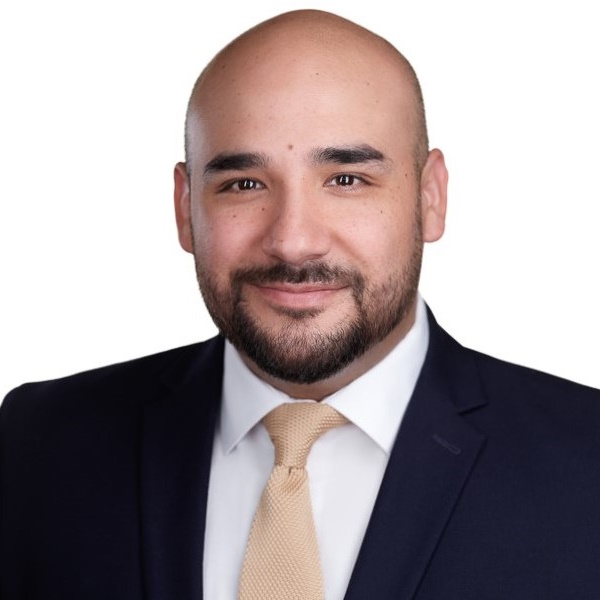
Lupe Eleno Peña — Associate Attorney
Lupe Peña is a third-generation Texan, born and raised in Sugar Land, Fort Bend County. South Texas College of Law Houston JD May 2012. Texas Bar Card 24084332. Admitted U.S. District Court SDTX. Before joining Attorney911 he spent the early part of his career at a national insurance defense firm where his job was to fight FOR insurance carriers and AGAINST injured plaintiffs in the same corporate-fleet cases he now brings. He has watched adjusters value claims using Colossus and ClaimIQ. He has sat in defense strategy meetings where carriers planned exactly how to push injured victims into low-ball settlements. He has built and broken every standard insurance defense argument in trucking and corporate fleet litigation. He is fluent in Spanish at the native level.
Documented case results
| Case Type | Result |
|---|---|
| Workplace / logging — TBI and vision loss | $5 million-plus settlement |
| Motor vehicle accident with medical complication — partial leg amputation following infection | $3.8 million-plus settlement |
| Maritime / Jones Act — severe back injury from lifting cargo on a vessel | $2 million-plus settlement |
| Commercial trucking | $2.5 million-plus |
| Trucking wrongful death (multiple cases) | Multi-million dollar recoveries |
| BP Texas City Refinery explosion — worker fatalities and catastrophic injuries | Confidential, part of $2.1 billion-plus industry-wide |
| University of Houston Pi Kappa Phi hazing — pledge with rhabdomyolysis and acute kidney failure | $10 million lawsuit filed Nov. 21, 2025 — active |
Total firm recoveries: more than $50 million. Past results do not guarantee future outcomes; every case is unique.
What it costs
Nothing up front. Contingency — 33.33% before suit, 40% if litigated. We advance investigation, accident reconstruction, life-care planning, vocational economics, and trial preparation. Court costs and case expenses may apply.
Texas corporate fleet case anywhere in the state? Call 1-888-ATTY-911.
The Tracy Morgan / Walmart 2014 New Jersey Turnpike Case Study — What Reshaped the Entire Corporate Fleet Litigation Field
On June 7, 2014, at approximately 1:00 a.m., a Walmart Transportation tractor-trailer driven by Kevin Roper struck the rear of a chauffeured limo van carrying comedian Tracy Morgan and several others on the New Jersey Turnpike near Cranbury, New Jersey. James “Jimmy Mack” McNair was killed. Tracy Morgan suffered severe traumatic brain injury and other catastrophic injuries that required years of rehabilitation. Three other passengers were seriously injured.
The investigation established what Walmart’s defense team most wanted to suppress: the driver had been awake for more than 24 hours at the time of the crash. He had commuted approximately 700 miles from his home in Georgia to begin his Walmart shift. The Hours of Service violation was not technical — it was a fundamental human-physiology failure that Walmart’s scheduling and dispatch system enabled. The civil litigation that followed produced a confidential settlement widely reported in the press to be in the range of $90 million or more, plus a separate confidential resolution for the McNair family.
What the case taught the entire corporate fleet litigation field
- Hours of Service is the single most powerful liability theory in corporate fleet litigation. Driver fatigue is provable through ELD data, cell phone records, fuel receipts, toll records, GPS tracking, and dispatch records. The fatigue cause is rarely a one-time mistake — it is almost always evidence of systemic carrier scheduling pressure. The systemic evidence multiplies the case value.
- The carrier is rarely the only defendant. Walmart Transportation employed the driver directly; Walmart Stores Inc. is the corporate parent; Walmart’s logistics planning and routing decisions live within the corporate parent. Plead corporate parent.
- The rapid-response team is on the scene before the ambulance leaves. Walmart’s internal investigation team typically arrives within hours. They photograph, they interview, they collect. The plaintiff side’s spoliation letter must be on its way before the carrier’s investigation team finishes its initial report.
- Driver commute time matters. Drivers who commute hundreds of miles to begin shifts are operating with cumulative fatigue that the FMCSA HOS framework does not capture in straight on-duty hours. Discovery on driver commute patterns becomes case-relevant.
- Settlement values for catastrophic corporate fleet cases are not policy-limit-bounded. Walmart self-insures to high retention with corporate excess. The settlement reflected the $648-billion-revenue corporate solvency rather than any FMCSA policy floor.
- The press coverage matters. A celebrity victim drove unprecedented public scrutiny. Walmart’s response — operational changes to its driver scheduling system, public commitments to safety reform, executive accountability — became evidence in subsequent cases that Walmart knew its prior practices were dangerous.
- The federal HOS framework was tightened in part because of this case. The 2017 ELD mandate effective date had origins in the regulatory response to large public fatigue-driven crashes — Tracy Morgan among them.
What this teaches your Texas Walmart case
Walmart’s distribution center network in Texas is extensive — Brookshire (Harris County), Sealy (Austin County), Plainview, Sanger, Searcy adjacent, Palestine, and others. Each DC generates outbound truck movements that share the same operational characteristics — driver scheduling, dispatch pressure, route assignments, ELD compliance management — that the Tracy Morgan case exposed. When you are hit by a Walmart truck on I-10 in Brookshire, on I-45 between Houston and Dallas, on I-35 in Central Texas, the playbook is the same: pull the ELD, pull the dispatch records, pull the route-assignment history, identify the systemic pattern, plead Walmart Transportation and Walmart Inc. as defendants, hit the corporate solvency floor.
Hit by a Walmart truck in Texas? Tracy Morgan-class playbook deployed. Call 1-888-ATTY-911.
Ramsey v. Werner Enterprises — The $730 Million Texas Verdict and What It Teaches About Every Corporate Fleet Case
In May 2018, a Texas jury in the 158th District Court of Denton County returned a verdict of approximately $89 million against Werner Enterprises in a wrongful-death case arising from a December 2014 crash on I-20 near Roscoe, Texas — the death of seven-year-old Brianna Blake and the catastrophic brain injury of her younger brother Nathan. The case was litigated through trial, and over time, after appellate proceedings and post-judgment proceedings, related Werner litigation has produced verdict-and-settlement totals widely reported in the legal press to exceed $730 million across the broader docket of cases — making the Werner exposure one of the largest single-carrier exposures in modern American trucking litigation.
What the underlying crash exposed
The trial evidence focused on the conduct of the Werner driver and the Werner training and supervision systems. The jury heard evidence about the driver’s experience level (a relatively new commercial driver), Werner’s driver-training program and the standards Werner applied (or failed to apply) to driver readiness for adverse-weather operations, the speed at which the driver was operating in icy conditions on I-20, and the systemic question of whether Werner’s growth-driven hiring practices had outpaced its safety-training infrastructure.
What the verdict teaches every Texas corporate fleet case
- Texas juries will return very large verdicts in trucking cases when the systemic safety evidence is developed. The Ramsey verdict was not an outlier — it was the product of meticulous discovery on Werner’s training and supervision systems and a presentation that connected systemic carrier conduct to the specific crash that killed and maimed children.
- Negligent training and negligent supervision are real claims that survive defense motions. Courts have allowed these claims to reach the jury when the evidentiary development is rigorous. The training-curriculum discovery is essential.
- Adverse-weather operations are foreseeable. Carriers that operate nationally know that some routes will encounter ice, snow, fog, flooding, or extreme weather. Their training and dispatch systems are obligated to account for the foreseeable operational reality.
- Driver experience matters. A driver new to the industry, new to a particular carrier, or new to a particular route presents a known elevated risk profile. Carriers that ignore the risk profile face systemic liability.
- The carrier’s growth model can become evidence. A carrier that has expanded faster than its safety-training infrastructure can support is operating on a known-risk basis.
- Punitive damages are available where systemic safety failures are proved with clear and convincing evidence of gross negligence. The combined Ramsey-related Werner exposure includes substantial punitive components.
- Post-verdict appellate and procedural proceedings are part of the case. Werner appealed; subsequent proceedings have continued. The verdict is the headline; the appellate and post-judgment proceedings determine ultimate recovery.
Why this is the most important Texas trucking precedent of the modern era
For decades, the conventional defense expectation in Texas commercial trucking cases was that catastrophic-injury verdicts would settle in the low-tens-of-millions range, that punitive damages would be limited, and that systemic carrier-conduct evidence would be excluded or minimized at trial. Ramsey v. Werner shattered every one of those expectations. The verdict signaled to defense counsel and to corporate fleet risk-management teams that Texas juries — properly equipped with the discovery — will hold corporate fleet operators accountable at scales that change settlement calculus across the entire industry. Every modern Texas corporate fleet settlement negotiation now happens in the shadow of Ramsey. We use it.
Hit by a Werner, Knight-Swift, Schneider, J.B. Hunt or other major truckload-carrier truck in Texas? Ramsey-precedent playbook deployed. Call 1-888-ATTY-911.
Amazon’s Three-Layer Contractor Shield — DSP, Relay and Flex — and the Maximum-Depth Piercing Playbook
Amazon does not employ the drivers who deliver Amazon packages. Amazon does not own most of the vehicles that carry Amazon freight on Texas highways. Amazon does not directly dispatch the gig drivers who deliver from Amazon Prime Now. Amazon has built — deliberately, with extensive corporate-counsel architecture — a three-layer contractor structure designed to push every conceivable theory of vehicle-related liability away from Amazon Inc. and onto smaller, less-solvent contractor entities that Amazon can replace at will. The three layers are Delivery Service Partners (DSPs) for last-mile residential delivery, Amazon Relay for middle-mile carrier freight, and Amazon Flex for gig-driver personal-vehicle delivery. Each layer presents its own piercing analysis.
Layer 1 — Delivery Service Partner (DSP)
The Amazon-branded delivery vans you see in your residential neighborhood are operated by Delivery Service Partners — independent businesses (typically LLCs) that contract exclusively with Amazon. The DSP rents the vans from Amazon (Amazon owns or leases them, often Rivian electric vans or Ram ProMaster vans), receives Amazon-issued uniforms and devices, runs Amazon-issued routes, meets Amazon-issued daily delivery quotas (frequently 250 to 350 stops per day per van), and operates under Amazon-monitored on-board AI cameras (Netradyne / Driveri systems integrated with Amazon’s contractor monitoring). The DSP employs the drivers as W-2 employees of the DSP — but every operational parameter that controls those drivers’ conduct flows from Amazon corporate.
The piercing playbook for Layer 1:
- Apparent authority. The Amazon-branded van, the Amazon-branded uniform, the Amazon-issued device, the “amazon.com” return logo on the package — all create the apparent authority of the driver to act for Amazon. Texas apparent-authority doctrine reaches Amazon despite the contractor structure.
- Agency-and-control. The level of control Amazon exercises over routes, schedules, quotas, vehicles, and on-the-job conduct (via the AI camera system) crosses the line from independent-contractor to agent. Texas common-law agency doctrine applies. Federal courts in multiple jurisdictions have allowed agency claims against Amazon to proceed past summary judgment.
- Joint employer. Where Amazon and the DSP both exercise control over the worker, joint employer liability can attach. The borrowed-servant doctrine in Texas overlaps.
- Negligent selection of contractor. Amazon retained the DSP. Amazon vetted (or failed to vet) the DSP’s safety systems. A DSP with a documented pattern of crashes, driver complaints, or safety violations who continues to receive Amazon contracts presents the negligent-selection theory.
- Direct corporate negligence. Amazon’s quota system, route-density planning, and AI monitoring system are corporate-level decisions that contribute to the on-the-job conditions producing crashes. Direct corporate negligence theories — negligent system design — reach Amazon Inc. directly.
- Successor / parent / single-business-enterprise. Amazon’s corporate structure includes Amazon.com Services LLC and other subsidiaries; the Texas single-business-enterprise doctrine and alter-ego principles can reach the parent.
Layer 2 — Amazon Relay (middle-mile)
Amazon Relay is Amazon’s freight brokerage platform connecting independent carriers (separate trucking companies, owner-operators, and small fleets) with Amazon middle-mile freight — the loads that move between fulfillment centers, sortation centers, delivery stations, and inbound from suppliers. The carrier accepts the load through the Relay app, runs the freight under the carrier’s own FMCSA authority, and bills Amazon. From Amazon’s perspective, this is broker-only activity — Amazon argues that as a freight broker it has no responsibility for the carrier’s operational conduct.
The piercing playbook for Layer 2:
- Negligent broker selection. Texas and federal courts have increasingly allowed claims against freight brokers for negligent selection of unsafe carriers. The broker’s duty is to vet the carrier — check FMCSA Safety Measurement System BASIC scores, verify operating authority, verify insurance. A broker who tendered loads to a carrier with documented safety violations exposes itself.
- The Section 14501 preemption analysis. 49 U.S.C. § 14501(c) preempts certain state-law claims against motor carriers, brokers, and freight forwarders. The scope of preemption for negligence claims against brokers is contested. Recent appellate decisions have permitted claims to proceed under the Section 14501(c)(2)(A) safety exception. We litigate within that evolving framework.
- Algorithm-driven dispatch evidence. Amazon’s Relay platform uses algorithm-driven dispatch that creates effective schedule pressure on contracted carriers. Discovery on the algorithm parameters provides system-design evidence.
- Joint venture or de facto carrier. Where Amazon’s control over freight movement crosses the broker-only line into de facto carrier operations, broker preemption arguments can be defeated.
Layer 3 — Amazon Flex (gig drivers in personal vehicles)
Amazon Flex is the gig-driver platform — individual drivers using their own personal vehicles to deliver Amazon packages, paid per delivery block, classified as independent contractors. Coverage analysis runs through the four-phase rideshare/gig insurance framework discussed in our Austin pillar: Phase 0 (app off — personal auto only); Phase 1 (app on, no delivery — coverage gap territory); Phase 2 (en route to pickup — Amazon contingent coverage activates, typically $1M); Phase 3 (delivery in vehicle — full $1M plus UM/UIM).
The piercing playbook for Layer 3:
- Driver-status verification at moment of crash. Subpoena Amazon for the Flex app driver-status logs the day we are retained. Discrepancies between platform records and other evidence are common.
- Personal auto coverage denial fight. Personal auto policies often contain commercial-use exclusions; we litigate the exclusion in parallel.
- Misclassification. Where Amazon’s control over the Flex driver crosses the line from independent contractor to employee, employer liability attaches. The legal landscape is evolving.
- Algorithm pressure evidence. Amazon Flex delivery-block timing creates effective speed pressure on drivers. System-design evidence reaches Amazon.
Hit by an Amazon DSP van, Amazon Relay tractor, or Amazon Flex driver anywhere in Texas? The three-layer playbook is built. Call 1-888-ATTY-911.
FedEx Ground Independent Service Provider Model — The Contractor Shield, the Federal Case Law Eroding It, and the Texas Litigation Roadmap
FedEx Ground is the FedEx subsidiary that handles ground-residential and ground-commercial parcel delivery. FedEx Ground does not employ the drivers who deliver FedEx Ground packages. FedEx Ground contracts with Independent Service Providers (ISPs) — small businesses, typically operating five to fifty vehicles, that contract with FedEx Ground to operate specific Ground routes. The ISP employs the drivers as W-2 employees of the ISP. The ISP provides the vehicles (which carry the FedEx Ground branding under contractual arrangement), the uniforms (also FedEx-branded under contractual arrangement), and the operational management. FedEx Ground sets the routes, the service standards, the performance metrics, and the contractual terms — and can terminate the ISP contract at will if the ISP fails to meet FedEx Ground’s standards.
The contractor shield argument
FedEx Ground’s standard defense in any FedEx Ground vehicle crash is that the ISP is an independent business, that the driver is the ISP’s W-2 employee (not FedEx Ground’s), that the ISP carries its own commercial auto liability insurance, and that FedEx Ground has no respondeat superior or other employer-liability exposure for the driver’s conduct.
The federal case law eroding the shield
Federal and state courts across the country have increasingly allowed claims against FedEx Ground (and its predecessor FedEx Home Delivery) to proceed past the contractor-shield defense, on theories that include: (1) the level of FedEx Ground’s operational control over the ISP and through the ISP to the driver crosses the independent-contractor line; (2) FedEx Ground’s branding requirements and uniform requirements create apparent authority; (3) FedEx Ground’s quota and metric systems create effective dispatch control; (4) FedEx Ground’s right to terminate creates effective control over hiring and firing; (5) state-law misclassification doctrines treat FedEx Ground drivers as employees rather than independent contractors. The California Estrada v. FedEx Ground line of cases is a foundational example. Texas has not yet adopted a single uniform misclassification rule for FedEx Ground drivers — the analysis remains case-specific.
The Texas litigation roadmap
- Sue both the ISP and FedEx Ground directly. Plead respondeat superior against both. Plead negligent contractor selection against FedEx Ground. Plead direct corporate negligence against FedEx Ground for system design.
- Discovery on the FedEx Ground operating agreement with the ISP. The contract terms are central evidence. Discovery on operational standards, performance metrics, termination rights.
- Discovery on FedEx Ground’s vetting of the ISP at the time of contracting. Negligent selection requires ISP-level safety-record evidence.
- Discovery on FedEx Ground’s monitoring of the ISP’s ongoing safety performance. Continuing duty under negligent supervision theory.
- Discovery on the dashcam and on-board camera systems. FedEx Ground specifies certain systems and reviews certain footage; the system-level evidence reaches FedEx Ground.
- Discovery on the route-density planning. Routes that effectively require speeds or stop counts that are unsafe present system-design evidence reaching FedEx Ground.
Comparative coverage analysis
The ISP’s commercial auto liability is the first layer. FedEx Ground’s excess umbrella, where applicable, is the secondary layer. FedEx Corporation’s parent-level coverage may reach in alter-ego or single-business-enterprise theories. The total reach can extend significantly past the ISP’s primary coverage when the case is properly developed.
Hit by a FedEx Ground truck in Texas? The ISP shield can be pierced. Call 1-888-ATTY-911.
FedEx Express and FedEx Freight — Direct-Employer Liability, the Memphis Hub Flow into Texas, the LTL Crash Profile
Two FedEx operating divisions employ their drivers as W-2 employees and operate under direct employer liability with no contractor shield in the way. FedEx Express handles air-and-ground priority parcel delivery — the white-and-purple FedEx Express vans you see during morning and afternoon delivery windows are operated by FedEx Express W-2 employees, and the tractors that shuttle Express cargo between the Memphis SuperHub and Express ground sortation centers are operated by FedEx Express W-2 employees. Respondeat superior is straightforward. FedEx Freight is the FedEx less-than-truckload (LTL) operating company that handles palletized freight movements between FedEx Freight terminals — the FedEx Freight LTL tractors and 28-foot or 53-foot trailers you see on Texas interstates carrying freight under FedEx Freight authority are operated by FedEx Freight W-2 employees, and FedEx Freight has historically had a more challenging safety profile than FedEx Express on account of the higher-mileage and longer-shift LTL operating model.
The Memphis hub flow into Texas
FedEx’s global air-cargo SuperHub at Memphis International Airport drives nightly flow patterns: parcel arrives by air at Memphis between 11 p.m. and 4 a.m., is sorted, and departs by air or truck before dawn. The truck flow into Texas runs primarily on I-40 west to Little Rock and then on I-30 to Dallas-Fort Worth, with a parallel I-55 / I-49 / I-20 path into northeast Texas. From DFW, FedEx Express ground sortation centers feed local routes statewide. FedEx Freight LTL terminals are distributed across Texas major metros — Houston, Dallas, San Antonio, Austin, El Paso, Lubbock, Amarillo, Beaumont, McAllen.
The FedEx Freight LTL crash profile
FedEx Freight tractor-trailers operate longer shifts, longer distances, and at higher daily mileage than FedEx Express ground vans. Driver fatigue cluster is correspondingly higher. Pre-trip inspection failures, brake-maintenance shortfalls, and HOS violations all show up at higher rates in FedEx Freight cases relative to FedEx Express cases. The discovery roadmap parallels Werner-class cases: ELD subpoena, dispatch records, driver qualification file, training records, CSA Safety Measurement System BASIC scores, FedEx Freight internal incident-investigation reports.
UPS — Teamsters W-2 Employment, the ORION Routing System, the Mesquite Texas Hub, the Package-Car Blind-Spot Pattern
United Parcel Service operates a different model from FedEx Ground: UPS package-car drivers (the brown package cars you see during daily residential and commercial delivery) and UPS tractor drivers (linehaul) are W-2 employees of UPS, organized under Teamsters Local representation across most US operations. Respondeat superior is straightforward — there is no contractor-shield argument in the way. UPS self-insures to a high retention layer with commercial excess above; the corporate solvency floor is substantial.
The ORION routing system
UPS’s On-Road Integrated Optimization and Navigation (ORION) system algorithmically optimizes package-car routes across the daily delivery network. ORION’s optimization parameters affect driver workload, time pressure, and route-decision constraints. ORION-generated routes that exceed reasonable safe-operation parameters create system-level negligence theories reaching UPS corporate. Discovery on the ORION parameters, the route-density assignments, and the driver compliance feedback loop is the case.
Texas UPS operations
The UPS Mesquite Texas hub (Dallas-area) is one of the largest UPS hubs in the southern United States. UPS Worldport in Louisville is the global air hub but Mesquite is the regional ground hub feeding much of the South-Central region. Texas package-car operations originate from local centers in every major metro: Houston, Dallas, San Antonio, Austin, Fort Worth, El Paso, McAllen, Corpus Christi, Lubbock, Amarillo, Beaumont, Tyler, Waco. Linehaul tractor flows on I-10, I-20, I-30, I-35, I-40, I-45 and US-59 / I-69 are continuous.
The package-car blind-spot pattern
UPS package cars have substantial right-rear blind spots and limited rear visibility. Backing accidents in residential cul-de-sacs and at delivery destinations are a recurring fact pattern — pedestrian strikes, parked-vehicle strikes, child-injury cases. The standard UPS training protocols, the spotter-use requirements, and the backup-alarm functionality all become evidence.
USPS — Federal Tort Claims Act, SF-95 Administrative Claim Path, Federal Court Only, Procedural Traps That Destroy Unrepresented Claims
The United States Postal Service operates one of the largest vehicle fleets in the world — more than 230,000 vehicles, including the legacy LLV (Long Life Vehicle) and the new NGDV (Next Generation Delivery Vehicle), plus tractor-trailer linehaul units that shuttle mail between USPS processing centers and between USPS and contracted air-cargo carriers. USPS vehicles are everywhere — every neighborhood, every street, every business district, every rural route in Texas.
The Federal Tort Claims Act path
USPS is an independent establishment of the federal executive branch. Tort claims against USPS are governed by the Federal Tort Claims Act, 28 U.S.C. § 2671 et seq. The procedural rules differ sharply from ordinary tort cases:
- SF-95 administrative claim required first. Before filing suit, you must file Standard Form 95 — Claim for Damage, Injury or Death — with the Postal Service. The form requires sum-certain damages amounts.
- Six-month decision window. USPS has six months to grant, deny, or otherwise dispose of the claim. Only after denial — or after six months of agency silence treated as denial — can suit be filed.
- Two-year statute of limitations to file the SF-95. 28 U.S.C. § 2401(b). Miss the deadline and the case is dead.
- Federal court only. FTCA cases go in U.S. District Court. State court is not available. For Texas USPS cases, that is the Southern, Northern, Eastern or Western District of Texas depending on venue.
- No jury trial. FTCA cases are tried to the federal judge.
- FTCA exceptions. Discretionary function exception, intentional tort exception, postal-matter exception (28 U.S.C. § 2680(b) — note the limited “loss, miscarriage, or negligent transmission” exception which does NOT bar claims for vehicle-operation negligence). Specific FTCA exception analysis required at intake.
Procedural traps that destroy unrepresented claims
Claimants who file in state court without first exhausting the administrative remedy get the case dismissed. Claimants who miss the SF-95 two-year deadline lose the case entirely. Claimants who file the SF-95 with insufficient sum-certain damages can be limited to the lower amount. Claimants who file suit before the six-month agency window closes can have their suit dismissed as premature. The procedural framework is unforgiving.
Why Ralph’s federal court admission matters
Ralph Manginello is admitted to the U.S. District Court for the Southern District of Texas. We file FTCA cases in SDTX directly. We coordinate Eastern, Northern and Western District filings as needed.
Walmart Transportation — Direct-Employer Model, $648 Billion Corporate Solvency, Texas Distribution Center Network, Rapid-Response Defense
Walmart Transportation employs its drivers directly as W-2 employees and owns its tractor and trailer fleet. The fleet — over 12,000 tractors and tens of thousands of trailers — is one of the largest private fleets in the United States. Respondeat superior is straightforward: Walmart Transportation is liable for its drivers’ negligent conduct within the scope of employment, and Walmart Inc. is the corporate parent that funds the operation. The corporate solvency floor — Walmart Inc. revenue exceeded $648 billion in fiscal 2024 — is effectively unlimited from a settlement-floor perspective.
Texas Walmart distribution center network
Walmart operates major distribution centers in Brookshire (Harris County, west of Houston, feeding the Houston metro), Sealy (Austin County, west of Houston, feeding broader Houston-area Supercenters), Plainview (Texas Panhandle), Sanger (Denton County), Searcy / Fort Worth-area, Palestine (Anderson County, East Texas), and others. Each DC generates outbound truck flow to Walmart Supercenter stores in a regional radius. The truck flow patterns mean Walmart trucks are present on virtually every Texas interstate corridor — I-10, I-20, I-30, I-35, I-37, I-40, I-45, I-69, I-70 (just outside Texas), and US-59 / I-69, US-83, US-281, US-287, US-385.
The Walmart rapid-response defense
When a Walmart Transportation truck is involved in a serious crash, Walmart’s internal investigation and rapid-response team is on the scene within hours. The team photographs, interviews witnesses, retains accident reconstructionists, retrieves and preserves the driver and the vehicle. Their objective is the same as ours — but to opposite purpose. The plaintiff side’s spoliation letter and same-day investigation deployment must outrun Walmart’s internal team.
Walmart truck case in Texas? Tracy Morgan-class playbook deployed against Walmart’s $648 billion solvency floor. Call 1-888-ATTY-911.
Sysco Corporation — 1390 Enclave Parkway Houston Home-Field Advantage and the Foodservice Route Accident Profile
Sysco Corporation is the largest foodservice distribution company in North America. Its global headquarters is at 1390 Enclave Parkway in west Houston. It operates more than 14,000 trucks across its US and global network. Sysco refrigerated trucks deliver to restaurants, hospitals, schools, hotels, casinos, prisons and institutional foodservice customers across every Texas metro from approximately 2 a.m. through dinner service. The trucks are heavy when loaded — 26,000 to 33,000 pounds with full reefer cargo plus refrigeration unit weight. The drivers operate under Sysco employment in most of the network. The accident profile is urban and suburban: double-parking-related sideswipes on tight downtown delivery streets, intersection wide-turn squeeze plays, blind-spot lane-changes during morning delivery flows, parking-lot collisions at restaurant loading docks.
Houston home-field advantage
Sysco is headquartered ten miles from the Attorney911 Houston main office at 1177 West Loop South, Suite 1600. When a Sysco truck case is filed in Harris County District Court, Sysco is in its home county. The Harris County jury knows Sysco. The Harris County judges know Sysco. Sysco’s general counsel office is a short drive from the Civil Courthouse at 201 Caroline Street. Service of corporate witnesses is straightforward. Discovery proceeds at home. Home-field advantage cuts both ways — and we use it for the plaintiff side.
The foodservice route accident profile in detail
Sysco delivery routes typically begin between 2 a.m. and 4 a.m. with the first restaurant deliveries before opening. Drivers make 8 to 25 stops per route in tight urban or suburban geography. Vehicles double-park, block traffic lanes, open cargo doors into traffic flow. Drivers use hand trucks and pallet jacks to move product across sidewalks and parking lots. The downtown Houston, Galleria, Westheimer, Midtown, EaDo, Heights, Memorial, Energy Corridor, Sugar Land, The Woodlands and Greater Houston restaurant districts all generate constant Sysco truck activity.
The Texas-Grocer Fleet Coverage No Other Texas Firm Publishes — H-E-B, McLane, Buc-ee’s, Whataburger Commissary, Performance Food Group, Ben E. Keith
This is the section that no other Texas plaintiff personal injury firm publishes at this depth. The Texas-grocer and Texas-foodservice fleet operators are highly visible defendants in Texas commercial vehicle litigation, and yet competitor firms do not build dedicated content around them. We do.
H-E-B
H-E-B is San Antonio-headquartered. It operates exclusively in Texas (with limited Mexico operations as Mi Tienda / Joe V’s). It is one of the largest privately-held grocery chains in the United States. H-E-B operates a private trucking fleet feeding its store network from distribution centers in San Antonio, Houston (Manor / Tomball area), Dallas-Fort Worth, and Temple. H-E-B trucks are present on virtually every Texas interstate corridor and on suburban arteries throughout Texas urban areas. H-E-B drivers are W-2 employees of H-E-B; respondeat superior is straightforward. H-E-B carries strong corporate brand affinity in Texas — the “everyone loves H-E-B” jury sentiment is real and we counter it with safety-record specifics when the facts support.
McLane Company (Walmart spinoff, Temple HQ)
McLane Company is headquartered in Temple, Texas (Bell County, on I-35 between Austin and Dallas). McLane was spun out of Walmart in 2003 and was acquired by Berkshire Hathaway. McLane operates one of the largest convenience-store and restaurant-supply distribution networks in the United States — supplying convenience stores (7-Eleven, Stripes, others), restaurants (Yum Brands operations including Pizza Hut, Taco Bell, KFC), and other foodservice customers. McLane trucks are heavily present on I-35 (the Temple HQ corridor), I-10, I-20, I-45 and across Texas suburban arteries. Direct-employer model.
Buc-ee’s logistics
Buc-ee’s is headquartered in Lake Jackson, Texas (Brazoria County). Buc-ee’s operates massive travel-stop convenience stores along Texas highways — I-10, I-45, I-35, I-69 / US-59 — with constant store-resupply truck traffic and contracted fuel-tanker traffic. Buc-ee’s resupply trucks are heavy commercial vehicles. The Buc-ee’s brand affinity in Texas is intense (the beaver mascot is iconic) and the jury-bias question matters in case strategy. We deconstruct the brand-affinity defense with safety-record specifics.
Whataburger commissary
Whataburger is headquartered in San Antonio (with operations history in Corpus Christi). Whataburger operates a commissary distribution fleet that supplies restaurants statewide and in adjacent states. Whataburger trucks are W-2-driver direct-employer operations. Texas brand affinity is real; safety-record discovery cuts through it.
Performance Food Group (PFG)
Performance Food Group is the third-largest US foodservice distributor (behind Sysco and US Foods), with growing Texas operations through acquisitions. Direct-employer model.
Ben E. Keith
Ben E. Keith is headquartered in Fort Worth. It operates two divisions: Ben E. Keith Foods (foodservice distribution) and Ben E. Keith Beverages (beer and beverage distribution). Direct-employer model.
Why this matters for your case
Texas-headquartered foodservice and grocery operators are sued in Texas state court in their home counties — Bexar (H-E-B), Bell (McLane), Brazoria (Buc-ee’s), Bexar (Whataburger), Tarrant (Ben E. Keith). Discovery is local. Service of corporate witnesses is local. Texas juries see these brands every day. The defense of Texas-grocer fleet cases requires balancing brand affinity against documented safety conduct; we navigate both.
Hit by an H-E-B, McLane, Buc-ee’s, Whataburger, PFG or Ben E. Keith truck in Texas? Coverage no other Texas firm builds. Call 1-888-ATTY-911.
Costco, Target and Sam’s Club Last-Mile — The Texas Warehouse-Club Fleet
Costco operates regional distribution and inbound logistics serving Texas warehouse locations. Target operates private fleet and contracted last-mile through Shipt (Target-owned same-day delivery) and other contracted carriers. Sam’s Club (Walmart subsidiary) operates within the broader Walmart logistics network. The accident profiles for warehouse-club fleet are similar to Walmart Transportation and Sysco — heavy commercial vehicles in suburban and urban arterials, double-parking and parking-lot patterns at warehouse-club locations and customer destinations.
Coca-Cola Southwest Beverages, PepsiCo, Frito-Lay (Plano), Anheuser-Busch Distributors — Beverage and Snack Route Trucks
Beverage and snack route trucks operate at saturation across every Texas market. Loaded beverage trucks routinely exceed 40,000 pounds. Frito-Lay’s private fleet (headquartered at Plano, Texas) operates approximately 16,000 trucks — one of the largest private fleets in the United States, serving every retail outlet in the country with snack distribution. Coca-Cola Southwest Beverages is the regional Coca-Cola bottling and distribution operation serving Texas, Oklahoma, Arkansas and Louisiana. Anheuser-Busch and competing alcohol distributors operate under the three-tier alcohol distribution system — multi-defendant analysis applies.
Major Truckload Carriers — Werner, Knight-Swift, J.B. Hunt, Schneider, Heartland, CR England, Prime Inc.
Beyond corporate-fleet operators (Walmart, Amazon, etc.) the dedicated commercial trucking carriers handle large shares of US freight. The major truckload carrier defendants in Texas commercial vehicle cases include:
- Werner Enterprises (Omaha) — Ramsey precedent applies (full case study above)
- Knight-Swift Transportation (Phoenix) — largest US truckload carrier post-merger
- J.B. Hunt Transport Services (Lowell, AR) — largest US intermodal carrier; Amazon Relay partner
- Schneider National (Green Bay)
- Heartland Express
- CR England (refrigerated specialist)
- Prime Inc.
- Covenant Logistics
- USA Truck (acquired by DB Schenker)
- Estes Express Lines (LTL)
- Old Dominion Freight Line (LTL)
- Saia (LTL)
- Yellow Corporation (LTL — bankrupt 2023; insurance-proceeds analysis applies)
- ABF Freight (LTL)
- TForce Freight (former UPS Freight, sold to TFI International)
The 50-Row Texas Corporate Fleet Defendant Master Matrix
| Fleet | Headquarters | Liability Model | Insurance Floor |
|---|---|---|---|
| Amazon DSP | Seattle (DSPs are local LLCs) | Contractor shield — pierce | $1M typical |
| Amazon Relay | Seattle | Broker model — pierce via § 14501 safety exception | $750K-$5M carrier |
| Amazon Flex | Seattle | 1099 gig — 4-phase analysis | Personal + Amazon contingent |
| Walmart Transportation | Bentonville, AR | Direct employer | Self-insured high retention |
| FedEx Express | Memphis | Direct employer | Self-insured + excess |
| FedEx Ground (ISP) | Memphis / Pittsburgh | ISP shield — pierce | ISP primary + FedEx excess |
| FedEx Freight | Memphis | Direct employer (LTL) | Self-insured + excess |
| UPS | Atlanta | Direct employer (Teamsters) | Self-insured high retention |
| USPS | Federal — Washington DC | FTCA — federal court only | Federal sovereign |
| Sysco | 1390 Enclave Pkwy, Houston (HOME) | Direct employer | Self-insured + excess |
| US Foods | Rosemont, IL | Direct employer | Self-insured + excess |
| McLane Company | Temple, TX | Direct employer | Self-insured + excess |
| H-E-B | San Antonio, TX | Direct employer (Texas-only) | Self-insured |
| Buc-ee’s logistics | Lake Jackson, TX | Direct + contracted | Mix |
| Whataburger commissary | San Antonio, TX | Direct employer | Self-insured + commercial |
| Performance Food Group (PFG) | Richmond, VA (Texas operations) | Direct employer | Self-insured + excess |
| Ben E. Keith | Fort Worth, TX | Direct employer | Self-insured + commercial |
| Costco Wholesale | Issaquah, WA | Mix direct + contracted; Shipt last-mile | $1M-$5M |
| Target | Minneapolis | Mix private + Shipt 1099 | Self-insured + excess |
| Sam’s Club (Walmart subsidiary) | Bentonville, AR | Within Walmart logistics | Walmart self-insured |
| Coca-Cola Southwest Beverages | Dallas, TX | Direct + leased haulers | $1M+ commercial |
| PepsiCo / Frito-Lay | Plano, TX | Direct employer (16,000+ trucks) | Self-insured + excess |
| Anheuser-Busch / AB InBev distributors | St. Louis (distributor model) | Three-tier distributor | Distributor commercial |
| Keurig Dr Pepper (regional bottlers) | Various | Bottler / distributor model | Commercial |
| Bimbo Bakeries | Horsham PA + Mexico parent | Direct + DSD route | Commercial |
| Werner Enterprises | Omaha, NE | Direct (Ramsey $730M precedent) | $1M+ liability |
| Knight-Swift | Phoenix, AZ | Direct (largest US truckload) | $1M+ liability |
| J.B. Hunt | Lowell, AR | Direct + intermodal partners | $1M+ liability |
| Schneider National | Green Bay, WI | Direct + intermodal | $1M+ liability |
| Heartland Express | North Liberty, IA | Direct | $1M+ |
| CR England | Salt Lake City, UT | Direct (refrigerated) | $1M+ |
| Prime Inc. | Springfield, MO | Direct + lease-to-own | $1M+ |
| Covenant Logistics | Chattanooga, TN | Direct | $1M+ |
| Estes Express Lines | Richmond, VA | Direct (LTL) | Commercial |
| Old Dominion Freight Line | Thomasville, NC | Direct (LTL) | Commercial |
| Saia | Johns Creek, GA | Direct (LTL) | Commercial |
| Yellow Corporation | Bankrupt 2023 | Insurance proceeds remain reachable | Variable |
| ABF Freight | Fort Smith, AR | Direct (LTL) | Commercial |
| TForce Freight | Memphis (former UPS Freight) | Direct (LTL) | Commercial |
| Halliburton | Houston (HOME) | Direct + MSA carriers (Pillar 4 deep dive) | $5M+ hazmat |
| Schlumberger / SLB | Houston (HOME) | Direct + MSA | $5M+ oilfield |
| Baker Hughes | Houston (HOME) | Direct + MSA | $5M+ oilfield |
| Waste Management (WM) | Houston downtown (HOME) | Direct employer (Pillar 6 detail) | Self-insured |
| Republic Services | Phoenix | Direct (Pillar 6 detail) | Self-insured |
| Waste Connections | The Woodlands, TX (HOME) | Direct | Self-insured |
| U-Haul | Phoenix | Rental + Graves Amendment analysis | Variable |
| Penske Truck Rental | Reading, PA | Rental + commercial leasing | Variable |
| Ryder System | Miami | Leasing + fleet management | Commercial |
| METRO Houston transit | Houston (governmental) | TTCA (Pillar 6 detail) | Self-insured |
| Capital Metro Austin | Austin (governmental) | TTCA (Pillar 6 detail) | Self-insured |
If the corporate fleet that hit you is on this matrix — and almost every major US corporate fleet is — call 1-888-ATTY-911. We have already mapped your defendant before you finish your sentence.
Self-Insurance and Captive Insurance Penetration — How to Reach Corporate Solvency Past the Apparent Policy Limits
Most major US corporate fleets do not buy commercial trucking insurance in the way an outside observer would expect. They self-insure to a high retention layer (the “self-insured retention” or SIR), and they layer commercial excess insurance above the SIR. Many also operate captive insurance subsidiaries — corporate-owned insurance entities that fund the working layer and that are themselves controlled by the parent corporation. The practical result for a plaintiff is that the apparent policy limits visible on a certificate of insurance do not represent the actual financial exposure of the defendant.
How self-insurance changes the negotiation
When a Walmart truck or an Amazon DSP van or a Sysco refrigerated truck is involved in a serious crash, you are not negotiating with State Farm or Progressive or Travelers. You are negotiating with the corporation’s in-house risk-management department whose entire job is to minimize the corporation’s exposure. The negotiation looks different. The settlement floor is not the policy ceiling. The settlement floor is whatever the corporation calculates as the lowest defensible exposure given the case facts, the litigation costs, the reputational cost, and the precedent risk.
How to reach upper layers
Reaching upper insurance layers — and reaching past insurance into the corporation’s own balance sheet — requires demonstrating case value that exceeds the lower layers. Life-care planning, vocational economics, lost-earnings projections, catastrophic-injury settlement comparables, jury-verdict comparables (Ramsey v. Werner), pattern-evidence on systemic carrier conduct, punitive damages exposure for gross negligence — all of these become tools to put the upper layers and the corporate parent on notice. The corporate risk-management team responds to substantiated exposure.
Captive insurance discovery
Where a captive insurance subsidiary funds the working layer, discovery on the captive structure can reveal corporate-control evidence that supports parent-corporation reach. Single-business-enterprise theory, alter-ego theory, and instrumentality-of-control theory all interact with captive insurance structure in ways the corporate defendant prefers not to develop in discovery.
Self-insured corporate fleet defendant? The case value is bigger than the policy ceiling. Call 1-888-ATTY-911.
The Contractor Shield Doctrines and How Texas Courts Pierce Them — Agency, Apparent Authority, Joint Venture, Joint Employer, Alter Ego
The contractor-shield doctrines are the corporate fleet defendant’s most powerful procedural tool — and the Texas plaintiff side’s most consequential litigation challenge. Below is the operational framework for piercing each shield.
| Doctrine | Texas Source | When It Applies |
|---|---|---|
| Agency / right of control | Texas Workforce Comm’n v. C-Way Constr. Servs., St. Joseph Hosp. v. Wolff (Tex.) | Where principal exercises right to control means and method of work; reaches Amazon DSP, FedEx Ground ISP |
| Apparent authority / agency by estoppel | Insurance Co. of N. Am. v. Morris, Cactus Pipe & Supply v. M/V Montmartre | Where principal’s conduct creates appearance of agency; reaches Amazon-branded vans, FedEx-branded vehicles |
| Joint venture | Coastal Plains Dev. Corp. v. Micrea, Wilcox v. Hempel | Community of interest, agreement to share profits/losses, equal right of control; situational |
| Joint employer / borrowed servant | Texas Workers’ Comp Act and common law; Producers Chem. Co. v. McKay | Where multiple entities exercise control over worker; common-employer doctrine |
| Alter ego / piercing corporate veil | Tex. Bus. Orgs. Code § 21.223; Castleberry v. Branscum; SSP Partners v. Gladstrong Invs. | Where corporate form is used to perpetrate fraud or where parent and subsidiary are operationally indistinguishable |
| Single business enterprise (limited Texas application post-SSP Partners) | Operational unity test | Limited application; case-specific |
| Negligent retention / negligent contractor selection | Texas common law | Where principal knew or should have known of contractor’s safety problems |
| Direct corporate negligence | Texas common law | System design, route planning, quota systems, training programs that contribute to crash |
The 48-Hour Evidence Window — Corporate Fleet Evidence Preservation
The standard 48-hour FMCSA evidence-preservation framework applies. Corporate fleet additions:
- On-board AI camera systems — Netradyne / Driveri (Amazon DSP), Lytx DriveCam, Samsara, KeepTruckin/Motive. Subpoena to vendor and to parent.
- Algorithm-driven dispatch records — Amazon Relay app data, UPS ORION route assignments, Sysco route-optimization data.
- Quota and metric tracking systems — daily delivery quotas, performance metrics, contractor-monitoring scorecards.
- Internal incident-investigation reports — corporate fleet rapid-response team reports.
- Driver scheduling and commute records — Tracy Morgan-class evidence on cumulative driver fatigue.
- Corporate parent control evidence — operational standards, training materials, MSA contracts with contractors.
FMCSA Regulations Applied to Corporate Fleet Defendants
49 CFR Parts 390 through 399 apply identically. Particularly relevant: Part 391 driver qualification (DSP/ISP shield-pierce evidence), Part 392 driving rules (on-board camera evidence), Part 395 hours of service (Tracy Morgan-class fatigue), Part 396 inspection and maintenance (contractor-shield system design).
Who Owes You Money — The 14 Potentially Liable Parties
Same 14-party framework. Corporate fleet emphasis: parent corporation (#11), corporate captive insurance entity, additional-insured carriers under contractor-shield contracts.
Catastrophic Injury × Corporate Fleet × Settlement-Range Matrix
Same 11-injury matrix. Corporate fleet settlement values are typically higher than carrier-only cases because of the corporate solvency floor.
“Just a Fender Bender”? Corporate Fleet Edition — The Parking-Lot, Residential and Last-Mile Delivery Sub-Niche
Amazon DSP van backing into your parked car. Sysco truck double-parked opening cargo door into traffic. Walmart 18-wheeler clipping passenger car at loading dock. UPS package car backing in residential cul-de-sac. FedEx Ground van rear-ending sedan in apartment-complex lot. Coca-Cola route truck blocking traffic lane. The corporate fleet fender-bender sub-niche is one of the most overlooked categories in Texas commercial vehicle law. Mass differential is 8 to 20 times even in low-speed parking-lot collisions. 30-day delayed-injury phenomenon applies. Insurance lowball pre-day-30 strategy applies. Call before you sign anything.
Commercial Insurance — Federal Floors, Self-Insured Retentions, Captive Insurance, Layered Programs
FMCSA floors apply. Corporate fleet defendants typically self-insure to high retention with commercial excess. Walmart, Amazon, FedEx, UPS, Sysco, USPS all operate substantial self-insured layers. Captive insurance funds working layers. Reaching upper layers requires substantiated catastrophic case value.
What Our Clients Say About Us — Verified Google Reviews
“You are NOT a pest to them and you are NOT just some client… You are FAMILY to them.”
— Chad Harris, Google Review
“One company said they would not accept my case. Then I got a call from Manginello… I got a call to come pick up this handsome check.”
— Donald Wilcox, Google Review
“They make you feel like family and even though the process may take some time, they make it feel like a breeze. They fought for me to get every dime I deserved.”
— Glenda Walker, Google Review
“They solved in a couple of months what others did nothing about in two years.”
— Angel Walle, Google Review
“Mr. Manginello and his firm are first class. Will fight tooth and nail for you.”
— Ernest Cano, Google Review
“Mr. Manginello guided me through the whole process with great expertise… tenacious, accessible, and determined throughout the 19 months.”
— Jamin Marroquin, Google Review
“Especially Miss Zulema, who is always very kind and always translates.”
— Celia Dominguez, Google Review
“Ralph Manginello is indeed the best attorney I ever had. He cares greatly about his results.”
— Amaziah A.T., Google Review
“Consistent communication and not one time did I call and not get a clear answer… Ralph reached out personally.”
— Dame Haskett, Google Review
4.9 stars across 251+ reviews. 5.0 on Yelp. Past results do not guarantee future outcomes.
Texas Corporate Fleet Truck Accident Frequently Asked Questions
I was hit by an Amazon DSP, Relay, or Flex driver. Can we still reach Amazon?
Yes — through the agency, apparent authority, joint employer, negligent contractor selection and direct corporate negligence theories detailed above. Amazon’s three-layer contractor structure is designed to insulate the parent; the piercing playbook is built.
I was hit by a FedEx Ground ISP truck. Can we still reach FedEx?
Yes. The Estrada-line federal case law and parallel Texas authority allow agency, apparent authority, and direct-corporate-negligence claims against FedEx Ground despite the ISP shield. Discovery on the operating agreement, performance metrics, and operational control reaches FedEx.
I was hit by a Walmart Transportation truck. What changes?
Tracy Morgan-class playbook deployed. Walmart Transportation is a direct-employer model — respondeat superior straightforward. Walmart Inc. corporate parent solvency floor is effectively unlimited. Internal investigation team is on the scene fast; we move faster.
I was hit by a USPS mail truck.
Federal Tort Claims Act path. SF-95 administrative claim with USPS first; six-month decision window; suit in U.S. District Court only. Two-year limitations on SF-95 filing. No jury trial. Procedural traps abound. Ralph is admitted U.S. District Court SDTX.
I was hit by a Sysco truck in Houston.
Home-field advantage for the plaintiff side. Sysco is headquartered at 1390 Enclave Parkway, Houston. Harris County jurisdiction. We file at home.
I was hit by an H-E-B, Buc-ee’s, McLane, Whataburger or Ben E. Keith truck.
Texas-grocer / Texas-foodservice fleet defendants. Direct-employer models in most cases. Texas brand affinity matters in case strategy; we navigate it with safety-record specifics. Coverage no other Texas firm publishes at this depth.
I was hit by a Werner, Knight-Swift, J.B. Hunt or Schneider truck.
Major truckload carriers. Werner: Ramsey $730M precedent applies. All four self-insure to substantial layers. Discovery on systemic safety conduct produces verdict-level evidence.
What does it cost?
Nothing up front. Contingency — 33.33% before suit, 40% if litigated. We advance everything.
Hablan español?
Sí. Lupe Peña, abogado nativo. Su estatus migratorio NO importa.
How long do these cases take?
Multi-defendant corporate fleet cases routinely take 24 to 48 months. Catastrophic-injury cases benefit from waiting for medical-record maturation. We push as fast as the case can support.
What if the carrier files for bankruptcy mid-litigation?
Yellow Corporation 2023 example. Bankruptcy creates an automatic stay but does not end the case. Insurance proceeds typically property of insured, not estate. Successor entities, parents, brokers, additional-insured carriers remain reachable. Ralph admitted Federal Bankruptcy Court SDTX.
The corporate fleet’s insurance company offered a quick settlement. Should I take it?
Almost never. The corporate risk-management team’s first offer is engineered to close the case before the systemic discovery begins. Call us before you sign.
How to Reach Us — Houston, Austin, Beaumont
Toll-free 24/7: 1-888-ATTY-911
Houston direct: (713) 528-9070
Email Ralph: ralph@atty911.com
Email Lupe: lupe@atty911.com
Houston Main Office (15 minutes from Sysco, Halliburton, Schlumberger, Baker Hughes, Waste Management HQs)
1177 West Loop South, Suite 1600, Houston, TX 77027 — Direct: (713) 528-9070
Austin Office
316 West 12th Street, Suite 311, Austin, TX 78701
Beaumont Office
Available by appointment for Golden Triangle clients
24/7 emergency line. Free consultation. No fee unless we win. Hablamos Español. BP Texas City litigation experience. Tracy Morgan-class corporate-fleet methodology. Ramsey v. Werner-precedent leverage.
Past results described on this page do not guarantee a similar outcome. Every case is unique. The information on this page is for educational purposes and does not constitute legal advice. Communication via this page does not establish an attorney-client relationship. Attorney advertising. Ralph P. Manginello, principal — 1177 West Loop South, Suite 1600, Houston, TX 77027.
Abogado de Accidentes de Camiones de Flotas Corporativas en Texas — Atty911
Amazon DSP / Relay / Flex · FedEx Ground / Express / Freight · UPS · USPS FTCA · Sysco · H-E-B · McLane · Buc-ee’s · Whataburger · Costco · Target · Coca-Cola · PepsiCo · Frito-Lay · Walmart Transportation (Caso Tracy Morgan) · Werner Enterprises ($730M Ramsey) · Knight-Swift · J.B. Hunt · Schneider · Cualquier Flota Corporativa.
Attorney911. Más de 25 años. Admitidos en Corte Federal SDTX. Sede principal en Houston (donde Sysco, Halliburton, Schlumberger, Baker Hughes, Waste Management también están). Historial documentado litigando contra Walmart, Amazon, Coca-Cola, FedEx, UPS. 4.9 estrellas en más de 251 reseñas. Su estatus migratorio NO afecta su derecho a recibir compensación. Llame al 1-888-ATTY-911. Consulta gratis. No paga si no ganamos.
El Escudo de Tres Capas de Amazon — DSP, Relay y Flex
Amazon no emplea a los conductores que entregan paquetes Amazon. Amazon ha construido — deliberadamente — una estructura de contratista de tres capas diseñada para alejar la responsabilidad de Amazon Inc. y trasladarla a entidades contratistas más pequeñas y menos solventes. Las tres capas son los Socios de Servicio de Entrega (DSP) para entrega residencial de última milla, Amazon Relay para carga de transportistas de mediana distancia, y Amazon Flex para conductores gig en vehículos personales. Cada capa tiene su propio análisis de penetración. Las cortes federales y estatales han permitido cada vez más reclamos contra Amazon a través de teorías de agencia, autoridad aparente, empleador conjunto, selección negligente de contratista, y negligencia corporativa directa.
FedEx Ground ISP — El Escudo y Cómo Romperlo
FedEx Ground no emplea a los conductores. FedEx Ground contrata con Proveedores de Servicio Independientes (ISPs). Las cortes han permitido cada vez más reclamos contra FedEx Ground a través de teorías de control operacional, autoridad aparente, y negligencia corporativa directa. La línea de casos Estrada v. FedEx Ground de California es un ejemplo fundamental.
El Caso Tracy Morgan / Walmart 2014
El 7 de junio de 2014, un tractocamión de Walmart Transportation conducido por Kevin Roper chocó contra la parte trasera de una limosina que llevaba al comediante Tracy Morgan en la New Jersey Turnpike. James “Jimmy Mack” McNair fue asesinado. Tracy Morgan sufrió lesión cerebral traumática severa. El conductor había estado despierto por más de 24 horas. El acuerdo civil que siguió fue ampliamente reportado en el rango de $90 millones o más. El caso reformuló todo el campo de litigio de flotas corporativas. Cuando lo golpea un camión de Walmart en Texas, aplicamos el manual Tracy Morgan.
Ramsey v. Werner Enterprises — El Veredicto de $730 Millones de Texas
En mayo de 2018, un jurado de Texas en el Tribunal del 158vo Distrito del Condado de Denton devolvió un veredicto de aproximadamente $89 millones contra Werner Enterprises en un caso de muerte por negligencia derivado de un choque de diciembre de 2014 en la I-20 cerca de Roscoe, Texas. Procedimientos relacionados a lo largo del tiempo han producido totales de veredicto y acuerdo que se reporta exceden $730 millones a través del expediente más amplio de casos. Es el precedente de camión de Texas más importante de la era moderna.
Sysco — Ventaja de Territorio Local
Sysco es la empresa de distribución de servicios alimentarios más grande de Norteamérica. Su sede mundial está en 1390 Enclave Parkway en el oeste de Houston. Cuando se presenta un caso de camión Sysco en el Tribunal de Distrito del Condado de Harris, Sysco está en su condado de origen. Ventaja de territorio local — y la usamos para el lado del demandante.
Cobertura de Flotas de Tiendas Texanas
Esta es la sección que ningún otro despacho de lesiones personales texano publica con esta profundidad: H-E-B (San Antonio HQ, opera exclusivamente en Texas), McLane Company (Temple HQ, escisión de Walmart), Buc-ee’s (Lake Jackson HQ, paradas masivas en autopistas de Texas), Whataburger commissary (San Antonio HQ), Performance Food Group, Ben E. Keith (Fort Worth HQ).
Preguntas Frecuentes
¿Qué pasa si me golpeó un conductor de Amazon DSP, Relay o Flex?
Sí, podemos alcanzar a Amazon a través de teorías de agencia, autoridad aparente, empleador conjunto, selección negligente de contratista y negligencia corporativa directa. La estructura de contratista de tres capas de Amazon está diseñada para aislar al padre; el manual de penetración está construido.
¿Qué pasa si me golpeó un camión FedEx Ground ISP?
Sí. La línea de casos federales Estrada y la autoridad paralela de Texas permiten reclamos de agencia, autoridad aparente y negligencia corporativa directa contra FedEx Ground a pesar del escudo ISP.
¿Qué pasa si me golpeó un camión de Walmart Transportation?
Manual Tracy Morgan desplegado. Walmart Transportation es un modelo de empleador directo — respondeat superior directo. El piso de solvencia corporativa de Walmart Inc. es efectivamente ilimitado.
¿Qué pasa si me golpeó un camión de USPS?
Acta Federal de Reclamos por Daños. SF-95 con USPS primero; ventana de decisión de seis meses; demanda solo en corte federal. Solo dos años para presentar SF-95. Sin jurado. Trampas procesales abundan. Ralph está admitido en U.S. District Court SDTX.
¿Mi estatus migratorio afecta mi caso?
No. Lupe Peña habla español al nivel nativo. No preguntamos sobre estatus.
¿Cuánto cuesta?
Nada por adelantado. Contingencia 33.33%/40%.
Cómo Comunicarse
Línea gratis 24/7: 1-888-ATTY-911
Houston: (713) 528-9070 · 1177 West Loop South, Suite 1600, Houston, TX 77027
Lupe Peña: lupe@atty911.com
Su estatus migratorio NO importa.
Los resultados pasados no garantizan resultados similares. Cada caso es único. Anuncio de abogado.