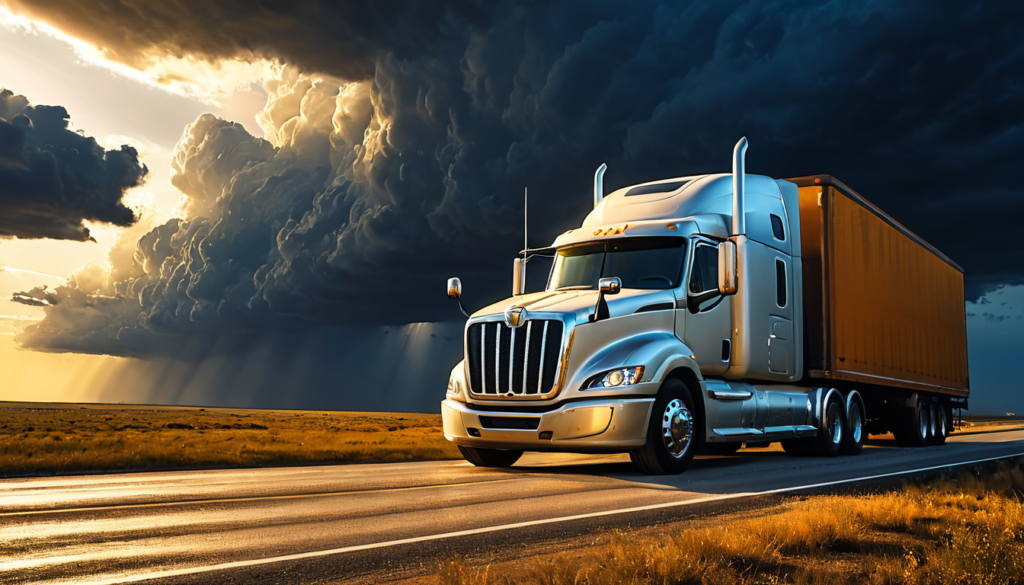
Grand Prairie 18-Wheeler Accident Guide: Fighting for Justice After a Catastrophic Truck Crash
Traffic never stops in Grand Prairie. Whether it’s the constant flow of freight moving through the Great Southwest Industrial District or 18-wheelers barreling down I-30 and I-20, our city is a primary artery for the American supply chain. But when an 80,000-pound semi-truck collides with your 4,000-pound passenger vehicle, the results are never a “simple accident.” They are a life-altering crisis.
If you’ve been hit by an 18-wheeler in Grand Prairie, you’re currently facing a David vs. Goliath battle. On one side, you have mounting medical bills, physical pain, and a foggy future. On the other, the trucking company already has a rapid-response team of lawyers and investigators working to find ways to pay you as little as possible. You need a fighter in your corner who understands the complex web of federal regulations and local traffic patterns that define these cases. Since 1998, Ralph Manginello has been that fighter for families across Texas.
At Attorney911, we recognize that your life changed in the fraction of a second it took for that truck to impact your car. We’ve seen the devastation these crashes cause on the President George Bush Turnpike and SH 360. We know that the next 48 hours are critical for your recovery—both physically and financially. Within days, the electronic data that could prove the truck driver was speeding or fatigued can be overwritten. We move immediately to stop that from happening.
Call Attorney911 now at 1-888-ATTY-911 for a free, confidential case evaluation. We are available 24/7 to respond to your legal emergency in Grand Prairie.
Why Attorney911 Is the Formidable Choice for Grand Prairie Trucking Victims
When your future hangs in the balance, experience isn’t just a bullet point—it is your greatest asset. Ralph Manginello brings over 25 years of courtroom experience to every Grand Prairie trucking case. He is admitted to practice in the U.S. District Court for the Southern District of Texas, a credential that allows our firm to take on the largest interstate carriers in the federal courts where many of these cases are ultimately resolved.
Our leadership is not just defined by length of service but by the quality of our results. We have recovered over $50 million for our clients, including multi-million dollar settlements for traumatic brain injuries and amputations. We’ve gone toe-to-toe with Fortune 500 corporations, including litigation involving the BP Texas City refinery explosion. We don’t fear the resources of a billion-dollar trucking company because we’ve beaten them before.
The Insider Advantage: Our Team’s Defense Background
Most personal injury firms only know one side of the coin. At Attorney911, we have a strategic edge that other Grand Prairie firms lack. Our associate attorney, Lupe Peña, spent years working for a national insurance defense firm. He used to be the person defending the insurance companies and trucking fleets—now he fights for you.
He knows their playbook cover-to-cover. He understands how they value claims, how they train their adjusters to trap victims into recorded statements, and exactly which “lowball” tactics they use to save their shareholders money. This insider knowledge allows us to anticipate the defense’s moves before they even make them. When an insurance adjuster tells us “this is our best offer,” Lupe Peña knows if they are telling the truth or if they are bluffing to protect their bottom line.
Hablamos Español. Llame a Lupe Peña al 1-888-ATTY-911. Su estatus migratorio no importa—usted tiene derechos tras un accidente en Grand Prairie.
The 48-Hour Evidence Window: Why You Cannot Wait
In Grand Prairie trucking accidents, the clock is your enemy. While you are in the hospital at Medical City Grand Prairie or Baylor Scott & White focusing on your health, the trucking company’s insurance carrier has already dispatched investigators to the scene. Their goal is simple: control the narrative and preserve only the evidence that helps them.
The Threat of Evidence Destruction
In many cases, the most critical evidence in your 18-wheeler crash is digital. However, federal law only requires trucking companies to keep certain records for a limited time.
- ECM/Black Box Data: The Engine Control Module records speed, brake application, and engine RPM. This data can be overwritten in as little as 30 days or as soon as the truck is put back into service.
- ELD Records: Electronic Logging Devices track a driver’s hours of service. Under 49 CFR § 395.8, these records only need to be retained for six months.
- Dashcam Footage: Many fleets now utilize AI-powered dashcams. These systems often overwrite footage within 7 to 14 days if a “critical event” wasn’t triggered or if the company chooses not to save the file.
Our Immediate Response Protocol
The moment you retain Attorney911, we send a formal spoliation letter to the trucking carrier, the driver, and their insurance company. This letter is a powerful legal tool that puts them on notice: if they destroy, delete, or “lose” any piece of evidence related to the crash, they face severe legal sanctions in court.
We demand the preservation of:
- The physical truck and trailer for independent inspection.
- All data from the black box and telematics systems.
- The complete Driver Qualification File (49 CFR § 391.51).
- Six months of previous maintenance and inspection records (49 CFR § 396.3).
- Dispatch logs and route communications.
- Post-accident drug and alcohol test results.
Don’t let the evidence disappear. Call 1-888-ATTY-911 immediately so we can lock down the proof you need to win your Grand Prairie case.
Comprehensive Analysis of 18-Wheeler Accident Types in Grand Prairie
Grand Prairie is a unique environment for trucking. We have high-speed interstates meeting dense residential areas and massive warehouse districts. Different road conditions lead to different types of catastrophic collisions. At Attorney911, we analyze the physics and forensics behind every crash to prove exactly how the driver or company was negligent.
Rear-End Collisions: The Physics of 80,000 Pounds
Rear-end accidents are common on I-20 and I-30 during the heavy Grand Prairie commute. The mass differential is the primary killer here. A car weighing 4,000 pounds is no match for a truck that could be 20 times heavier.
Under 49 CFR § 392.11, commercial drivers must maintain a following distance that is “reasonable and prudent.” However, at 65 mph, an 80,000-pound truck needs over 525 feet to stop—the length of nearly two football fields. If a driver is distracted by a cell phone or fatigued from a long shift, they cannot react in time. When we investigate these crashes, we use ECM data to prove the driver never hit the brakes until the moment of impact, proving they weren’t paying attention to the Grand Prairie traffic ahead.
Blind Spot “No-Zone” Crashes
The “No-Zone” is the area around a truck where the driver has zero visibility. 18-wheelers have massive blind spots on all four sides, particularly on the right side. In the dense traffic of SH 161 or the President George Bush Turnpike, these blind spots are deadly.
Under 49 CFR § 393.80, every truck must have mirrors that provide a clear view to the rear. But mirrors only work if the driver uses them. Too often, drivers change lanes without verifying the space is clear, crushing smaller vehicles against the concrete barriers common on Grand Prairie highways. We examine the truck’s mirror adjustments and sensor data to prove the driver failed in their duty to safely maneuver.
Jackknife Accidents on Grand Prairie Interchanges
A jackknife occurs when the drive wheels of the tractor lock up, causing the trailer to swing out like the blade of a folding knife. This is a terrifying event that often sweeps across four or five lanes of I-30, creating a massive chain-reaction pileup.
What many trucking companies claim was an “unavoidable skid” is often the result of driver error. Improper braking technique, speeding on wet roads near Lone Star Park, or failure to properly adjust brakes (a violation of 49 CFR § 393.48) are the real culprits. Ralph Manginello and our team work with accident reconstruction experts to prove the jackknife was a preventable act of negligence.
Underride Collisions: The Decapitation Risk
Underride crashes are among the most lethal. This is when a smaller car slides underneath the trailer of a truck because the trailer is high off the ground. In rear underride crashes, the car’s passenger compartment is often sheared off at the level of the windshield.
We look closely at whether the truck was equipped with properly maintained underride guards as required by 49 CFR § 393.86. If a guard was rusted, weak, or missing, the trucking company or the manufacturer may be liable for the resulting fatalities. This is particularly relevant in Grand Prairie’s industrial zones where old trailers are frequently moved between warehouses.
Wide Turn “Squeeze” Accidents
If you’ve driven near the Grand Prairie Premium Outlets or the Great Southwest Industrial District, you’ve seen it: a truck swings wide to the left to make a right turn. If the driver isn’t watching their mirrors, a smaller car can be “squeezed” between the truck and the curb.
Drivers are trained to avoid these “squeeze plays” by properly positioning the vehicle and signaling early. When they fail to do so, it is a clear violation of safe driving rules. We interview witnesses and pull camera footage from local Grand Prairie businesses to prove the driver cut you off.
Rollover Crashes and Cargo Shifts
Rollovers are common on the curved transition ramps between I-30 and the President George Bush Turnpike. High centers of gravity make 18-wheelers prone to tipping if they take a curve too fast.
Furthermore, if the cargo wasn’t properly secured according to the strict standards of 49 CFR § 393.100, the load can shift during a turn. This shift moves the center of gravity and can pull even a slow-moving truck onto its side. At Attorney911, we investigate the loading company and the shipper to see if an imbalanced or unsecured load caused your Grand Prairie rollover accident.
Every accident type requires a specific investigative strategy. As client Glenda Walker said, we fight to “get every dime” you deserve. Call 1-888-ATTY-911 today.
FMCSA Regulations: The Legal Backbone of Your Case
Federal law governs almost every aspect of how an 18-wheeler must operate in Grand Prairie. These rules, established by the Federal Motor Carrier Safety Administration (FMCSA), are documented in Title 49 of the Code of Federal Regulations. When a trucking company violates these rules, it isn’t just a mistake—it is a violation of federal safety law that proves negligence.
49 CFR Part 395: Hours of Service (The Fatigue Rules)
Driver fatigue is a silent killer on Texas roads. To prevent exhausted drivers from operating 40-ton vehicles, the FMCSA strictly limits driving time:
- Drivers may only drive 11 hours after 10 consecutive hours off duty.
- They cannot drive beyond the 14th hour after coming on duty.
- A 30-minute break is required after 8 hours of driving.
Despite these rules, we find that some carriers in the Grand Prairie area pressure their drivers to ignore these limits to meet delivery quotas at local distribution centers. We subpoena the Electronic Logging Device (ELD) data to prove if a driver was on hour 15 or 16 of a shift when they hit you. If they were, the trucking company is on the hook for endangering the public for profit.
49 CFR Part 391: Driver Qualification
Is the person behind the wheel actually qualified to drive? Under Part 391, trucking companies must maintain a full file on every driver. This includes:
- A valid Commercial Driver’s License (CDL).
- A current medical examiner’s certificate.
- A documented history of background checks and previous employer inquiries.
- Annually updated motor vehicle records (MVRs).
If a company hired a driver with a history of DUIs, multiple speeding tickets, or a medical condition that makes driving dangerous, they are liable for negligent hiring. Ralph Manginello has spent 25 years exposing companies that cut corners on driver safety to save on labor costs.
49 CFR Part 396: Inspection, Repair, and Maintenance
A truck in Grand Prairie is only as safe as its last inspection. 49 CFR § 396.3 requires companies to “systematically inspect, repair, and maintain” every vehicle.
- Pre-Trip Inspections: Drivers must verify that brakes, tires, and lights are working before they move.
- Post-Trip Reports: Drivers must report any defects found during their shift.
- Annual Inspections: Every truck must undergo a comprehensive yearly check.
If your accident was caused by a tire blowout (49 CFR § 393.75) or brake failure (49 CFR § 393.40), we look for the maintenance “gap.” Most of the time, the records show the company knew the brakes were worn but decided to “get one more run” out of them. That decision cost you your health—and we will make them pay for it.
49 CFR Part 382: Drug and Alcohol Testing
Commercial drivers are held to a higher standard. A BAC of 0.04% is considered a violation for a commercial lifter—half the limit for regular drivers. Companies must conduct:
- Pre-employment testing.
- Post-accident testing (mandatory if there is a fatality or a tow-away citation).
- Random testing.
If the driver who hit you in Grand Prairie was under the influence of alcohol, illegal drugs, or even certain prescription medications that impair driving, they have violated 49 CFR § 382. This is often the basis for seeking punitive damages—additional money meant to punish the company for egregious conduct.
Federal law is on your side, but you need a lawyer who knows how to use it. Ralph Manginello brings federal court experience to your Grand Prairie claim. Call 888-ATTY-911.
The 10 Liable Parties: Who Really Pays for Your Injuries?
One of the biggest mistakes a Grand Prairie victim can make is assuming that only the truck driver is responsible. In the world of commercial logistics, there is a chain of companies involved in every shipment. At Attorney911, we investigate every link in that chain. Why? Because the more parties that are liable, the more insurance coverage is available to pay for your catastrophic medical bills.
1. The Trucking Company (Carrier)
Under the legal doctrine of respondeat superior, the employer is responsible for the actions of their employees. Beyond the driver’s mistake, the company may be liable for:
- Negligent Supervision: Failing to monitor the driver’s ELD logs.
- Negligent Training: Putting a driver on the road who hasn’t been trained for heavy Grand Prairie traffic.
- Forced Dispatch: Violating HOS rules by demanding a delivery time that is physically impossible to meet safely.
2. The Cargo Owner or Shipper
If you were hit by a truck carrying hazardous chemicals near the Grand Prairie industrial district, the company that owns those chemicals may be liable. If they failed to disclose the dangerous nature of the cargo or provided improper loading instructions, they share the blame.
3. The Loading Company
Improperly loaded cargo is a leading cause of rollover accidents. If a third-party company in a Grand Prairie warehouse loaded the trailer and failed to secure the pallets correctly, they violated 49 CFR § 393.100. We hold these loading companies accountable for the instability they create.
4. Truck and Parts Manufacturers
Sometimes the driver does everything right, but the equipment fails. If a defective steering column, a faulty brake system, or a tire with a manufacturing defect caused the crash, we file a product liability claim against the manufacturer. We’ve litigated against Fortune 500 giants like BP and Daimler, and we aren’t afraid of their legal teams.
5. Maintenance and Repair Facilities
Many Grand Prairie trucking fleets outsource their maintenance. If a mechanic signed off on a brake inspection but failed to actually check the pads, that maintenance shop is liable when those brakes fail on I-30.
6. Freight Brokers
Brokers connect shippers with carriers. If a broker hired a trucking company that they knew—or should have known—had a “Conditional” or “Unsatisfactory” safety rating from the FMCSA, they can be sued for negligent selection.
7. The Truck Owner (In Owner-Operator Situations)
Liability gets complex when a driver owns their own truck but leases it to a larger company like Knight-Swift or J.B. Hunt. We untangle these lease agreements to find all available insurance policies.
8. Government Entities
Was your crash caused by a massive pothole that wasn’t repaired, or a confusing construction zone on SH 360 with inadequate signage? In these cases, the City of Grand Prairie, Tarrant County, or TxDOT may be liable. These cases have very short notice deadlines (often as little as 90-180 days), so immediate action is essential.
9. Multi-Vehicle Liability
Grand Prairie trucking accidents often involve three or more cars. If another passenger vehicle contributed to the crash, we ensure their insurance also pays their fair share.
10. Parent Companies and Subsidiaries
Large corporations often hide behind a web of smaller LLCs to limit their liability. We perform deep corporate research to see if a well-funded parent company is pulling the strings of the small trucking firm that hit you.
We don’t just sue the driver; we follow the money to ensure you get every dime you deserve. Call 1-888-ATTY-911 for a complete investigation of your Grand Prairie accident.
Understanding the Value of Your Grand Prairie Case: Damages and Resulting Compensation
A common question we hear is, “How much is my 18-wheeler case worth?” The answer depends on the severity of your injuries and the strength of the evidence we gather. However, trucking companies carry significantly more insurance than regular drivers, which means the potential recovery is much higher.
Federal Insurance Minimums
While a standard Texas driver might only carry $30,000 in liability insurance, 18-wheelers are required by the FMCSA to carry:
- $750,000 for general freight.
- $1,000,000 for oil or heavy equipment.
- $5,000,000 for hazardous materials.
Many of the carriers driving through Grand Prairie—such as Walmart, Amazon, or UPS—carry “umbrella” policies that provide tens of millions of dollars in coverage.
Types of Damages We Pursue
We don’t just ask for your current hospital bills. We calculate the lifetime cost of your injuries.
- Economic Damages: This includes surgery costs, physical therapy, future medical care, lost wages, and your “loss of earning capacity”—if you can never return to your job in the logistics or manufacturing sectors of Grand Prairie.
- Non-Economic Damages: This is compensation for your physical pain, mental anguish, PTSD, disfigurement, and the “loss of consortium” (the impact the injury has on your relationship with your spouse).
- Punitive Damages: These are designed to punish the trucking company for gross negligence. In Texas, if we can prove the company knowingly sent a dangerous driver onto Grand Prairie roads, a jury can award millions in punitives.
Our Multi-Million Dollar Results
We have a track record of winning big for victims.
- $5+ Million for a Traumatic Brain Injury victim.
- $3.8+ Million for a client who suffered an amputation.
- $2.5+ Million for a commercial trucking crash recovery.
These numbers aren’t just figures on a page—they are the resources our clients used to rebuild their lives. As client Donald Wilcox said, after another firm wouldn’t accept his case, he called Attorney911 and ultimately got a “handsome check.”
Your case is unique, and we treat it that way. Past results don’t guarantee future outcomes, but they do show which firm has the muscle to win. Call 1-888-ATTY-911.
Insurance Intelligence: Why Lupe Peña’s Background Is Your Advantage
When you file a claim against a trucking company, you aren’t just fighting a “carrier”—you are fighting an insurance giant. Carriers like Progressive Commercial, Geico, or Travelers have entire departments dedicated to paying you as little as possible.
Algorithmic Injustice: Colossus and Claims Software
Most people don’t know that insurance adjusters use software like Colossus or ClaimIQ to value your injuries. These programs don’t care about your pain. They look at data points: “Was there a delay in treatment?” “Did the victim go to an ER or an urgent care?” “Is the attorney a known trial lawyer?”
Because Lupe Peña used to work on the side of the insurance companies, he knows exactly how these algorithms work. He knows that if you wait 3 days to see a doctor in Grand Prairie, the software will automatically flag it and drop your case value by 20%. He knows how to present your medical evidence in a way that forces the software to show a higher number.
The Recorded Statement Trap
Within 24 hours of your crash on I-30, an adjuster will call you. They will sound friendly and sympathetic. They’ll ask, “Could you just give us a quick recorded statement so we can speed up your check?”
DON’T DO IT.
They are trained to ask leading questions like, “You didn’t see the truck before the crash, did you?” If you say “no,” they will later argue you weren’t paying attention, even if the truck swerved into your lane. Our rule at Attorney911 is simple: we handle all communication with the insurance company. You focus on healing; we focus on the fight.
You deserve a lawyer who knows the enemy’s secrets. With Lupe Peña and Ralph Manginello on your side, the insurance company doesn’t have the upper hand anymore. Call 1-888-ATTY-911.
Grand Prairie Carrier Intelligence: Who Is on Our Roads?
Grand Prairie is a massive logistical hub. We are home to some of the busiest distribution centers in the Southwest. Identifying which carrier hit you is the first step; understanding their safety history is the second.
Amazon (Logistics and Relay)
Amazon has a massive presence in the DFW Metroplex, including fulfillment centers very close to Grand Prairie (FTW1 in Dallas/Coppell and others). They often use a “contractor model” to distance themselves from liability when one of their vans or Relay trucks causes an accident. We know the legal theories to pierce this contractor shield and hold Amazon corporately accountable for the pressure they put on their drivers.
Walmart
Walmart operates one of the largest private fleets in America and has several major distribution centers within a short driving distance of Grand Prairie. Following the landmark Tracy Morgan settlement, Walmart’s safety protocols have been in the spotlight. However, their internal legal defense teams remain among the most aggressive in the world.
FedEx and UPS
Grand Prairie sits between the massive FedEx hub in Hutchins and the UPS Mesquite hub. These brown and white trucks are a constant presence on our streets. Both companies utilize tight delivery windows that can incentivize drivers to speed through Grand Prairie neighborhoods or push through fatigue.
Oilfield and Energy Transport
While we aren’t in the heart of the Permian Basin, Grand Prairie serves as a conduit for energy equipment moving across Texas. We frequently see oversized loads hauling wind turbine parts or oilfield machinery. These oversize loads require specialized escorts and permits. If they caused a crash on I-20, we check if they violated the terms of their Texas Oversize/Overweight permits.
Waste Management (WM) and Republic Services
Garbage trucks are among the most dangerous commercial vehicles in residential Grand Prairie. They have massive blind spots and operate in areas where children play and people walk their dogs. If a private waste company’s truck hit you, their liability is clear-cut and their insurance coverage is substantial.
We know the carriers of Grand Prairie. We know their safety records (CSA scores) and the common violations they commit. Call Attorney911 at 1-888-ATTY-911.
Dangerous Corridor Intelligence: Where Grand Prairie Crashes Happen
Not all roads in Grand Prairie are created equal. Some segments are notorious for 18-wheeler accidents due to poor design, high congestion, or heavy freight volume.
I-30 (Tom Landry Freeway)
The stretch of I-30 through Grand Prairie is one of the busiest in the state. From the Belt Line exit to SH 161, the constant merging of commuter traffic and long-haul trucks creates a “danger zone.” Speed differentials here are the primary cause of rear-end and sideswipe accidents.
I-20 (Ronald Reagan Memorial Highway)
I-20 serves as the primary route for trucks moving between the DFW area and the West Texas oilfields. The density of heavy trucks here is immense. During peak hours, the high-speed traffic through Grand Prairie is prone to jackknife and rollover accidents, especially near the 161 interchange.
President George Bush Turnpike (SH 161)
This tollway is a major north-south artery. Because it is a “faster” road, the impact forces of a truck crash on SH 161 are often fatal. The high transition ramps are common sites for rollover accidents when drivers take curves too fast for their load weight.
Great Southwest Parkway and Belt Line Road
These are the industrial lifebloods of Grand Prairie. They are plagued by “blind spot” and “wide turn” accidents. Drivers working in these areas are often in the “last-mile” of their delivery, where fatigue from a long shift is most likely to cause a lapse in judgment.
We drive these roads every day. We know where the accidents happen and why. Let our local Grand Prairie knowledge work for you. Call 1-888-ATTY-911.
The Human Cost: Catastrophic Injuries and Biomechanics
An 18-wheeler crash isn’t just a “car wreck.” The biomechanics of the human body being subjected to the forces of a semi-truck are devastating.
Traumatic Brain Injury (TBI)
Even if you didn’t hit your head, the “coup-contrecoup” effect—where your brain slams against the front and then the back of your skull during a 65 mph impact—can cause permanent cognitive damage. Symptoms like memory loss, mood swings, or severe headaches after a Grand Prairie crash shouldn’t be ignored. Our TBI settlements range from $1.5M to nearly $10M, reflecting the long-term care these victims require.
Spinal Cord Injuries and Paralysis
The extreme G-forces of a truck impact can shear or compress the spinal column. Whether it is a herniated disc requiring surgery or permanent paralysis, the life care costs are staggering. A quadriplegic injury can cost over $1 million in the first year alone and millions more over a lifetime. We fight to ensure every future dollar is covered.
Amputations and Crushing Injuries
During an underride or side-impact crash, victims are often pinned inside their vehicles for hours. The “crush syndrome” that results can lead to kidney failure and often requires the amputation of limbs. We’ve recovered over $3.8 million for amputation victims because we understand the cost of prosthetics and the psychological trauma of losing a limb.
Severe Burns and Hazmat Exposure
When a tanker truck ruptures on I-20, fuel fires can reach 1,500 degrees Fahrenheit. These burns require dozens of reconstructive surgeries and result in permanent disfigurement. We investigate the crashworthiness of the truck’s fuel tank and the securement of the cargo to hold everyone responsible.
You are not just a medical file to us. As client Chad Harris said, at Attorney911, “You are FAMILY to them.” Call 1-888-ATTY-911 for the compassion and legal power you need.
Grand Prairie 18-Wheeler Accident FAQ
How long do I have to file a claim in Grand Prairie?
In Texas, the statute of limitations for personal injury is generally two years from the date of the accident. However, if a government vehicle was involved or the victim was a minor, different deadlines apply. Regardless of the 2-year limit, you must act NOW to preserve the black box and ELD evidence before it is legally destroyed by the trucking company.
What if the truck driver was from out of state?
Many trucks in Grand Prairie are from carriers based in other states or even Mexico. Because Ralph Manginello is admitted to federal court and our team understands interstate commerce regulations, we can sue these out-of-state companies in federal court, ensuring they are held accountable regardless of where their headquarters are located.
Can I still recover if I was partially at fault?
Yes. Texas uses a modified comparative negligence system (the 51% bar rule). As long as you are 50% or less at fault, you can still recover damages. However, your total settlement will be reduced by your percentage of fault. This is why the trucking company will fight so hard to blame you—every 1% they put on you is thousands of dollars they get to keep. We fight back with forensic evidence to keep the blame where it belongs: on the commercial carrier.
Do I have to go to Houston or Austin to meet my lawyer?
No. While we have offices in Houston and Austin, we handle cases throughout Grand Prairie and Tarrant County. We offer virtual consultations, and for catastrophically injured clients, we can come to you. You get the power of a large-market litigation firm with the personal attention of a local advocate.
What if the truck that hit me was an Amazon van?
Amazon cases are complex because of their “Independent Service Partner” model. They will try to tell you that the driver isn’t their employee. We know how to prove that Amazon’s control over the driver’s route and delivery metrics makes them legally liable. We don’t take “no” for an answer from Amazon’s adjusters.
How do I pay for a trucking accident lawyer?
We work on a contingency fee basis. This means you pay $0 upfront. We advance all the costs of the investigation, the expert witnesses, and the court filings. We only get paid if we win your case. If we don’t recover money for you, you owe us nothing for our time.
Should I take the insurance company’s first offer?
ABSOLUTELY NOT. The first offer is a “lowball” designed to get you to sign away your rights before you know the full extent of your injuries. Once you sign a release, you can never ask for more money, even if you need a spinal surgery a year from now. Let our former insurance defense attorney, Lupe Peña, review any offer before you sign.
Got more questions? We have 291 educational videos on our YouTube channel to help you “get smart, like a lawyer.” Or just call us right now for a free answer: 1-888-ATTY-911.
Why Choose Attorney911 for Your Grand Prairie Case?
There are thousands of lawyers in Texas, but very few are 18-wheeler specialists. Choosing a general personal injury lawyer for a truck crash is like choosing a family doctor to perform heart surgery. You need a specialist.
- 25+ Years of Combat: Ralph Manginello has spent a quarter-century in the trenches of Texas courtrooms.
- Insider Intelligence: Lupe Peña knows the insurance companies’ secrets because he used to work for them.
- No Upfront Costs: You don’t pay a dime unless we bring you a check.
- Federal Authority: We can litigate in the federal courts where the biggest settlements are won.
- Bilingual Representation: We serve the Grand Prairie Hispanic community with native-level Spanish fluency.
- Family Treatment: Our 4.9-star Google rating from 251+ reviews isn’t an accident. Clients like Kiimarii Yup and Ernest Cano vouch for us because we treat them as people, not file numbers.
As client Chad Harris put it: “You are NOT a pest to them and you are NOT just some client… You are FAMILY to them.”
Your Fight for Justice Starts with One Call
The trucking company has already started their investigation. Their lawyers are already looking for ways to blame you. They hope you’re too overwhelmed to call a lawyer. They hope you’ll take a small settlement and go away quietly.
Don’t let them win.
You didn’t ask to be in this position. You didn’t ask for the pain, the surgeries, or the stress. But now that it’s happened, you have a right to be made whole. You have a right to hold a negligent multi-billion dollar corporation accountable for what they did to your family on Grand Prairie’s roads.
We are ready to fight for you. We are ready to send the spoliation letters, subpoena the ELD logs, hire the accident reconstructionists, and go to trial if that’s what it takes. We answer. We fight. We win.
Call Attorney911 right now at 1-888-ATTY-911 or (888) 288-9911. Your consultation is FREE. Your information is confidential. Your future is our priority.
Attorney Advertising. Past results do not guarantee future outcomes. The Manginello Law Firm, PLLC. Houston · Austin · Beaumont · Serving Grand Prairie.